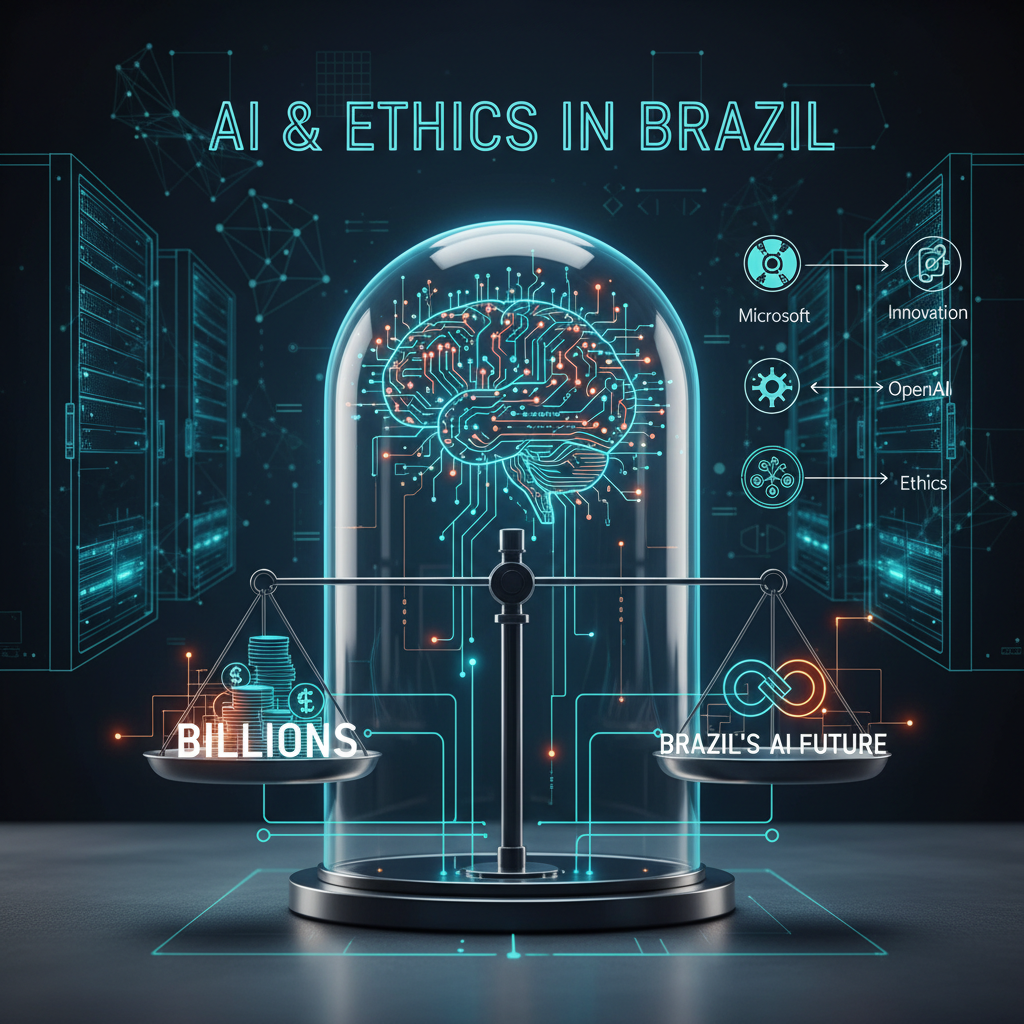
The world watched, captivated, as Microsoft poured an estimated $13 billion into OpenAI. It was a gamble, a declaration of intent, and arguably the most significant strategic move in the recent history of artificial intelligence. For many, it signaled a new era of innovation, a sprint towards a future where AI permeates every facet of our lives. But here in Brazil, where the digital divide is still a very real challenge and the nuances of language and culture are as rich as our Amazon rainforest, we ask a different question: Is this investment truly paying off in a way that benefits everyone, especially when we consider the ethical landscape?
It is easy to get lost in the sheer scale of the numbers. Billions of dollars, millions of users, and models with trillions of parameters. Yet, as a journalist who has spent years observing the tech scene from São Paulo to Salvador, I know that the code tells the real story. And right now, that story is complex, a tapestry woven with threads of incredible progress and nagging ethical dilemmas.
The breakthrough, in plain language, is that this partnership has supercharged the development and deployment of large language models, or LLMs. Think of it like this: if previous AI models were like a skilled artisan working with a limited set of tools, the OpenAI-Microsoft collaboration has given us a sprawling, automated factory capable of producing an astonishing array of complex creations, from writing code to generating prose. Microsoft's Azure cloud infrastructure provided the computational muscle, the sheer processing power needed to train these gargantuan models, while OpenAI brought the cutting-edge research and model architectures.
Why does this matter? Because these models, particularly OpenAI's GPT series, are now embedded in countless applications, from Microsoft Copilot in Office 365 to bespoke solutions developed by startups across Latin America. They are influencing how we work, how we learn, and even how we perceive information. For Brazil, a nation with a vibrant tech ecosystem and a hunger for innovation, these tools offer immense potential. Imagine AI-powered educational platforms tailored to specific regional dialects, or medical diagnostics assisting doctors in remote Amazonian communities. The possibilities are genuinely exciting.
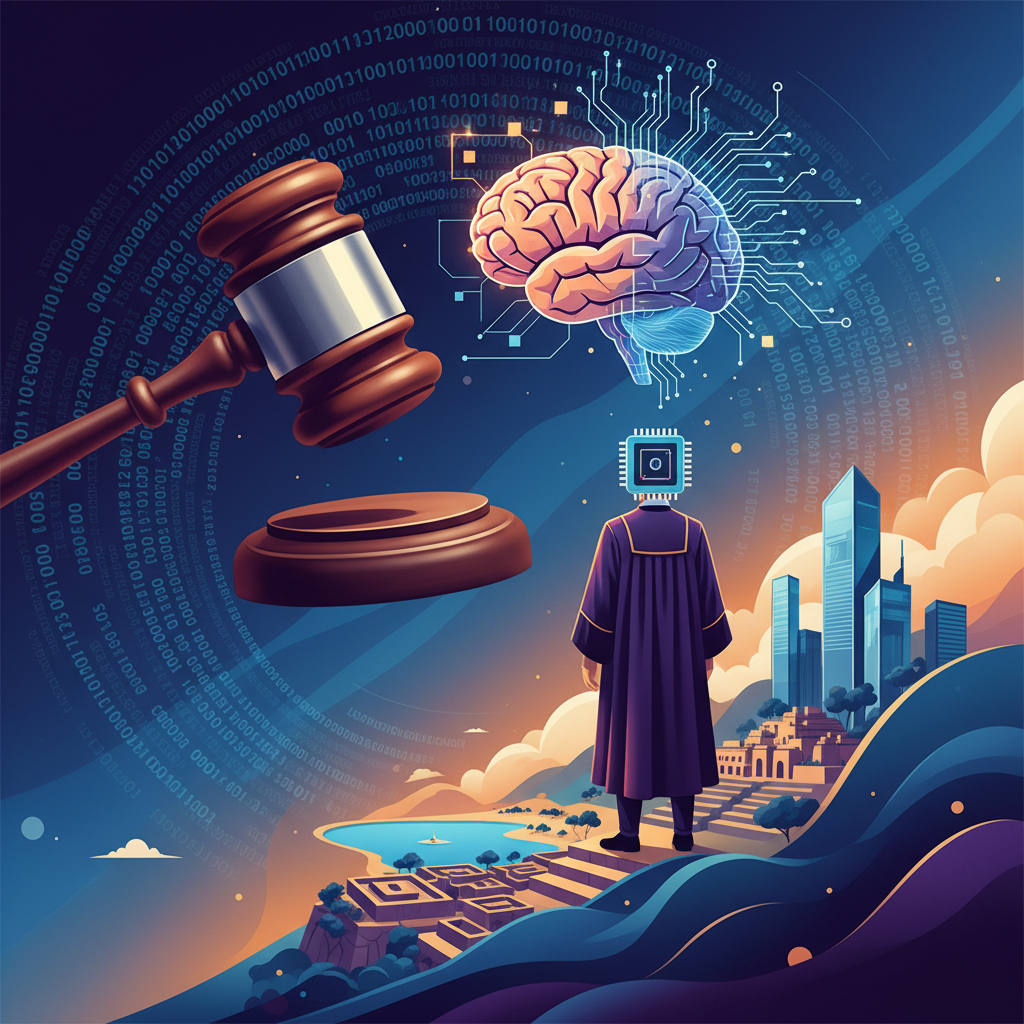
However, the technical details, while fascinating, often obscure a critical underlying truth: these models are not neutral. They are trained on vast datasets reflecting human language and human biases. When we talk about a $13 billion investment, we must also talk about the investment in understanding and mitigating these biases. Recent research highlights this challenge vividly. A paper by researchers at Stanford University, for instance, explored how LLMs can perpetuate and even amplify societal stereotypes, particularly concerning gender and race. Dr. Timnit Gebru, a prominent voice in AI ethics, has consistently warned about the dangers of deploying powerful AI without adequate safeguards. “The rush to deploy these models without fully understanding their societal impact is a recipe for disaster,” she stated in a recent interview, a sentiment that resonates deeply here in Brazil, where historical inequalities can be easily exacerbated by unexamined technology.
Consider the implications for Portuguese. While models are increasingly multilingual, the vast majority of their training data remains English-centric. This creates a linguistic and cultural bias. Translations might be fluent, but are they truly nuanced? Do they understand the subtle humor of a piada or the cultural weight of a saudade? A study published in Nature Machine Intelligence last year demonstrated how even advanced multilingual models can struggle with low-resource languages or exhibit performance degradation when encountering culturally specific idioms. This isn't just an academic exercise, it has real-world consequences for how Brazilians interact with and trust these AI systems.
Microsoft and OpenAI have acknowledged these concerns, of course. They have teams dedicated to responsible AI development, focusing on areas like fairness, privacy, and safety. OpenAI's charter, for example, emphasizes the importance of ensuring that artificial general intelligence benefits all of humanity. But the sheer pace of development, driven by intense market competition, often feels like a runaway train. As Dr. Joy Buolamwini, founder of the Algorithmic Justice League, eloquently puts it, “We need to move from 'move fast and break things' to 'move fast and fix things responsibly' when it comes to AI.” This sentiment is particularly relevant for countries like Brazil, where the regulatory frameworks are still catching up to the technological advancements.
For Brazil's developer community, which is massive and talented, the arrival of these powerful tools is a double-edged sword. On one hand, it democratizes access to advanced AI capabilities, allowing local innovators to build sophisticated applications without needing to train models from scratch. On the other hand, it raises questions about digital sovereignty and the potential for these powerful, foreign-developed models to shape our digital future in ways we might not fully control. We see startups here embracing the OpenAI API, integrating it into everything from customer service bots for local businesses to educational tools for public schools. This rapid adoption means that the ethical considerations are not theoretical, they are immediate and practical.
So, is Microsoft's $13 billion investment paying off? From a purely technological and market perspective, the answer is a resounding yes. OpenAI's models, integrated into Microsoft's ecosystem, have propelled the company to the forefront of the AI race, challenging rivals like Google and Meta. The commercial applications are vast, and the revenue streams are growing. However, from an ethical standpoint, the jury is still out. The true payoff will not be measured solely in market capitalization or quarterly earnings, but in whether these powerful tools can be deployed equitably and responsibly, enriching lives without inadvertently deepening existing divides or introducing new forms of harm.
As we look ahead, the conversation must shift beyond just capability to responsibility. Researchers at institutions like the Pontifical Catholic University of Rio de Janeiro, for example, are actively exploring how to adapt and fine-tune these global models for local contexts, addressing linguistic nuances and cultural specificities. This kind of local expertise is crucial. We need more research into bias detection specific to Portuguese, more frameworks for ethical deployment in diverse socioeconomic settings, and more transparency from the companies developing these foundational models. The future of AI in Brazil, and indeed globally, hinges not just on how powerful these models become, but on how wisely and ethically we choose to wield them. The investment is made, now the real work begins: ensuring that this technological marvel truly serves humanity, not just the bottom line. For more insights into the broader implications of AI's rapid growth, consider exploring articles on TechCrunch's AI section.