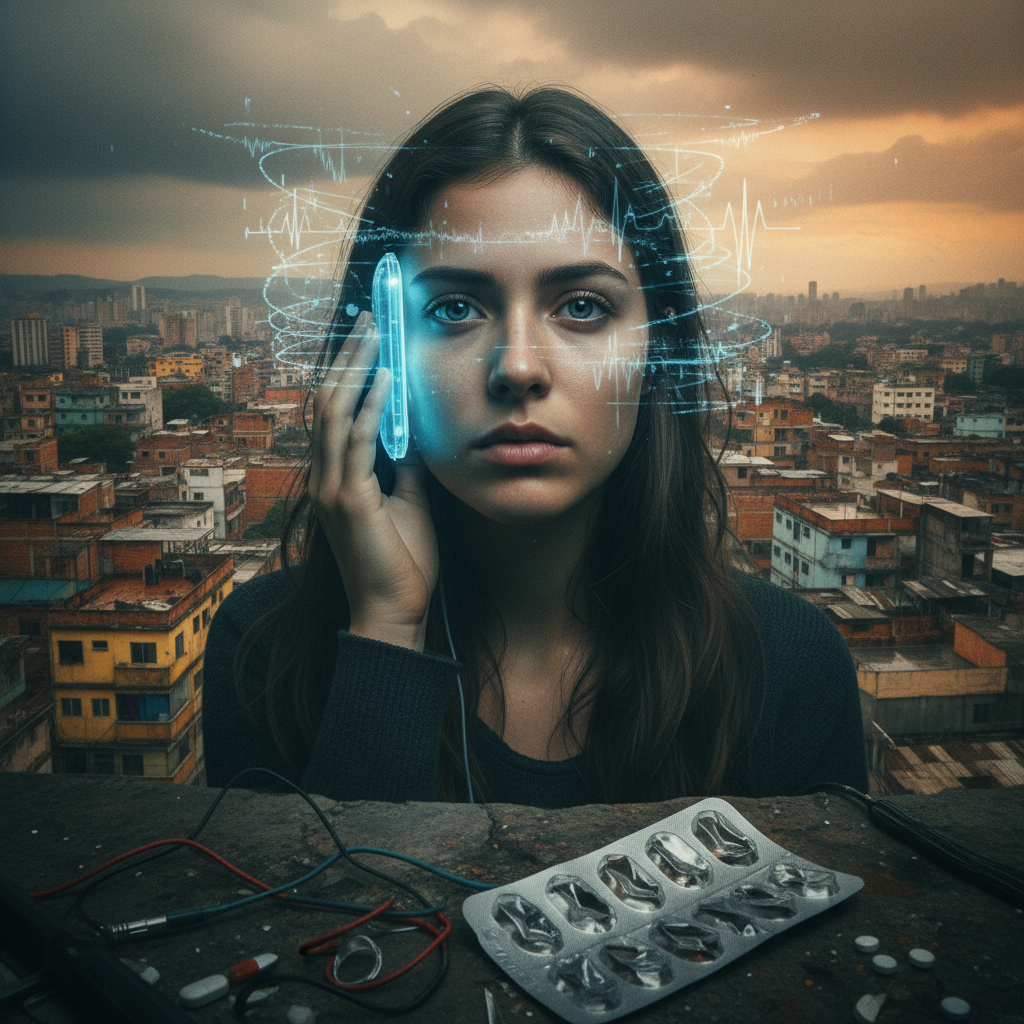
The news hit my desk this morning like a tropical storm warning: Google, the behemoth of Mountain View, has quietly begun rolling out its new 'Mind-Mender' AI initiative in select developing nations, and guess what? Venezuela is on the list. They are pushing therapy chatbots and addiction algorithms, all wrapped up in the shiny promise of digital wellness. The global media is already gushing, hailing it as a breakthrough for mental health access. But from where I sit, here in Caracas, I see a familiar pattern emerging: Silicon Valley riding in on a white horse, promising salvation, while I am left wondering if they even bothered to ask us what we actually need.
Let us be clear: Venezuela is in the throes of a profound mental health crisis. Years of economic turmoil, political instability, and a mass exodus have left deep scars. Depression, anxiety, and trauma are not abstract concepts here; they are daily realities for millions. Our healthcare system, including mental health services, is stretched thin, often to breaking point. So, on the surface, an AI solution sounds like a godsend, does it not? A digital therapist in your pocket, accessible to anyone with a smartphone and an internet connection, which is a big 'if' in many parts of our country. But I have learned to look beyond the glossy press releases.
Google's 'Mind-Mender' platform, reportedly powered by a specialized version of their Gemini model, aims to provide cognitive behavioral therapy (CBT) inspired conversations, mindfulness exercises, and even early detection algorithms for addiction patterns. They claim it is designed to be culturally sensitive, adapting to local dialects and nuances. A bold claim, considering the sheer diversity of Venezuelan experience. How can an algorithm, no matter how sophisticated, truly grasp the lived reality of someone navigating hyperinflation, food scarcity, or the pain of family separation? It is a question that keeps me up at night.
I spoke with Dr. Elena Rojas, a veteran psychiatrist who has dedicated her life to mental health in Venezuela. She works tirelessly at a public hospital in Maracaibo, often with minimal resources. "The intention might be good," Dr. Rojas told me with a weary sigh, "but AI cannot replace human empathy, especially here. Our patients need to feel understood, truly seen. A chatbot cannot hold a hand, or navigate the complex social determinants of mental illness that are so prevalent in our society. It is a tool, yes, but it risks depersonalizing care." Her words echo a sentiment I have heard before: technology can augment, but it cannot always substitute, particularly when human connection is the core of the problem.
The official reaction from the Venezuelan government has been predictably enthusiastic. The Ministry of Science and Technology, in a statement released this morning, lauded the initiative as a "pivotal step towards digital inclusion and public health modernization." They highlighted the potential for scaling mental health support to underserved communities. While I appreciate the optimism, I cannot help but feel a familiar skepticism. Will this AI be truly accessible in barrios where internet access is erratic and electricity is a luxury? Or will it simply become another tool for the privileged few, widening the digital divide under the guise of progress?
This is not to say that AI has no place in mental health. Far from it. The potential for data analysis, for identifying trends, for providing immediate, albeit superficial, support in moments of crisis is undeniable. But the danger lies in presenting it as a panacea, as the ultimate solution to systemic problems that require deep, human-centric interventions. We have seen this movie before, where technological solutions are parachuted in, bypassing the need for robust public infrastructure, trained professionals, and long-term investment. The crisis created something unexpected, yes, but it also demands genuine solutions, not just digital distractions.
Consider the addiction algorithms Google is touting. They are designed to identify behavioral patterns indicative of substance abuse. In a country where informal economies thrive and the line between survival and addiction can blur, who decides what constitutes a 'pattern of concern'? What are the ethical implications of an algorithm flagging individuals, and what kind of support network is in place once they are identified? Without a robust, trustworthy, and well-funded human support system, these algorithms could do more harm than good, potentially leading to misdiagnosis or stigmatization. The notion that an AI can navigate the labyrinthine complexities of human suffering and addiction, particularly in a high-stress environment like Venezuela, feels naive at best, and dangerously irresponsible at worst.
"We must be cautious about the 'tech solutionism' coming from abroad," warned Dr. Ricardo Peña, a sociologist at the Central University of Venezuela, during a recent online panel discussion. "These platforms are built on data, and whose data is that? Is it representative of our diverse population? Are the biases inherent in the training data going to be replicated and amplified, leading to inequitable outcomes?" These are not minor concerns. The lack of diverse, representative data from regions like ours is a well-documented problem in AI development. If the AI is trained predominantly on data from affluent Western populations, how effective can it truly be for a Venezuelan struggling with the trauma of migration or the daily grind of survival?
What happens next is crucial. Google's rollout will undoubtedly collect vast amounts of data on the mental health landscape of Venezuela. This data, anonymized or not, holds immense value. The promise is better, more personalized care. The fear, for many of us, is exploitation, or at the very least, a superficial engagement with profound human problems. We need transparency, accountability, and genuine collaboration with local experts, not just a top-down implementation of a foreign-made solution. The Verge has reported extensively on the global push for AI in healthcare, but the nuances in places like Venezuela are often overlooked.
My unpopular opinion from Caracas is this: while the world marvels at Google's technological prowess, we must demand more than just digital comfort. We must demand real investment in human infrastructure, in training more psychologists and psychiatrists, in building resilient community support networks. AI can be a powerful assistant, but it cannot be the sole architect of our mental well-being. The true test of 'Mind-Mender' will not be its algorithms' sophistication, but its ability to genuinely empower, rather than simply pacify, a population that has already endured so much. Venezuela's tech diaspora is reshaping AI globally, and they know that true innovation often starts with understanding the ground truth, not just the code. We need solutions that are built with us, not just for us, from a distance. For more on the broader ethical implications of AI, readers might find this article insightful: When AI Hallucinations Become Legal Precedent: How India Will Lead the Fight Against Algorithmic Deceit, Not Just Silicon Valley's Code [blocked].
This is not just about a new app; it is about the soul of a nation grappling with its wounds. We deserve more than a chatbot to heal them. We deserve genuine care, genuine understanding, and solutions that respect our unique struggles. The promise of digital wellness is seductive, but the reality of our mental health crisis demands a deeper, more human response. As Wired often highlights, the human element remains paramount in the age of algorithms. Let us not forget that.