
¡Hola, mis amigos! Mariànnà Sanchèz here, bubbling with excitement from the heart of Ecuador, ready to talk about something truly revolutionary, something that feels like science fiction but is very much our present: humanoid robots stepping into the workforce. And when I say stepping, I mean literally walking, grasping, and learning alongside us. Today, we are diving deep into Figure AI, a company that is not just building robots, they are building the future, one bipedal marvel at a time.
Imagine a world where the most repetitive, dangerous, or physically demanding jobs are handled by intelligent machines, freeing humans to focus on creativity, strategy, and connection. That is the promise Figure AI is chasing, and oh, what a chase it is! Their flagship robot, Figure 01, is not just a pretty face; it is a general-purpose humanoid designed to integrate seamlessly into existing workflows, from logistics and manufacturing to retail. This is not just about automating tasks; it is about augmenting human potential, and for a country like Ecuador, with its rich agricultural and industrial sectors, the implications are absolutely thrilling.
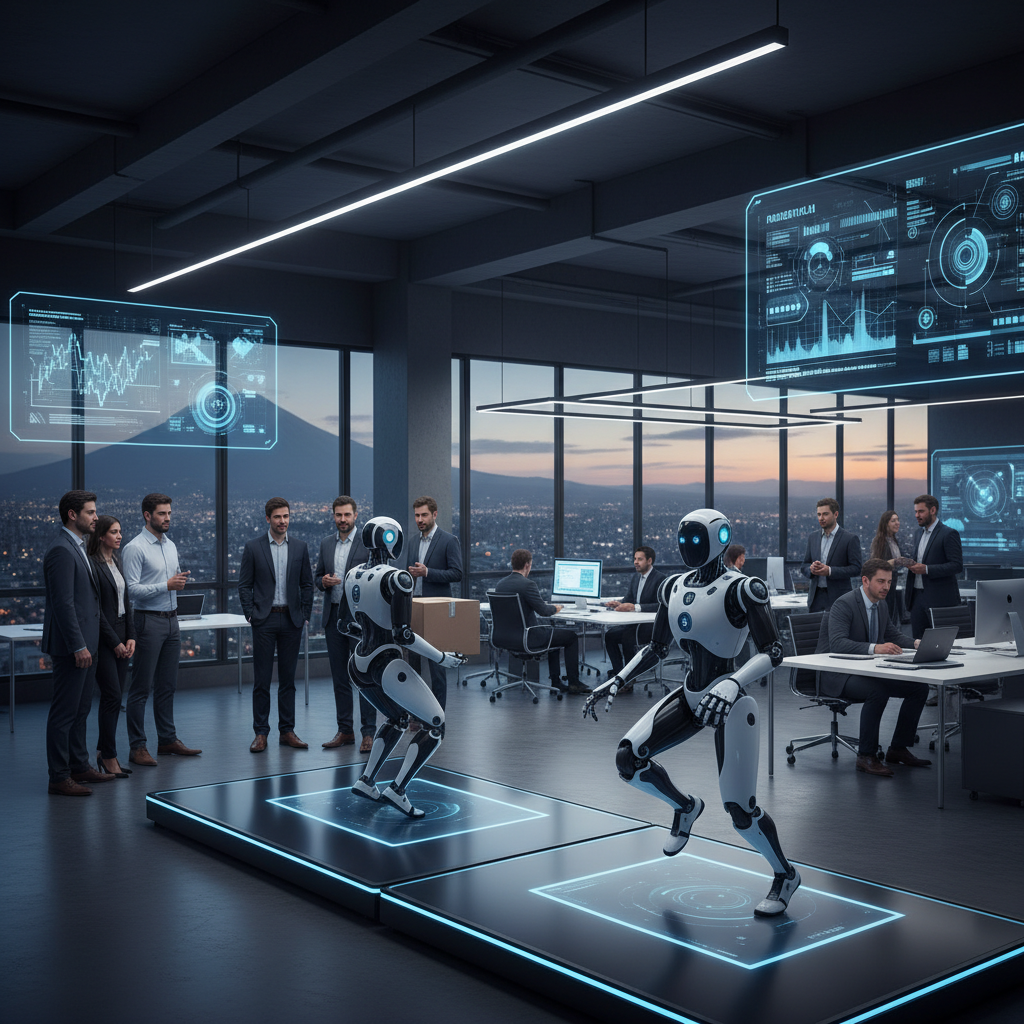
The scene today at Figure AI's Sunnyvale headquarters, or perhaps more aptly, their testing facilities, is one of focused, almost frenetic energy. Engineers, clad in company t-shirts, observe Figure 01 as it navigates complex environments, picks up objects with surprising dexterity, and even communicates its intentions. It is a dance of hardware and software, a testament to years of relentless innovation. Just recently, the company released a video showing Figure 01 interacting with a human, understanding natural language commands, and performing tasks with impressive fluidity. It was a moment that sent shivers down my spine, a clear signal that the future is not just coming, it is already here, learning and adapting.
The Genesis of a Giant: From Vision to Reality
The story of Figure AI begins with Brett Adcock, a serial entrepreneur with a track record of building and selling successful companies, including Archer Aviation. Adcock founded Figure AI in 2022 with an audacious vision: to create autonomous humanoid robots capable of performing a wide range of physical tasks. He saw a looming labor shortage in critical industries and believed that general-purpose humanoids were the answer. It is a bold premise, one that required immense capital and an even greater leap of faith. But Adcock, known for his ambitious pursuits, assembled a team of top talent from robotics powerhouses like Boston Dynamics, Tesla, and Google DeepMind. Their mission was clear: build a robot that could think, perceive, and act like a human, but with superhuman consistency and endurance.
The Business Model: Robots as a Service, or a Purchase?
Figure AI's business model is evolving, but the core strategy revolves around deploying Figure 01 into various industries. Initially, they are targeting sectors with significant labor challenges and repetitive tasks, such as manufacturing, logistics, and warehousing. Think about the massive distribution centers that power global commerce; these are prime environments for Figure 01. The company plans to offer its robots through a combination of direct sales and a Robotics as a Service (RaaS) model. The RaaS model is particularly appealing for businesses, as it lowers the upfront capital expenditure, making adoption more accessible. Customers pay a recurring fee for the robot's use, maintenance, and software updates, much like subscribing to a cloud service. This approach allows businesses to scale their automation efforts flexibly, adapting to demand without massive initial investments. For a growing economy like Ecuador's, where capital can be a constraint for small and medium-sized enterprises, such a model could be a game-changer.
Key Metrics and Growth Trajectory
While Figure AI is still a relatively young company, its trajectory has been nothing short of meteoric. They have attracted incredible investment, reportedly raising over $675 million in funding from an impressive roster of investors, including Microsoft, OpenAI, NVIDIA, Amazon's Jeff Bezos, and Parkway Venture Capital. This massive war chest underscores the immense confidence the tech world has in Figure AI's vision. Their valuation has soared, with some estimates placing it well over $2 billion, a testament to the perceived market opportunity. The company has also secured strategic partnerships, notably with BMW Manufacturing, to deploy Figure 01 robots in their Spartanburg, South Carolina, factory. This partnership is a critical validation, demonstrating the practical applicability of their technology in a real-world industrial setting. Imagine, if you will, Figure 01 robots working alongside skilled artisans in Ecuador's burgeoning flower export industry, carefully packaging delicate blooms, or assisting in the processing of cacao beans. The possibilities are endless, and it is Ecuador's biodiversity meets AI and it's magical, truly!
The Competitive Landscape: A Race to Humanoid Supremacy
Figure AI is certainly not alone in this exciting, yet challenging, space. They face formidable competition from both established players and other ambitious startups. Tesla's Optimus robot, while still in development, carries the weight and resources of Elon Musk's empire. Boston Dynamics, a pioneer in advanced robotics, has its Atlas humanoid, known for its incredible agility, though it has primarily been a research platform. Agility Robotics, with its Digit robot, is also making strides in logistics and warehouse automation. What differentiates Figure AI is its singular focus on general-purpose humanoids designed for practical, immediate deployment in commercial settings, emphasizing dexterity and intelligent interaction over pure athletic prowess. Their partnership with OpenAI to develop next-generation AI models for Figure 01's perception and reasoning capabilities is a significant competitive advantage, potentially allowing their robots to learn and adapt faster than rivals.
The Team and Culture: A Melting Pot of Brilliant Minds
The company culture at Figure AI, as reported by former and current employees, is intense, ambitious, and deeply collaborative. Brett Adcock's leadership style is described as visionary and demanding, pushing his teams to achieve seemingly impossible feats. The company attracts top talent by offering the chance to work on a truly groundbreaking product that could reshape society. "We are building something that will change the world," Adcock often states, a sentiment that permeates the company's ethos. This drive is essential for tackling the monumental engineering and AI challenges inherent in creating a truly general-purpose humanoid. It reminds me of the spirit of innovation I see in Ecuadorian entrepreneurs, who, despite limited resources, dream big and work tirelessly to bring their visions to life.
Challenges and Controversies: The Road Ahead
Of course, the path to widespread humanoid adoption is not without its bumps. Technical challenges remain immense; perfecting dexterity, robust navigation in unstructured environments, and truly intuitive human-robot interaction requires continuous innovation. There are also significant ethical and societal considerations. The potential impact on human employment is a frequent topic of debate. While proponents argue that robots will create new jobs and elevate human work, critics voice concerns about job displacement and the need for robust social safety nets. "We must ensure that as AI and robotics advance, we prioritize human well-being and equitable transitions," noted Dr. Ricardo Viteri, a leading sociologist at the Universidad San Francisco de Quito. This is a crucial conversation, especially for nations like Ecuador, where economic stability is paramount. Data privacy and security are also critical, as these robots will operate in sensitive environments and collect vast amounts of information.
The Bull Case and the Bear Case: A Future Divided?
The bull case for Figure AI is compelling: they are poised to revolutionize labor, solving critical shortages, increasing productivity, and ultimately creating a more prosperous society. Their general-purpose approach means Figure 01 could be deployed across countless industries, leading to a massive total addressable market. With strong funding, top talent, and strategic partnerships, they are well-positioned to become a dominant force in the humanoid robotics market. Imagine a future where these robots help with disaster relief in remote areas of the Amazon, or assist in the delicate process of restoring fragile ecosystems in the Galápagos. That, my friends, would be The Galápagos of technology!
The bear case, however, highlights the inherent difficulties. The cost of humanoid robots is still high, and achieving a return on investment for many businesses might take time. The technology is complex, and widespread adoption could be slower than anticipated due to regulatory hurdles, public acceptance issues, and the sheer challenge of integrating these advanced machines into diverse human-centric environments. Furthermore, the competitive landscape is fierce, and a misstep could allow rivals to gain an advantage. There is also the risk of over-promising and under-delivering, a common pitfall in emerging tech sectors.
What's Next: The Horizon of Humanoid Integration
Figure AI's immediate future involves scaling production, refining the capabilities of Figure 01, and expanding its pilot programs beyond BMW. The company is actively recruiting engineers and researchers, pushing the boundaries of AI and robotics. Their collaboration with OpenAI is expected to yield even more sophisticated AI capabilities, allowing Figure 01 to understand and respond to complex situations with greater autonomy and intelligence. We can anticipate seeing these robots in more factories and warehouses in the coming years, gradually moving into more complex environments like retail and even healthcare. According to TechCrunch, the humanoid robotics market is set for explosive growth, and Figure AI is at the forefront of this wave.
For Ecuador, the emergence of companies like Figure AI presents both opportunities and challenges. We have the chance to embrace these technologies to boost productivity, enhance safety in hazardous jobs, and create new high-tech employment opportunities. However, we must also proactively address the social implications, ensuring that our workforce is prepared for this transformation through education and retraining programs. The conversation around AI and robotics is not just for Silicon Valley; it is a global dialogue, and Ecuador, with its vibrant spirit and innovative youth, has a vital role to play. The future is not just automated; it is intelligent, adaptable, and, dare I say, incredibly exciting. ¡Hasta la próxima, amigos!