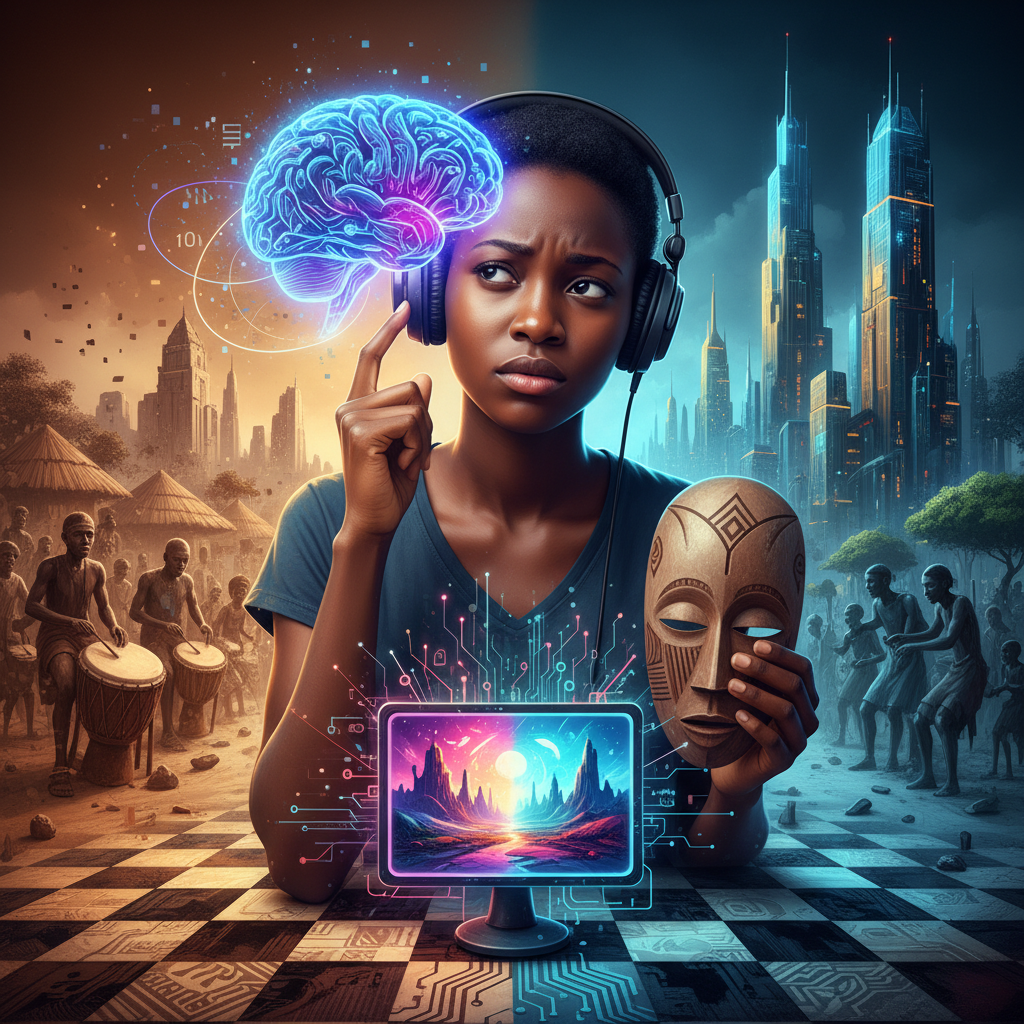

The sun was already beating down on Lusaka's bustling Kamwala market when I found myself scrolling through TikTok, not for the usual dose of dance challenges, but for a glimpse into the digital lives of our local YouTube stars. There was Chimwemwe, a young man from Matero, who used to spend hours meticulously editing his short films about Zambian folklore. His videos, raw and heartfelt, gained him a small but loyal following. Now, his latest upload, a slickly produced explainer on how to make nshima, featured AI-generated voiceovers and even some AI-assisted animation. It was polished, yes, but something felt… missing. The Chimwemwe I knew, the one who stumbled over his words sometimes but spoke with such genuine passion, seemed to have been replaced by a smoother, more generic version. You're going to want to sit down for this, because what I saw wasn't just a technological upgrade, it was a subtle shift in the very soul of creation.
YouTube, under its parent company Google, has been steadily rolling out a suite of AI-powered tools designed to make content creation easier and faster. From AI-assisted video editing that can suggest cuts and transitions, to automated captioning, background music generation, and even synthetic voiceovers, the platform is practically begging creators to lean on its digital crutches. For many Zambian YouTubers, struggling with limited resources and slow internet, these tools are a godsend. They promise to democratize content creation, allowing anyone with a smartphone and a story to compete on a global stage. The dream is compelling: produce more, faster, and with higher quality, all thanks to a benevolent algorithm.
But what happens when the algorithm becomes less of a tool and more of a co-creator, or even the primary creative force? This is where the human-AI psychology comes into sharp focus. Research from institutions like the MIT Technology Review has begun to explore the cognitive impacts of offloading creative tasks to AI. One emerging concern is the concept of 'automation complacency,' where users become over-reliant on AI, leading to a decline in their own skills and critical judgment. For Chimwemwe, this might mean less time spent honing his editing eye, less practice finding the perfect narrative rhythm, and eventually, a diminished capacity for original thought in his craft.
Dr. Naledi Mwale, a cognitive psychologist at the University of Zambia, has been observing these trends with a keen eye. "We're seeing a fascinating, and sometimes troubling, dynamic," she explained to me over a cup of strong Zambian coffee. "On one hand, these AI tools can lower the barrier to entry, allowing more voices to be heard. That's a positive for a country like ours, where access to professional production equipment is limited. But on the other hand, there's a risk of what I call 'algorithmic mimicry.' Creators might start producing content that is optimized for the algorithm, rather than for genuine human connection or artistic expression. The AI, in essence, trains the human to think like the AI." Dr. Mwale emphasized that the human brain thrives on challenge and problem-solving. If AI removes too much of that, our creative muscles could atrophy.
Indeed, the irony is almost too perfect. Platforms like YouTube thrive on user-generated content, celebrating individuality and unique perspectives. Yet, the very tools they offer could inadvertently lead to a homogenization of content. If every creator uses the same AI-generated music, the same voiceovers, the same editing styles, what distinguishes one from another? We risk a future where a Zambian folk tale, a cooking tutorial, and a political commentary all sound and look eerily similar, stripped of the distinct human touch that makes them compelling.
Consider the concept of 'flow state,' a term coined by psychologist Mihaly Csikszentmihalyi, describing a state of complete immersion in an activity. This is often where true creativity blossoms. When AI handles the tedious or complex parts of creation, it can free up the human to focus on higher-level conceptualization. However, if the AI takes over too much, it can prevent the creator from ever entering that flow state, instead relegating them to the role of an overseer, a quality controller for AI output. The joy of the struggle, the satisfaction of overcoming a creative challenge, diminishes.
This isn't just about individual creators; it has broader societal implications. In Zambia, YouTube has become a significant platform for education, cultural preservation, and social commentary. If the content produced becomes less authentic, less rooted in genuine human experience, its impact could wane. Imagine a history lesson about Zambia's independence struggle, narrated by a perfectly modulated, yet soulless, AI voice. Would it resonate as deeply as the passionate, imperfect delivery of a human elder? Probably not. The emotional connection, the very essence of storytelling, is at stake.
Furthermore, the economic implications are complex. While AI can boost productivity, it also raises questions about the value of human labor. If AI can generate a video script, edit it, and voice it, what becomes of the human scriptwriter, editor, and voice artist? For many young Zambians, content creation offers a pathway to economic independence. We need to ensure that AI empowers them to earn more, not displaces them entirely. The challenge is to leverage AI for efficiency without devaluing human skill and creativity.
So, what's a Zambian creator to do in this brave new world? The answer, like most things in life, lies in balance. Firstly, embrace AI as a powerful assistant, not a replacement. Use it to automate repetitive tasks, to refine your output, but never to dictate your creative vision. Think of it as a very skilled apprentice, not the master craftsman. Secondly, prioritize authenticity. Your unique voice, your perspective, your cultural nuances, these are things AI cannot replicate, at least not yet. These are your superpowers. Lean into them. As a journalist, I know the value of a unique perspective, and I try to bring that to my reports, whether I'm discussing global tech trends or local innovations in places like BongoHive, Lusaka's vibrant tech hub.
Finally, stay curious and keep learning. Understand how these AI tools work, their strengths, and their limitations. Don't let yourself become complacent. The digital landscape is always shifting, like the sands of the Zambezi. Creators who remain adaptable, who see AI as another brush in their toolkit rather than the entire canvas, will be the ones who thrive. Because ultimately, the most compelling stories, the ones that truly move us, will always have a human heart beating at their core. And that, my friends, is something no algorithm can ever truly replicate. For more insights into how AI is shaping human interaction, you might find this article on AI ethics particularly illuminating.