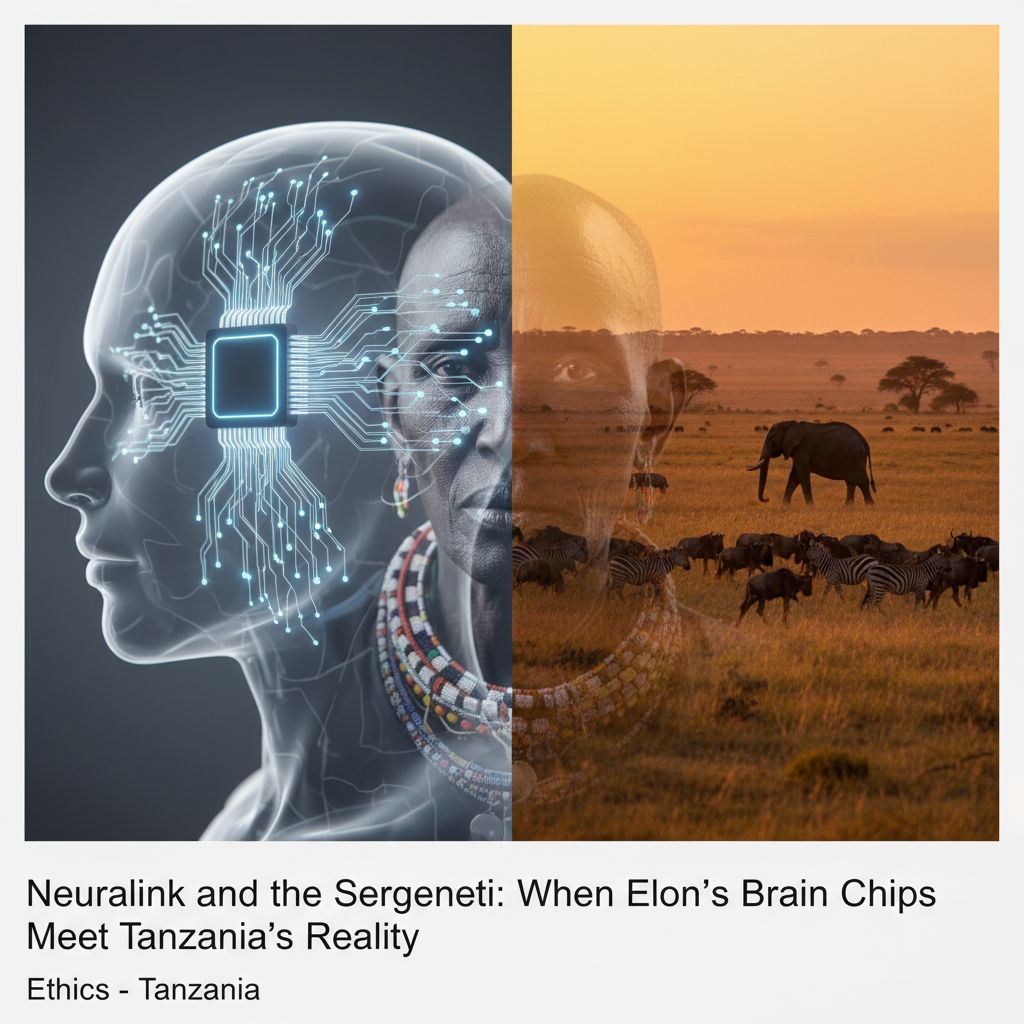

The news hit like a lightning bolt across the digital savannah: a human patient, Noland Arbaugh, playing chess with his mind, courtesy of Elon Musk’s Neuralink. For anyone who has followed the breathless promises of brain-computer interfaces, or BCIs, this was a moment of both awe and a healthy dose of skepticism. The man was moving a cursor, for crying out loud, with just his thoughts. It sounded like something out of a sci-fi movie, or perhaps a particularly ambitious episode of Bongo Flava music video. Welcome to the future, because it's weird.
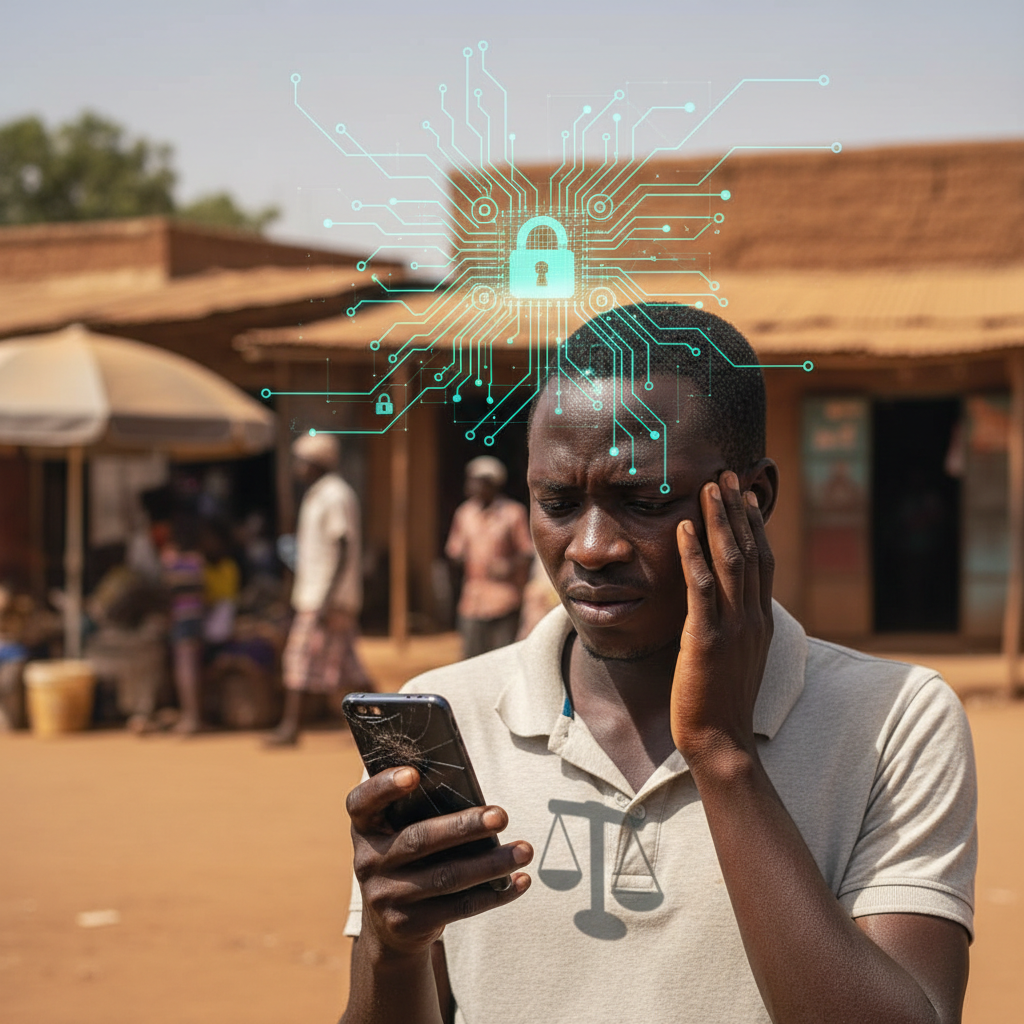
Now, for those of us watching from Dar es Salaam, or indeed anywhere beyond the gilded gates of Silicon Valley, the immediate reaction might be a shrug. “Mambo vipi?” we might say, “What’s up?” and then go back to navigating the daily dance of traffic, power outages, and the ever-present hustle. While the tech titans are busy implanting chips into skulls, most people here are still grappling with ensuring stable internet access, let alone connecting their brains to a computer. This attention gap, where groundbreaking advancements are met with indifference or outright ignorance in large parts of the world, is not just a curiosity; it is a chasm.
Why are most people ignoring it? Simple. The immediate, tangible impact is zero for the vast majority. It is a distant dream, a luxury item for a problem that, while profoundly debilitating, affects a relatively small percentage of the global population. When you are worried about the price of unga (maize flour) or the next heavy rain washing away your village road, the idea of a chip in your brain to help you type faster feels, well, a bit like a joke. It is the ultimate first-world problem solution, a technological marvel that exists in a bubble of immense wealth and specialized medical infrastructure. The cost alone, even if it were to become widely available, would make it prohibitive for millions, if not billions. We are talking about procedures that require highly skilled neurosurgeons, advanced imaging, and post-operative care that most public health systems, especially in developing nations, simply cannot provide.
But here is why you, dear reader, should care, even if you are not planning on getting a cranial USB port anytime soon. This is not just about a few individuals regaining function; it is about the very definition of human potential and the ethical tightrope we are walking. Imagine a world where a person who has lost their voice due to illness or injury can speak again, not through a robotic monotone, but with their own reconstructed voice, powered by their thoughts and an AI. Or someone blind since birth seeing the sunrise over Kilimanjaro for the first time. Or a person paralyzed from the neck down standing up and walking. These are not just medical breakthroughs; they are profound shifts in what it means to be human, to interact with the world, and to experience life. The implications for dignity, independence, and quality of life are immense. It affects you because it redefines the boundaries of what is possible, and those boundaries, once pushed, rarely return to their original place.
The bigger picture here is a kaleidoscope of societal, economic, and political implications. On the one hand, BCI technology, especially when supercharged by AI, promises to unlock unprecedented levels of human capability. It could revolutionize rehabilitation medicine, creating new industries and job markets for specialists in neuro-engineering, AI ethics, and personalized healthcare. Think of the economic boon if a significant portion of the population currently unable to work due to severe disabilities could re-enter the workforce, or contribute in new ways. The potential for increased productivity and innovation is staggering. However, there is a darker side. Who controls this technology? What happens if these devices are hackable? What about the privacy of our thoughts, our very consciousness, when it is interfaced with a machine? The digital divide, already a gaping wound, could become a neurological chasm, separating the 'enhanced' from the 'unenhanced.' Only in East Africa, as we say, do we see such a stark contrast between technological aspirations and ground-level realities.
Experts, as you might expect, are weighing in with a mix of excitement and caution. Dr. Anna Devor, a neuroscientist at Boston University, noted in a recent seminar, “The ability to decode neural signals with such precision, thanks to advanced AI algorithms, is truly transformative. We are moving beyond simple control to understanding the brain’s language itself.” Her optimism is tempered by the practicalities. “However, the path to widespread, equitable access is fraught with challenges, from surgical risks to the sheer cost of development and deployment.”
Meanwhile, Professor Juma Mbwana, a bioethicist at the University of Dar es Salaam, voiced concerns that resonate deeply here. “While the promise of restoring sight or movement is compelling, we must ask: who benefits first? And what are the long-term societal impacts if these technologies become a luxury good? We risk creating a new class divide, not just of wealth, but of biological capability.” He emphasized the need for international cooperation to ensure ethical guidelines and accessibility are baked into the development process, not bolted on as an afterthought. MIT Technology Review has extensively covered these ethical dilemmas, highlighting the urgent need for global dialogue.
Even industry leaders are acknowledging the tightrope walk. Demis Hassabis, CEO of Google DeepMind, has often spoken about the ethical imperative in AI development. While not directly involved in BCI hardware, his company’s work in AI algorithms is crucial for interpreting brain signals. He reportedly stated, “The power of AI means we must build it responsibly, with safety and societal benefit at its core. This applies doubly to technologies that interface directly with the human brain.” His words echo a growing sentiment that the 'move fast and break things' mantra needs to be retired when dealing with human biology.
What can you do about it? For starters, stay informed. Do not let the hype or the distance lull you into complacency. Engage in discussions about the ethics of enhancement, accessibility, and the future of human identity. Support initiatives that advocate for equitable access to advanced medical technologies, and push for policies that consider the global implications of such breakthroughs. Demand transparency from companies developing these devices. The conversation around these technologies cannot be confined to labs and boardrooms; it must be a public discourse, especially in regions like ours where the stakes for equitable development are so high. Read more about the latest developments in AI and health on TechCrunch.
The bottom line is this: in five years, these AI-powered brain-computer interfaces will not just be a niche medical treatment. They will be a topic of intense debate, a source of both profound hope and deep anxiety. They will challenge our legal frameworks, our understanding of disability, and perhaps even our definition of what it means to be alive and conscious. The technology is advancing at a terrifying pace; it is up to us to ensure that humanity, in all its diverse forms, keeps pace with it, and that these incredible tools serve all of us, not just a privileged few. You can’t make this stuff up; the future is already here, and it is asking us some very uncomfortable questions.