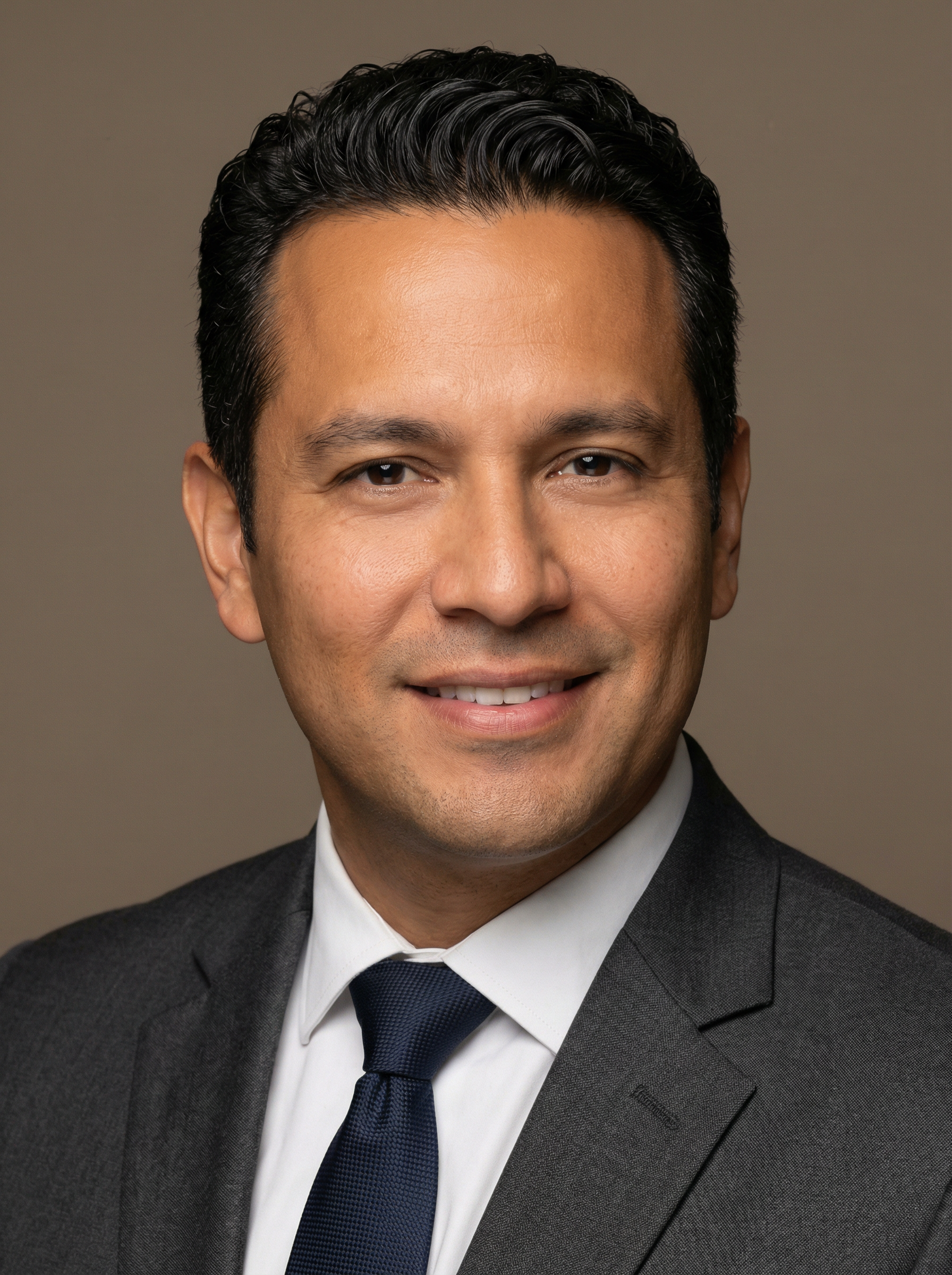
The fluorescent lights of the hospital waiting room always had a way of flattening everything, didn't they? The hope, the fear, the sheer complexity of it all. For too long, medicine has been a one-size-fits-all endeavor, a best guess based on population averages. But what if the answer to healing wasn't in a textbook, but encoded in your very own DNA, waiting for the right intelligence to unlock it? That's the future Dr. Andrew Trister is building, and trust me, this is the real AI revolution.
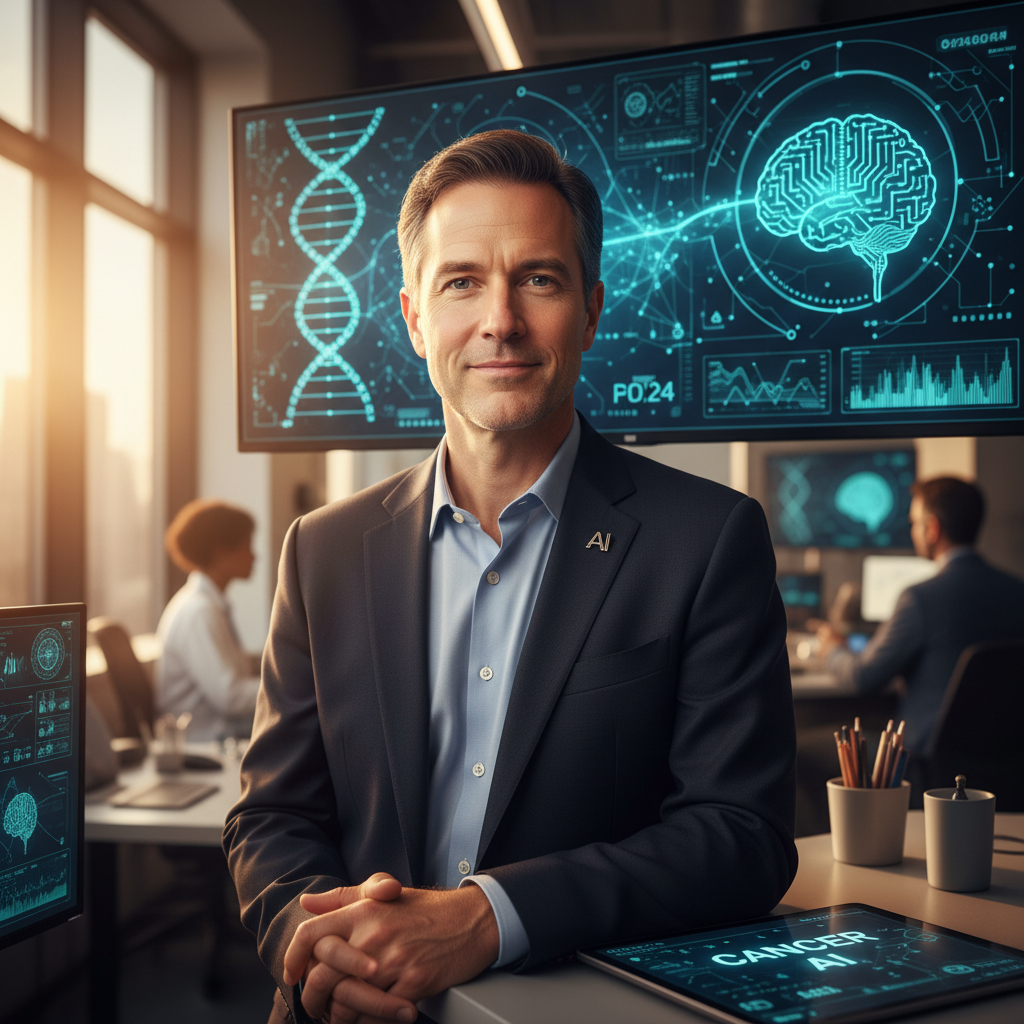
Trister, a physician and computer scientist, isn't your typical tech bro. He’s a guy who’s seen the front lines of human suffering and decided to do something about it with the most powerful tools available. His current venture, a stealthy but impactful startup, is diving deep into AI-powered personalized medicine, specifically in the brutal landscape of cancer treatment. His work is about moving beyond broad strokes and getting down to the granular, genetic level to tailor therapies that actually work for you, not just for the statistical average.
It’s a vision that feels both thrilling and inevitable, especially when you consider his background. Trister didn’t just wake up one day and decide to cure cancer with AI. His journey is a fascinating tapestry woven through some of the most innovative corners of American technology and medicine. He’s a product of a system that, despite its flaws, still churns out some of the brightest minds on the planet. He earned his MD from the University of California, San Francisco, and his PhD in computer science from the University of Washington. That dual expertise, the clinical insight paired with deep technical chops, is what makes him such a formidable force.
Before diving headfirst into the startup world, Trister spent significant time at Apple, serving as a senior director of health. Think about that for a second. Apple, a company synonymous with user experience and elegant design, had him at the helm of health initiatives. He was there helping shape how technology could empower individuals with their own health data, how it could make complex medical information accessible. That experience, I believe, was foundational. It taught him how to build intuitive systems for incredibly complex problems, a skill that's gold in the personalized medicine space.
But even before Apple, his career trajectory was anything but linear. He spent years as a radiation oncologist, confronting cancer daily. He saw firsthand the limitations of current treatments, the trial and error, the devastating side effects, and the heartbreaking reality that what worked for one patient might fail another with seemingly the same diagnosis. This wasn't just a theoretical problem for him; it was a deeply personal one. That clinical experience, that empathy for the patient, is what truly sets him apart from many AI founders who come purely from a software background.
The idea for his current venture, still largely under wraps but making waves in the biotech community, wasn't born in a vacuum. It was forged in the crucible of these experiences. The realization that genomic data, combined with advanced machine learning, could predict treatment response with unprecedented accuracy was a lightbulb moment. Instead of guessing, what if you could analyze a patient's specific tumor genetics, compare it against a vast database of clinical outcomes, and then recommend the most effective therapy, potentially saving precious time and lives?
This isn't sci-fi anymore. Companies like Google's DeepMind have shown what AI can do in protein folding with AlphaFold, and NVIDIA is pouring billions into healthcare AI infrastructure. The computational power and algorithmic sophistication are finally catching up to the biological complexity. Trister's approach is to harness this confluence, using AI to sift through mountains of genomic data, patient records, and clinical trial results to identify patterns invisible to the human eye. It's about finding that needle in the haystack, but the haystack is the size of the internet and the needle is a life-saving insight.
Building a company in this space is no small feat. It requires not just brilliant minds, but also trust, regulatory navigation, and significant capital. While details on his current startup's funding are kept close to the vest, the caliber of talent he attracts speaks volumes. He’s known for fostering a culture of rigorous scientific inquiry combined with a relentless focus on patient outcomes. It’s a delicate balance, but one he seems to master. He understands that in medicine, there’s no room for error, and the stakes couldn't be higher.
When I think about the future of AI in America, I often say, "Forget the Valley, look at Atlanta, Detroit, Houston." But sometimes, the Valley still produces these incredible individuals who then apply their talents to problems that transcend geography. Trister is one such individual. His work isn't just about building a successful company; it's about fundamentally altering the trajectory of human health. He's not just optimizing an ad platform; he's optimizing life itself.
What drives him? I reckon it's that initial spark, that frustration from the hospital floor, seeing patients suffer when better answers might exist. It's the belief that technology, when wielded with purpose and compassion, can be a profound force for good. "The potential for AI to truly revolutionize how we approach complex diseases, especially cancer, is immense," Trister has been quoted saying. "We're moving towards a future where treatment is as unique as the individual." This isn't just a business opportunity; it's a moral imperative.
The road ahead is long, of course. There are challenges with data privacy, regulatory hurdles, and the sheer complexity of human biology. But the progress is undeniable. We're seeing AI models now capable of predicting drug interactions, identifying novel therapeutic targets, and even assisting in surgical procedures. The integration of AI into clinical practice is no longer a distant dream, it's happening now. For more on the cutting edge of AI in medicine, you can always check out what's happening on MIT Technology Review or TechCrunch's AI section.
Trister's story is a powerful reminder that the most profound innovations often come from those who deeply understand the problem they are trying to solve. He’s not just a technologist; he’s a healer, armed with algorithms and a vision for a future where a cancer diagnosis isn't a death sentence, but a solvable puzzle, unique to each person. This is the future of AI being built in places you'd never expect, and by people who are truly driven to make a difference. It's an exciting time to be alive, especially if you're hoping for a healthier one. For deeper insights into the broader AI landscape, including ethical considerations, you might find articles on The Verge's AI section quite informative. And if you're interested in how AI is changing healthcare globally, some of our recent pieces, like one on how Google Gemini's medical applications are being scrutinized, might be relevant: When Google Gemini Prescribes Bad Medicine: How AI Hallucinations Become a Crisis for Venezuela's Health System [blocked].
What's next for Trister and his team? Continued innovation, relentless pursuit of clinical validation, and ultimately, bringing these life-saving technologies to patients who desperately need them. The promise of personalized medicine, once a distant dream, is now within our grasp, thanks to pioneers like him who dare to connect the dots between code and cure.