
You know, sometimes I look at these big tech companies, these global giants with their fancy algorithms and their even fancier valuations, and I just have to shake my head. They roll into our beautiful island, promising opportunity and flexibility, and for a while, it feels like a good thing. Our people, always resourceful, jump on board. They become the drivers, the delivery folks, the hosts, the digital yardies making a living. But then, the algorithms start to bite.
For years, we've watched from the sidelines as the gig economy exploded globally. Here in Jamaica, it's no different. From Kingston to Montego Bay, you see the familiar logos of Uber, Airbnb, and various local delivery services. They've provided jobs, yes, but they've also introduced a new kind of boss: the algorithm. This digital overseer dictates prices, assigns tasks, monitors performance, and can, with a flick of its binary wrist, deactivate a worker's account, often with little explanation or recourse. It's a power imbalance so stark, it makes the old factory boss look like a benevolent uncle.
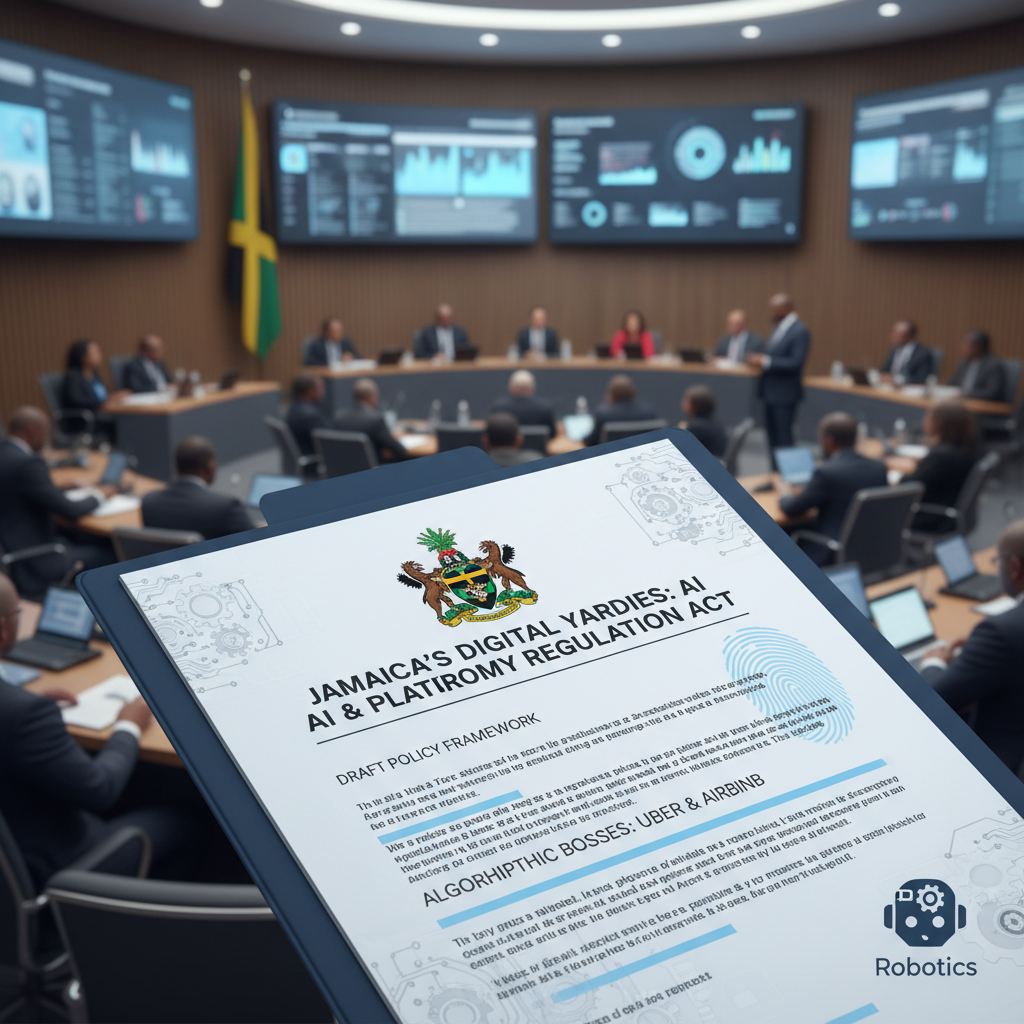
Now, finally, the Jamaican government is making moves to address this digital wild west. The Ministry of Labour and Social Security, in collaboration with the Ministry of Science, Energy and Technology, recently unveiled a draft policy framework aimed at regulating the use of artificial intelligence in the gig economy. This isn't just about protecting data, mind you, though that's part of it. This is about protecting people, our people, from the often-opaque and sometimes outright unfair practices driven by AI. It's a recognition that while small island, big ideas might be our motto, we also need big regulations to match big tech.
The Policy Move: Taming the Digital Beast
The proposed framework, still in its consultation phase, seeks to establish clear guidelines for how gig platforms use AI to manage their workforce. Key provisions include mandating transparency in algorithmic decision-making, ensuring human oversight for critical decisions like account deactivation, and establishing avenues for workers to appeal algorithmic judgments. It also touches on data privacy, requiring platforms to inform workers about what data is collected and how it's used, and giving them rights to access and correct that data. Furthermore, there's a strong emphasis on fair compensation models and ensuring that algorithms do not inadvertently discriminate based on factors like location, gender, or even perceived efficiency that might be culturally biased.
Minister of Labour and Social Security, Hon. Pearnel Charles Jr., speaking at a recent press briefing, emphasized the urgency. “Our workers deserve dignity and fairness, whether they are employed in a traditional setting or navigating the complexities of the digital economy,” he stated. “This policy is not about stifling innovation, but about ensuring that technological advancement serves our people, not exploits them. We must create a regulatory environment where the benefits of AI are shared equitably.” His words carry weight, especially for those who've felt the sting of an algorithm's cold shoulder.
Who's Behind It and Why: A Blend of Protection and Pragmatism
This push isn't coming out of nowhere. It's a culmination of years of advocacy from local labor groups, academic researchers, and even some forward-thinking entrepreneurs who understand that a stable, fairly treated workforce is good for business in the long run. The University of the West Indies, Mona campus, has been particularly vocal, with researchers like Dr. Aisha Campbell from the Department of Computer Science publishing extensively on the ethical implications of AI in developing economies. “We’ve seen the patterns globally, where algorithms optimize for profit at the expense of worker welfare,” Dr. Campbell noted in a recent seminar. “Jamaica has an opportunity to leapfrog some of these issues by implementing proactive, human-centric regulations now, before the problem becomes intractable.”
The motivation is clear: protect vulnerable workers, foster a more equitable digital economy, and ensure that Jamaica's burgeoning tech scene is built on a foundation of fairness. There's also a pragmatic element. Unchecked algorithmic control can lead to worker unrest, high turnover, and a negative perception of the gig economy, which could deter future investment and participation. By setting clear rules, the government hopes to create a predictable and stable environment for both platforms and workers.
What It Means in Practice: More Than Just a Pretty Policy Document
If this policy passes into law, it will mean a significant shift for gig workers. Imagine a driver for a ride-sharing app, let's call it 'IslandRide', who suddenly finds their account suspended. Under the new rules, IslandRide wouldn't just be able to send an automated message. They would be legally required to explain why the account was suspended, based on specific algorithmic inputs, and provide a clear, human-reviewed appeals process. This means no more arbitrary deactivations without explanation, a common complaint among gig workers globally.
For delivery services, it could mean more transparent pricing models, ensuring that the algorithm doesn't suddenly slash per-delivery rates without notice, leaving workers scrambling to make ends meet. It also implies a greater emphasis on data privacy, giving workers more control over their personal information that these platforms collect, which, let's be honest, is a lot. From GPS data to customer ratings, these platforms know a surprising amount about their workers. This policy aims to put some guardrails around that knowledge.
Industry Reaction: A Mix of Concern and Cautious Optimism
Unsurprisingly, the reaction from the industry has been varied. Global players like Uber and Airbnb, accustomed to operating with relative autonomy, have expressed concerns about potential operational complexities and increased compliance costs. A spokesperson for Uber, who requested anonymity as discussions are ongoing, mentioned, “We are committed to working with governments worldwide to ensure a fair and sustainable gig economy. However, overly prescriptive regulations can hinder innovation and impact the flexibility that drivers and riders value.” It's the usual song and dance, frankly. They always talk about innovation and flexibility when what they really mean is unchecked power and minimal overhead.
However, some local tech startups and smaller platforms have shown cautious optimism. Mr. Rohan Marley, CEO of 'YardDash', a local delivery service, sees it as an opportunity. “Jamaica’s tech scene is like reggae, it’ll surprise you, and this policy could actually level the playing field,” he told me. “If everyone has to play by the same transparent rules, it prevents larger, more established players from exploiting algorithmic loopholes. It fosters trust, and trust is crucial for growth in any market, especially here.” His perspective highlights that not all industry players are monolithic in their opposition to regulation, especially when it promotes fair competition.
Civil Society Perspective: A Long-Awaited Victory?
For civil society organizations and labor unions, this policy is a long-awaited step in the right direction. The Jamaica Confederation of Trade Unions (jctu) has been a vocal advocate for gig worker rights. Sister Beverly Johnson, President of the Jctu, commented, “For too long, these platforms have operated outside the traditional labor laws, creating a grey area where workers have few protections. This policy is a crucial first step towards recognizing gig workers as legitimate contributors to our economy, deserving of fair treatment and due process. It’s about humanizing the digital workplace.” Her sentiment resonates deeply with many who feel that technology, while offering convenience, has often stripped away basic worker rights.
There's also a strong ethical component. As AI becomes more sophisticated, its potential for bias, if left unchecked, is immense. Dr. Aliyah Khan, an independent AI ethics consultant based in Kingston, noted, “Algorithmic bias is a real threat, particularly in diverse societies like ours. If an algorithm is trained on biased data, it can perpetuate and even amplify discrimination, affecting who gets jobs, how much they earn, and even their ability to participate in the economy. This policy’s emphasis on transparency and non-discrimination is vital.” Her work, often highlighted in forums like Wired's AI section, underscores the global importance of these local regulatory efforts.
Will It Work? The Proof is in the Pudding, or Rather, the Policy Enforcement
So, will it work? That's the million-dollar question, isn't it? Crafting a robust policy is one thing; effectively enforcing it against global tech behemoths with deep pockets and even deeper legal teams is another entirely. The success of this initiative will hinge on several factors: the clarity of the final legislation, the resources allocated for enforcement, and the willingness of the Jamaican judiciary to uphold these new protections.
There's also the challenge of keeping pace with technological change. AI evolves at a dizzying speed, and what constitutes fair algorithmic practice today might be outdated tomorrow. The policy framework will need built-in mechanisms for regular review and adaptation. Furthermore, educating both workers and platforms about their rights and responsibilities will be crucial. Many gig workers, accustomed to the 'take it or leave it' nature of platform work, may not even be aware of their newfound protections.
However, Jamaica has a history of punching above its weight. Our resilience and ingenuity are legendary. If any nation can navigate the complexities of AI governance in a way that truly benefits its people, it's us. This isn't just about Jamaica; it's a blueprint for other developing nations grappling with similar issues. The world is watching, and frankly, I'm optimistic. Because when it comes to protecting our own, Jamaica always finds a way. We have to, because our future depends on it. This isn't just policy; it's progress. And it's about time. For more on how other nations are grappling with AI regulation, you can always check out MIT Technology Review. The global conversation is heating up, and Jamaica is now firmly in the mix. Just last month, I was reading a fascinating piece on how some countries are trying to balance innovation with ethical AI use, a topic that feels particularly relevant to our current situation. It's a complex dance, but one we're ready to lead. I mean, we did invent reggae, didn't we? We know a thing or two about setting a rhythm for the world to follow. And if you're curious about how AI impacts other parts of the world, there's a good article about how AI is affecting judicial systems in Peru that might be of interest: When AI Wears the Judge's Robe: Why Peru's Justice System Needs More Than Just Silicon Valley's Algorithms [blocked].