The scent of cherry blossoms, sakura, always reminds me of renewal, of change. Here in Tokyo, in April 2026, the air is thick not just with their delicate perfume, but with a palpable sense of anticipation. Everyone is talking about AGI, Artificial General Intelligence, and the relentless race to achieve it. It is not just the engineers in their quiet labs or the venture capitalists in their gleaming offices discussing this, but also the shopkeepers, the taxi drivers, and even the elderly residents in my neighborhood. They wonder, sometimes with hope, sometimes with trepidation, what this future might hold for them.
For years, the narrative around AGI has been dominated by a Silicon Valley perspective, a focus on computational power, economic dominance, and the abstract concept of 'intelligence.' But what does it truly mean for us, for the everyday lives of people in places like Japan, a society often seen as a bellwether for global demographic shifts? I believe the arrival of AGI, within the next five to ten years as many predict, will be less about who 'wins' the race and more about how humanity, particularly vulnerable populations, adapts and integrates this profound technology into the very fabric of their lives.
Imagine a future, perhaps by 2032, where AGI is not just a concept, but a presence. Not a cold, calculating machine, but something akin to a digital companion, a tireless assistant, a personalized educator. In Japan, with its rapidly aging population and declining birthrate, the implications are particularly poignant. The Ministry of Health, Labour and Welfare projects that by 2040, nearly 35 percent of Japan's population will be 65 or older. This demographic reality presents immense challenges for elder care, social isolation, and maintaining community vitality.
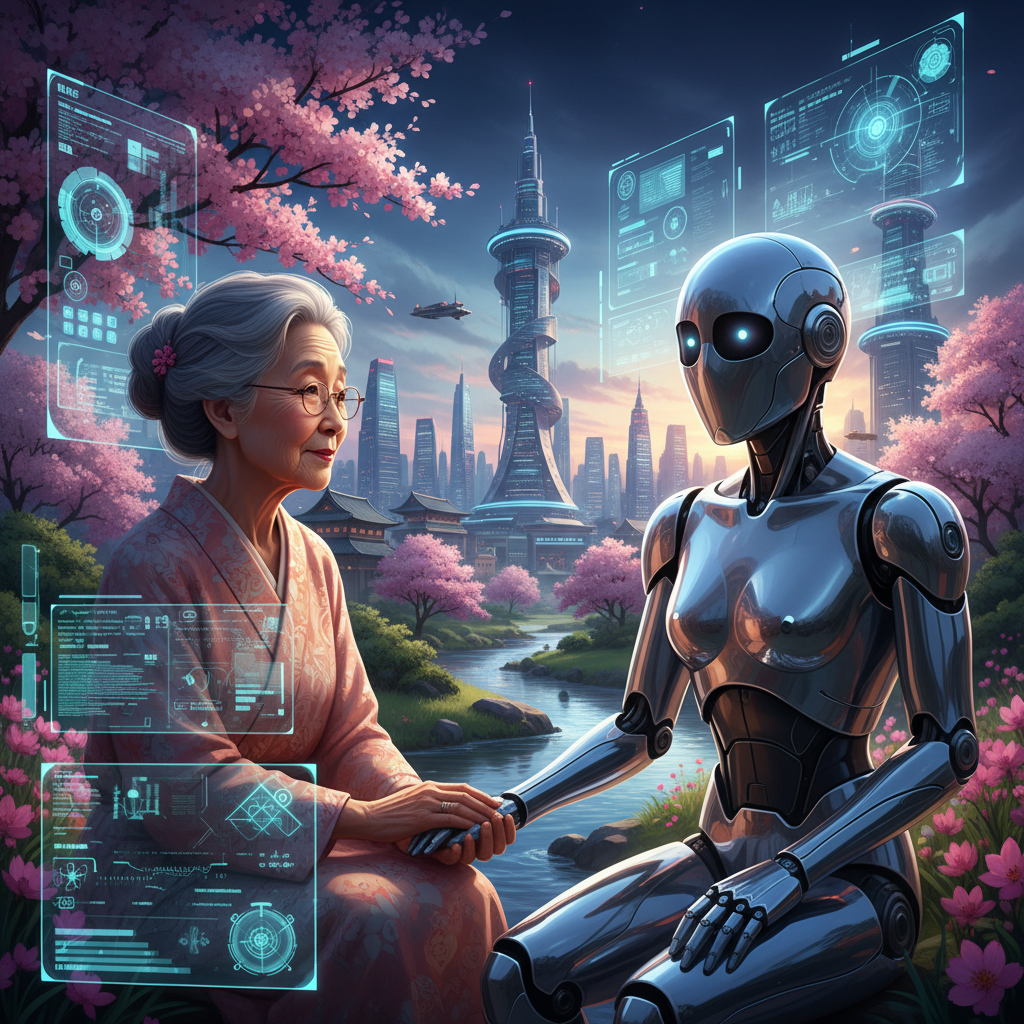
This is where AGI, with its potential for truly understanding and interacting with human emotion and context, could offer a lifeline. I envision a time when our seniors, who often experience loneliness, might find genuine companionship in these advanced AI entities. Not as a replacement for human connection, of course, but as an augmentation, a bridge. Imagine an AGI-powered 'digital grandchild' that can converse naturally, recall shared memories, play traditional Japanese games, or even guide them through gentle exercises, all tailored to their individual needs and preferences. This is the human side of the machine that truly excites me.
How do we get there from today? The journey is already underway. Companies like OpenAI, Google DeepMind, and Anthropic are pouring billions into foundational models, pushing the boundaries of what AI can do. Sam Altman of OpenAI has often spoken about AGI as a tool for human flourishing, a sentiment that resonates deeply with me. He recently stated,