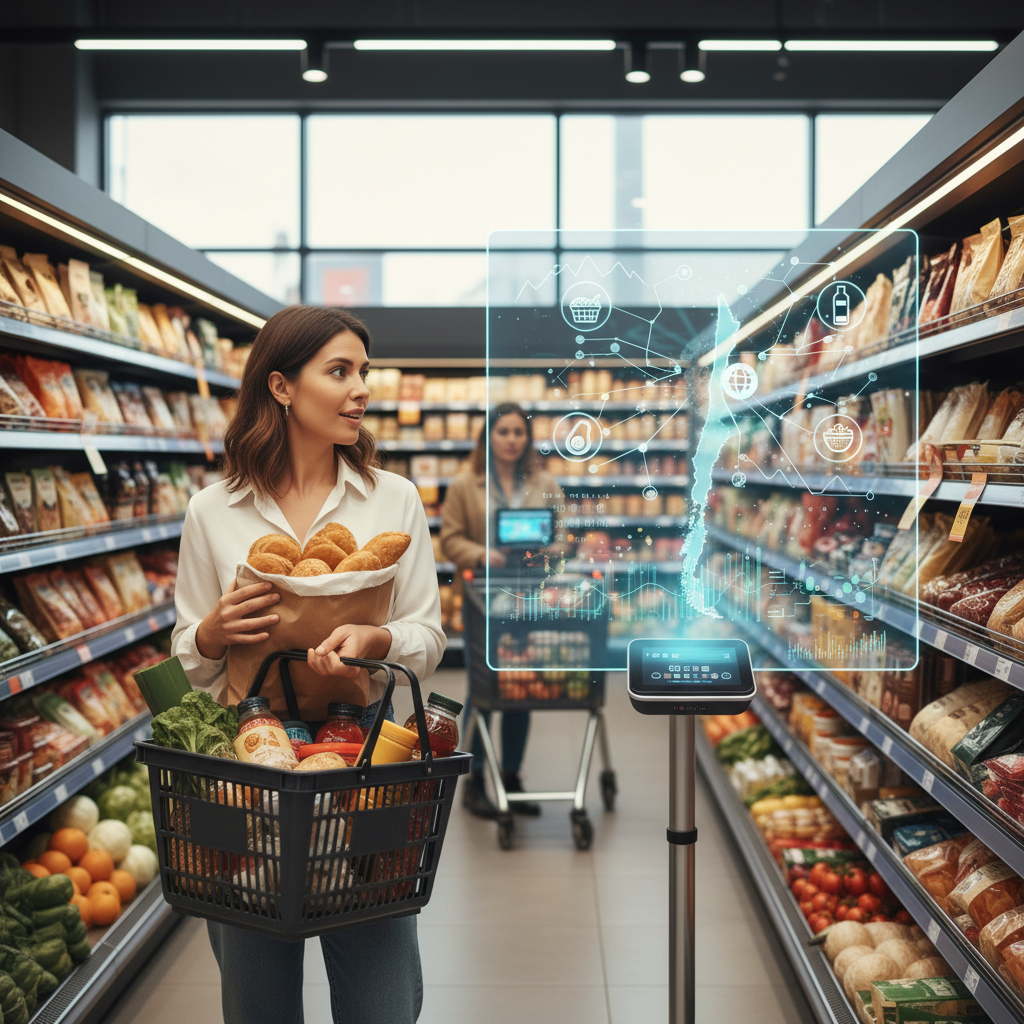

Let's be honest, the idea of a machine knowing what you want before you do can feel a bit… Orwellian, no? Like a digital paco watching your every move in the produce aisle. But here in Chile, from the bustling ferias of La Vega to the gleaming aisles of Jumbo and Lider, AI is quietly revolutionizing how we shop, making sure that when you suddenly crave a completo or a specific brand of manjar, it's actually there. And not just there, but presented to you in a way that feels almost, dare I say, personal. It's not magic, my friends, it's just very clever algorithms.
This isn't some far-off Silicon Valley fantasy. This is happening right now, influencing everything from the price of your avocados to the availability of that obscure Chilean craft beer you discovered last summer. We're talking about AI in retail, a triple threat of demand forecasting, inventory optimization, and personalized shopping experiences. It's the silent, digital hand guiding the invisible market, and frankly, it's fascinating, if a little unsettling.
The Big Picture: Making Retail Less Like a Guessing Game
Think about a typical supermarket. Thousands of products, fluctuating prices, unpredictable weather, holidays, promotions, and the ever-fickle tastes of the Chilean consumer. For decades, managing this was a Herculean task, relying on historical sales data, a manager's gut feeling, and perhaps a bit of brujería for good measure. The result? Too much stock of things nobody wanted, not enough of what everyone did, and a lot of wasted food and money.
AI steps in as the ultimate data cruncher, transforming this chaotic guessing game into a sophisticated science. Its goal is simple: ensure the right product is in the right place, at the right time, for the right customer, and at the right price. It's about efficiency, profitability, and, yes, a surprisingly tailored shopping experience. The Andes view of AI is different, we see it as a tool that can help us navigate our unique logistical challenges, from Patagonia to the Atacama, ensuring supply chains are robust and responsive.
The Building Blocks: What Makes This Digital Brain Tick?
So, how does this digital cerebro actually work? It's not one giant, all-knowing AI, but rather a collection of specialized models working in concert. Imagine a team of highly specialized ingenieros and estadísticos, each with their own task, all reporting to a central command.
-
Data Ingestion and Preprocessing: This is where the AI eats. It consumes vast amounts of raw data: past sales records, promotional calendars, weather patterns, local events like Fiestas Patrias, social media trends, competitor pricing, economic indicators, and even traffic data around stores. This data, often messy and incomplete, needs to be cleaned, structured, and made palatable for the algorithms.
-
Machine Learning Models: These are the brains of the operation. We're talking about various types of algorithms: recurrent neural networks (RNNs) for time-series forecasting, decision trees for classification, clustering algorithms for customer segmentation, and recommendation engines. Companies like Google and Amazon have poured billions into developing these, making them incredibly sophisticated. According to Reuters, investments in AI for retail continue to surge globally.
-
Cloud Infrastructure: All this data and processing power needs a home. Major cloud providers like Amazon Web Services (AWS), Microsoft Azure, and Google Cloud Platform provide the scalable infrastructure to run these complex AI systems without needing to build massive data centers in every comuna.
-
Integration Layers: The AI's insights aren't useful if they just sit in a digital void. They need to be integrated directly into existing retail systems: point-of-sale (POS), enterprise resource planning (ERP), warehouse management systems (WMS), and e-commerce platforms. This ensures that a forecast translates directly into an order placed with a supplier or a price change on a digital shelf.
Step by Step: From Data to Decision
Let's break down the journey from raw data to a perfectly stocked shelf and a happy customer.
Step 1: Demand Forecasting. This is the foundation. The AI analyzes historical sales data, looking for patterns. It identifies seasonality, like the spike in pan de pascua sales in December or chirimoya demand in spring. It factors in external variables: a heatwave means more ice cream, a football match might mean more cerveza and snacks. Promotions, holidays, school breaks, even local news events are all fed into the model. The output? A highly accurate prediction of how many units of each product will sell at a specific store on a given day or week.
Step 2: Inventory Optimization. With a solid demand forecast in hand, the AI then tackles inventory. It calculates the optimal stock levels for each product, considering lead times from suppliers, storage costs, shelf life, and the risk of obsolescence. The goal is to minimize both overstocking (which leads to waste and lost capital) and understocking (which leads to lost sales and unhappy customers). Imagine a store in Valparaíso needing a different inventory profile than one in Las Condes, the AI handles these nuances, ensuring the right mix for each location.
Step 3: Personalized Shopping. This is where things get really interesting, and a little bit personal. Based on your past purchases, browsing history, loyalty program data, and even what similar customers are buying, the AI creates a profile of your preferences. It then uses this profile to recommend products, offer personalized discounts, and even arrange the layout of an e-commerce site to highlight items you're more likely to buy. Think of it as a digital casamentero for you and your groceries. This is also where the AI can suggest that perfect Chilean Carmenere to go with your asado, based on your past wine choices. Chile's tech scene is like its wine, underrated and excellent, and this personalization is a prime example.
Step 4: Dynamic Pricing and Promotion. The AI doesn't stop at just knowing what you want. It also helps determine the best price. By continuously monitoring competitor prices, demand elasticity, and inventory levels, it can adjust prices in real-time. It also identifies optimal times for promotions, ensuring they maximize sales without eroding profit margins too much.
Step 5: Automated Replenishment and Logistics. Finally, the AI's insights trigger actions. Optimal inventory levels automatically translate into purchase orders sent to suppliers. Logistics systems are optimized to ensure efficient delivery routes, minimizing fuel costs and delivery times. This entire cycle is continuous, constantly learning and adapting.
A Worked Example: The Case of the Missing Mote con Huesillo
Let's say a supermarket chain in Santiago, let's call it 'SuperMercado Andes', wants to ensure they never run out of mote con huesillo during a heatwave. Traditionally, a manager might order extra based on last year's sales. But last year, perhaps there was a long weekend that skewed the numbers, or the weather was milder.
SuperMercado Andes' AI system, powered by something akin to Google's Vertex AI, ingests data: historical sales of mote con huesillo, daily temperatures for the past five years, forecasts for the next two weeks, local holiday schedules, and even social media mentions of mote con huesillo (because, let's face it, we Chileans love to talk about our food). It also knows that a major concert is happening near one of its stores, which usually boosts sales of cold beverages and snacks.
The AI predicts a 40% surge in mote con huesillo demand for the coming week, particularly in stores near the concert venue and in hotter comunas. It then checks current stock levels, factors in the supplier's delivery schedule (which might be slower due to the concert traffic), and automatically generates an order for additional units, ensuring they arrive just in time. Simultaneously, its personalized shopping module might push a 'Buy 2 Get 1 Free' offer for mote con huesillo to customers who frequently buy similar refreshing drinks, appearing in their SuperMercado Andes app. Santiago has something to say, and it's often about what's for dessert.
Why It Sometimes Fails: The Human Element and Unforeseen Events
While powerful, these systems aren't infallible. They are built on data, and if the data is biased or incomplete, the predictions will be flawed. For example, if a store historically served a specific demographic that has since changed, the AI might continue making recommendations based on outdated profiles. Unexpected global events, like a sudden supply chain disruption or a new government regulation, can also throw a wrench into the most sophisticated models. The AI can't predict a volcanic eruption in the south that halts transport, for instance, or a sudden shift in consumer preference that hasn't been captured in historical data. Furthermore, the ethical implications of data privacy and algorithmic bias are always a concern, especially when personalization borders on manipulation. As Wired often points out, the human element in oversight remains crucial.
Where This Is Heading: Hyper-Personalization and Autonomous Retail
The future of AI in retail is moving towards even greater autonomy and personalization. Imagine stores where shelves dynamically reconfigure based on real-time demand, or where robots manage inventory and restocking entirely. We're already seeing the rise of cashier-less stores, like Amazon Go, which use computer vision and sensor fusion to track purchases. Further advancements in generative AI could lead to hyper-personalized product development, where new items are created based on predicted future trends and individual customer desires. The lines between online and offline shopping will continue to blur, with AI providing a seamless, integrated experience across all channels. It's a brave new world for shopping, and whether you find it convenient or creepy, it's undeniably here to stay.