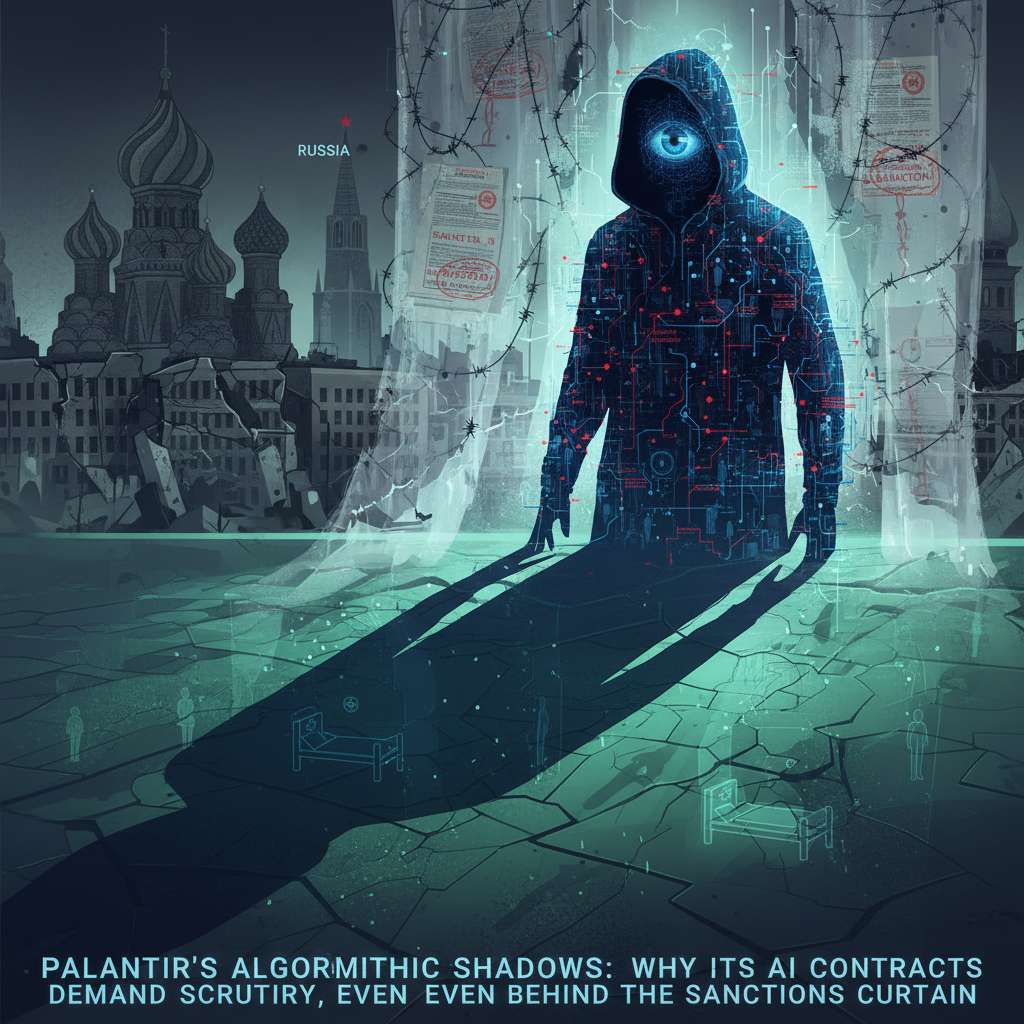

The digital frontier, much like the vast, unforgiving steppes of Siberia, is a landscape where power is increasingly consolidated by those who command information. In this modern arena, companies like Palantir Technologies stand as formidable, if often enigmatic, entities. Their artificial intelligence platforms, designed to sift through mountains of data for patterns and insights, have become indispensable tools for governments and intelligence agencies across the globe. Yet, the very nature of their work, shrouded in secrecy and often tied to sensitive state operations, demands rigorous scrutiny, particularly when considering its broader implications for international relations and societal trust. The official story doesn't always add up, and it is our duty as journalists to look beyond the polished press releases.
Palantir, co-founded by Peter Thiel, has built its reputation on providing sophisticated data analytics software to governments. Its platforms, notably Gotham and Foundry, are designed to integrate disparate datasets, from financial records to surveillance footage, and apply AI algorithms to identify connections, predict events, and support decision-making. While the company often highlights its utility in combating terrorism or managing supply chains, its involvement in controversial government contracts, particularly those related to immigration enforcement and defense, has sparked considerable debate. The core risk lies not merely in the technology itself, but in the power it confers and the lack of transparency surrounding its deployment.
Consider the technical explanation of such systems. Palantir's platforms are essentially sophisticated data fusion engines. They ingest vast quantities of structured and unstructured data from diverse sources: databases, documents, images, and even real-time feeds. Machine learning models, often proprietary, are then applied to this integrated data. These models can perform tasks such as entity extraction, anomaly detection, predictive policing, and network analysis. For instance, in a law enforcement context, the system might identify individuals based on their digital footprints, map their social connections, and even attempt to predict their future movements or intentions. The sheer scale and speed at which these analyses can be conducted far exceed human capabilities. The algorithms, however, are not infallible. They are trained on historical data, which can embed existing societal biases, leading to discriminatory outcomes. If the training data disproportionately represents certain demographics in criminal records, for example, the AI might flag individuals from those groups with higher probability, perpetuating and even amplifying systemic injustices.
Expert debate on this subject is sharply divided. On one side, proponents argue that Palantir's technology is a vital asset for national security and public safety. Alex Karp, Palantir's CEO, has consistently emphasized the company's commitment to Western values and its role in protecting democracies. He stated in a recent interview,