
The digital landscape, mi gente, it is a strange and ever-shifting beast. Just when you think you have a handle on what constitutes 'fame' or 'influence', along comes a new wave that makes you question everything. I am talking, of course, about AI influencers, those perfectly sculpted, perpetually cheerful, and utterly synthetic beings who are racking up millions of followers across platforms like Instagram, TikTok, and even YouTube. They are not just cartoons, no, these are sophisticated digital constructs, and their rise is a technical marvel, if a slightly unnerving one.
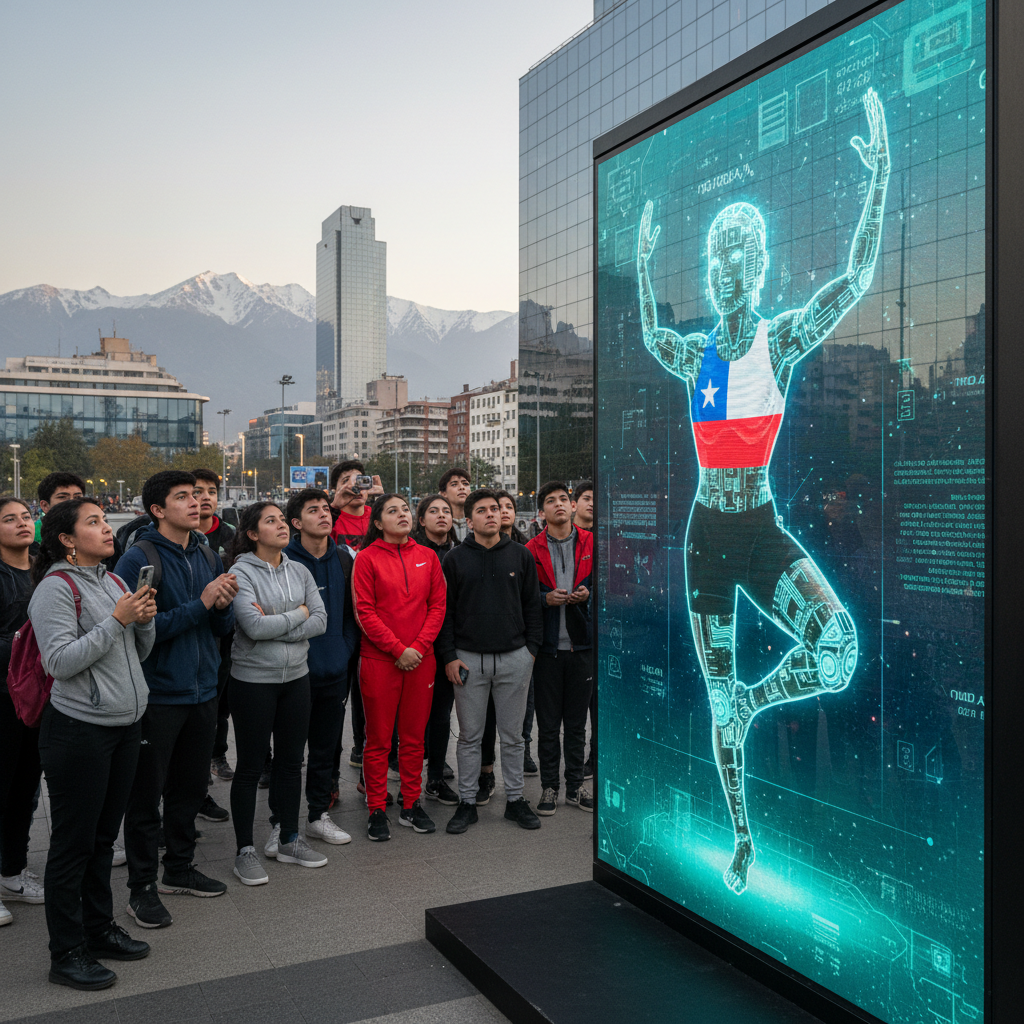
From my perch here in Santiago, with the Andes providing a rather dramatic backdrop to all this digital noise, I have been watching this phenomenon unfold. It is easy to dismiss them as a passing fad, another Silicon Valley eccentricity, but the underlying technology is serious business. We are talking about advanced generative AI, sophisticated rendering pipelines, and computational power that would make a supercomputer from a decade ago blush. And yes, Chile's tech scene, much like its wine, is underrated and excellent, and we have our own quiet observers and developers keenly watching this space.
The Technical Challenge: Crafting a Digital Persona From Pixels and Code
The core problem these virtual celebrities solve is simple: how do you create a compelling, consistent, and endlessly engaging digital persona without the messy, unpredictable baggage of actual human beings? The answer lies in a complex interplay of generative models, real-time rendering, and intelligent content generation. This is not just about making a pretty face, it is about crafting a narrative, responding to followers, and maintaining an illusion of sentience and personality.
Architecture Overview: The Digital Puppet Master's Stack
At a high level, the architecture behind a successful AI influencer is a multi-layered beast. Think of it as a digital puppet, but one that writes its own scripts, chooses its own outfits, and even improvises its own dance moves. The main components typically include:
- Persona Generation and Modeling: This is where the virtual celebrity's appearance and core personality traits are defined. This involves 3D modeling, texturing, rigging, and often, the use of generative adversarial networks, GANs, or more recently, diffusion models, to create hyper-realistic faces and bodies.
- Behavioral AI and Dialogue Systems: This is the 'brain' of the influencer. It includes natural language processing, NLP, for understanding comments and messages, and natural language generation, NLG, for crafting responses. Large language models, LLMs, like those from OpenAI or Anthropic, are central here, often fine-tuned on specific datasets to match the influencer's defined personality.
- Animation and Motion Synthesis: To make these digital beings move and express themselves, sophisticated animation techniques are employed. This can range from motion capture data applied to the 3D model to fully generative animation driven by AI, synthesizing movements based on text prompts or desired emotional states.
- Content Creation Pipeline: This is the engine that produces the actual social media posts, videos, and stories. It integrates the visual assets, AI-generated text, and synthesized audio into a cohesive piece of content, often automated to a significant degree.
- Deployment and Interaction Layer: This layer handles the actual posting to social media platforms, managing comments, and sometimes, real-time interaction with fans through chatbots or live streams.
Key Algorithms and Approaches: The Magic Behind the Screen
Let us get a bit deeper, shall we? The magic, if you can call it that, happens thanks to some serious computational heavy lifting, often powered by NVIDIA's formidable GPUs. For visual generation, diffusion models have largely superseded GANs for their stability and quality. Imagine a model that can take a text prompt like 'a confident young woman with flowing red hair sipping coffee in a Parisian cafe' and generate a photorealistic image. That is the power we are talking about.
For personality and dialogue, fine-tuned LLMs are paramount. These models are trained on vast amounts of text data, then further refined with specific conversational styles, slang, and even ideological stances to match the influencer's persona. For example, a virtual fashion influencer might have an LLM fine-tuned on fashion blogs, magazine articles, and celebrity interviews. The pseudocode for a simplified dialogue system might look something like this:
function generate_response(user_input, influencer_persona_model, conversation_history):
 # Preprocess user_input (tokenization, sentiment analysis)
 processed_input = preprocess(user_input)

# Query LLM with input and persona context
 # Example:
function generate_response(user_input, influencer_persona_model, conversation_history):
 # Preprocess user_input (tokenization, sentiment analysis)
 processed_input = preprocess(user_input)

# Query LLM with input and persona context
 # Example: