Ah, la bella vita. Here in Italy, we understand that true beauty often lies in collaboration, in shared passion, in the open exchange of ideas that makes a masterpiece. Think of our Renaissance workshops, where apprentices learned alongside masters, each contributing to a grand vision. This is why, when Stability AI burst onto the scene with its promise of open-source artificial intelligence, many of us, myself included, felt a kinship, a sense of hope for a more democratic future for technology. But like a perfectly crafted espresso that cools too quickly, the initial warmth surrounding Stability AI has given way to a bitter aftertaste.
For a time, Stability AI was the darling of the AI world. Its Stable Diffusion models democratized image generation, putting powerful creative tools into the hands of millions, not just a select few with deep pockets. This resonated deeply here, where art and design are woven into our very fabric. Italy does AI differently, with style, and the idea of AI as an accessible tool for artists and designers, rather than a corporate overlord, was intoxicating. We saw it as a modern echo of our artisanal traditions, where the tools of creation, though advanced, were meant to empower the individual.
However, the past year has seen a dramatic shift. The departure of its charismatic founder, Emad Mostaque, in March 2024, was just the beginning of a cascade of challenges. Mostaque, a figure who often spoke with the zeal of an evangelist, had championed a vision of AI that was free, accessible, and community-driven. He believed in the power of the crowd, the collective intellect that could push boundaries faster and more ethically than any single corporation. But the reality of running a venture-backed startup, one reportedly valued at over $1 billion at its peak, proved to be a different beast entirely. The demands for profitability, for a clear path to revenue, began to clash with the open-source ethos.
Sources close to the company, speaking anonymously to various tech publications, described internal turmoil, rapid expansion, and a struggle to monetize their groundbreaking models effectively. The dream of open-source idealism, it seems, was colliding head-on with the harsh realities of startup economics. "Innovation is wonderful, but investors want returns," a venture capitalist, who preferred not to be named given the sensitivity of the situation, told me recently. "The market for AI models is consolidating, and the giants like OpenAI and Google are moving at an incredible pace. Open-source needs a sustainable business model, not just good intentions." This sentiment is echoed across the industry, from Silicon Valley to our own burgeoning tech hubs in Milan and Turin.
Here in Italy, the implications are particularly poignant. We have a vibrant community of artists, designers, and small businesses eager to leverage AI. Many have embraced Stable Diffusion for everything from fashion design sketches to architectural visualizations. In a workshop in Milan, where artisans still hand-stitch leather goods, I spoke with Sofia Rossi, a young designer who uses AI to generate initial concepts for her bespoke handbags. "Stable Diffusion changed everything for me," she explained, her hands expertly guiding a needle. "I don't have the budget for expensive software or a team of graphic designers. This tool, because it was open, allowed me to compete. If it becomes closed, or too expensive, what then?" Her concern is palpable, a fear that the tools that once empowered her could become yet another barrier.
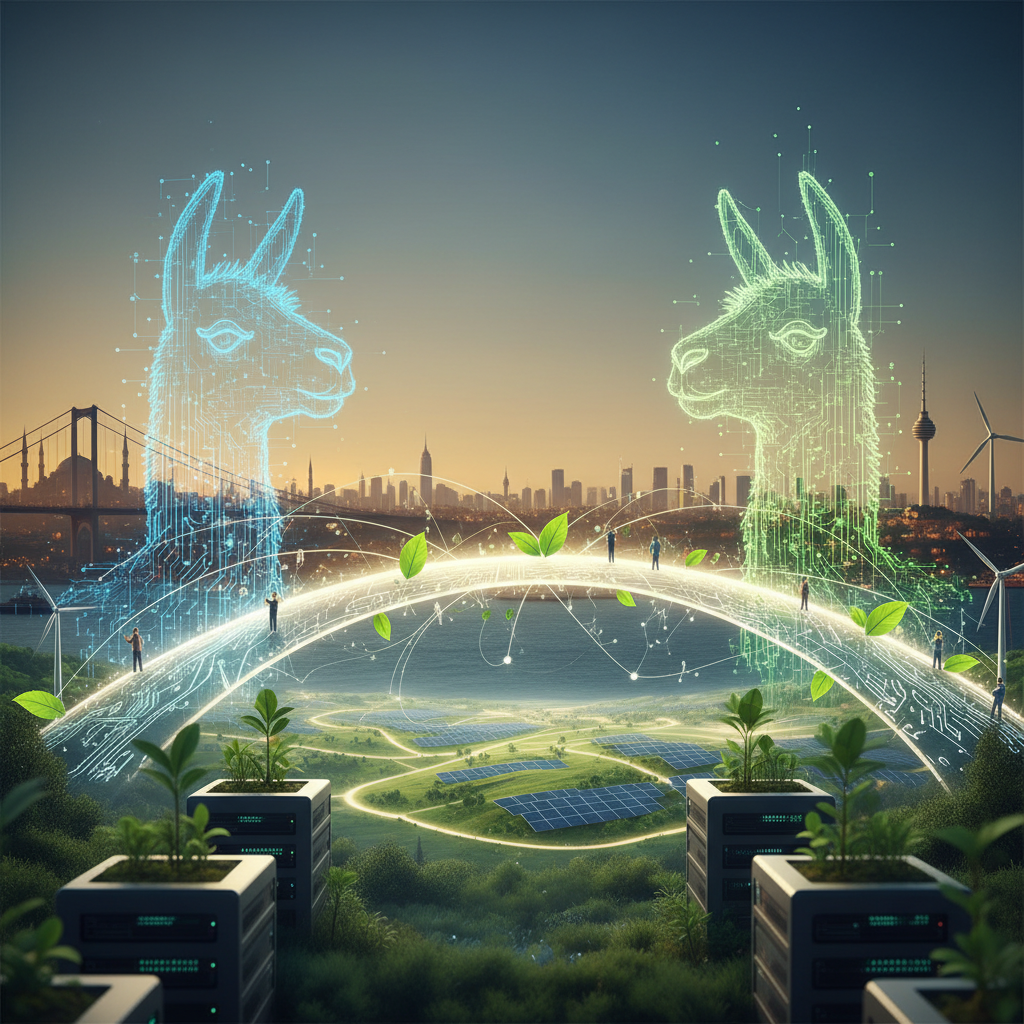
Indeed, the shift at Stability AI raises fundamental questions about the future of open-source AI. Can a company built on the principle of shared knowledge truly thrive in a landscape dominated by proprietary models and massive corporate investments? The answer is not simple. While companies like Meta continue to release powerful open-source models like Llama, their underlying business models are vastly different, relying on advertising revenue and a vast ecosystem of products. Stability AI, without that diversified revenue stream, found itself in a precarious position.
Recent reports indicate that Stability AI has been exploring various strategic options, including a potential sale or significant new funding rounds, often with less favorable terms than their earlier valuations. The company has also seen a significant exodus of key researchers and engineers, a talent drain that further complicates its future. This brain drain is a universal challenge in the AI space, but for a company built on intellectual capital, it is particularly damaging. The very people who built the open-source magic are now seeking new pastures, often at the very corporate giants that Stability AI once sought to challenge.
What does this mean for the broader AI ecosystem, especially for those of us in Europe who champion a more ethical and accessible approach to technology? The European Union, with its strong emphasis on regulation and responsible AI development, has often looked to open-source as a counterbalance to the power of American tech giants. The struggles of Stability AI serve as a stark reminder that idealism alone cannot sustain a company in a hyper-competitive market. "We need to foster environments where open-source AI can flourish sustainably," stated Dr. Elena Moretti, a leading AI ethicist at the University of Bologna. "This means not just celebrating the technology, but also supporting viable business models, perhaps through public-private partnerships or alternative funding mechanisms that align with open principles." Her words resonate with the ongoing discussions around the AI Act and Europe's digital sovereignty.
The journey of Stability AI is a microcosm of the larger tensions in the AI world: the tension between innovation and monetization, between open access and proprietary advantage, between the dreams of founders and the demands of investors. It reminds us that even the most revolutionary technology needs a solid foundation, not just a brilliant idea. As we sip our coffee here in Italy, watching the world of AI unfold, we are reminded that la dolce vita meets machine learning is not just about integrating technology into our lives, but about ensuring that the human spirit, the spirit of collaboration and accessibility, remains at its heart. The future of AI, like a great Italian recipe, needs both passion and a pragmatic understanding of its ingredients. The next chapter for Stability AI, whatever it may be, will undoubtedly offer more lessons for us all. For more on the evolving landscape of AI startups, you can always check out TechCrunch. The conversation around open source versus proprietary models is also a constant topic at MIT Technology Review.
It is a complex dance, this balance between radical openness and the need for a sustainable enterprise. The story of Stability AI is far from over, but it serves as a powerful parable for anyone hoping to build the next great AI company: the code might be open, but the path to success is often anything but. The question remains: can the spirit of open collaboration find a way to truly thrive, or will the allure of venture capital always lead to a more closed, more controlled future? Only time will tell, but here in Italy, we will be watching, and perhaps, offering our own unique perspective on how to blend innovation with enduring values. For a deeper dive into the ethical considerations of AI, particularly in creative fields, you might find this article on When OpenAI's Code Consumes Culture: Why the Copyright Clash Matters to Tajikistan's Artists and Beyond [blocked] insightful.