
For generations, the wisdom of our grandmothers has guided us in matters of health, passed down through whispers and remedies. In a small village in Guatemala, a curandera might tell you about the healing properties of rue or the calming effects of chamomile. But today, a different kind of wisdom, born of algorithms and data, is beginning to weave itself into the fabric of our healthcare, bringing with it the promise of early detection for some of our most formidable adversaries: cancer and heart disease.
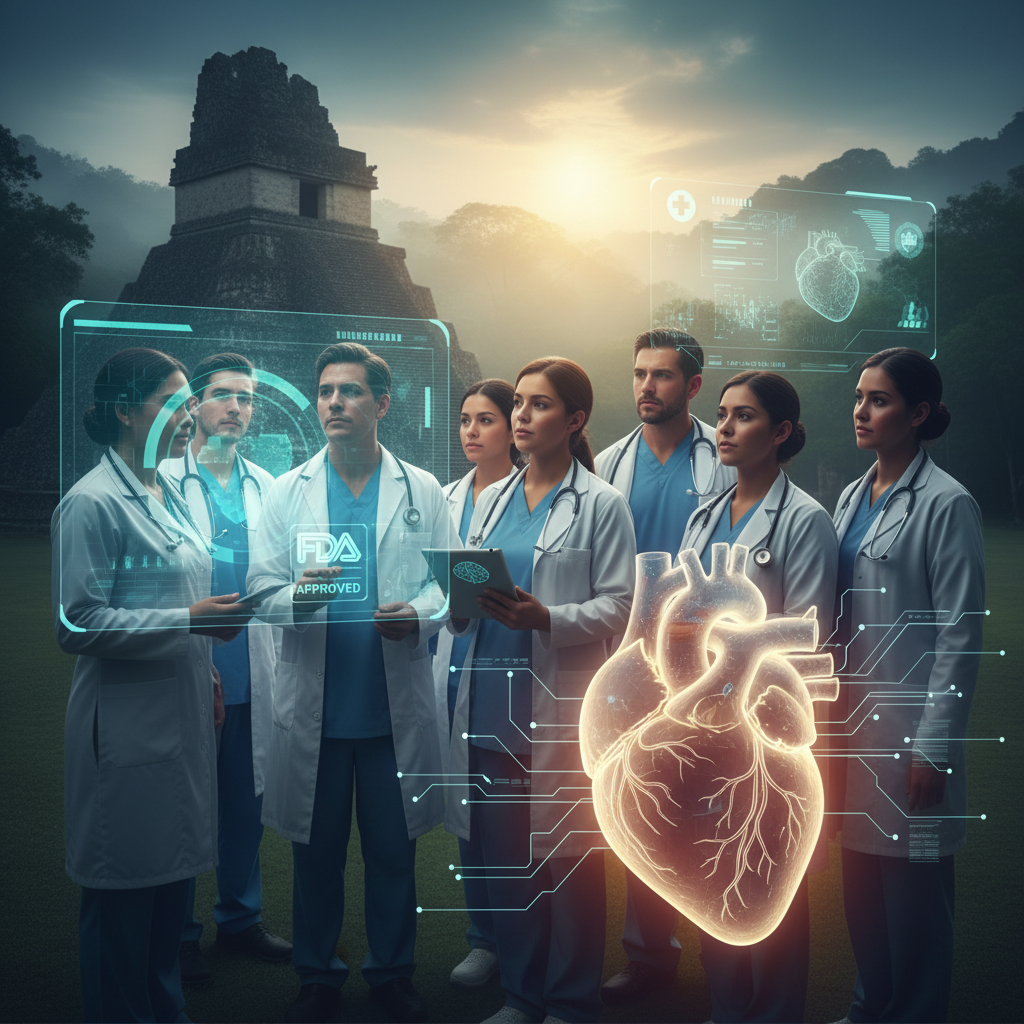
We are talking about AI, specifically the FDA-approved tools that are now being deployed globally, and increasingly, finding their way into places like Guatemala. These are not futuristic fantasies, but real, tangible systems that are helping doctors see what the human eye might miss, catching diseases at their earliest, most treatable stages. But how do these digital healers work? Let us break down this complex technology into something we can all understand.
The Big Picture: A Digital Detective for Your Health
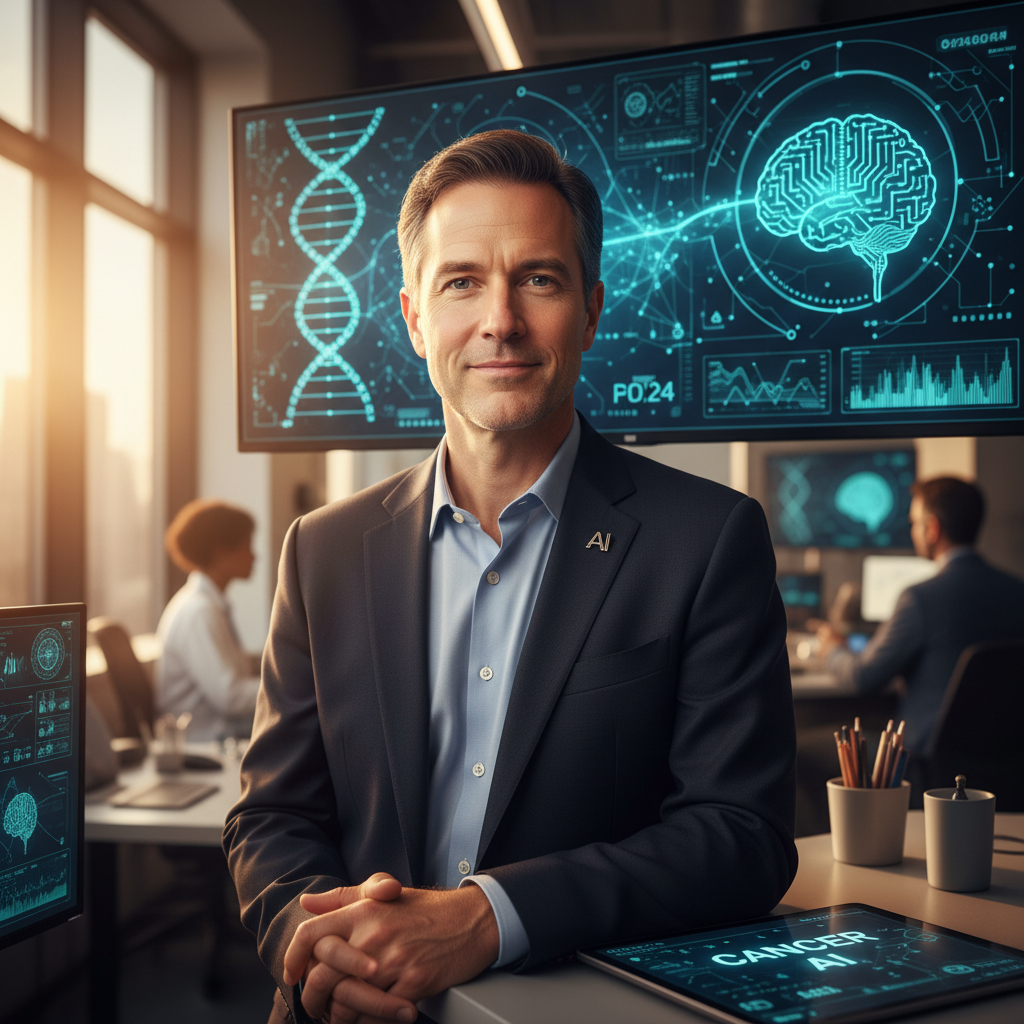
Imagine a highly skilled detective, one who can sift through millions of clues in seconds, connecting patterns that are invisible to the average person. That is essentially what AI in healthcare diagnostics does. Its primary mission is to analyze vast amounts of medical data, such as X-rays, CT scans, MRIs, and even electrocardiograms, to identify anomalies that could indicate serious conditions like cancer or heart disease. The goal is simple yet profound: to help doctors make faster, more accurate diagnoses, ultimately saving lives.
These systems are not replacing doctors, a common fear I hear when discussing AI in our communities. Instead, they are powerful assistants, like a second, tireless pair of eyes that never gets fatigued. Dr. Ricardo Morales, a leading cardiologist at Hospital General San Juan de Dios in Guatemala City, recently told me, “The AI does not make the final decision, but it highlights areas of concern with incredible precision. It is like having a super-powered magnifying glass for every image we examine. It allows us to focus our human expertise where it is most needed.”
The Building Blocks: What Makes This Digital Detective Tick?
At the heart of these AI diagnostic tools are what we call 'machine learning models,' particularly deep learning, a subset of AI inspired by the structure of the human brain. Think of it like this:
- Data, Data, Data: Just as a child learns by observing countless examples, these AI models learn by being fed enormous datasets of medical images. For instance, to detect lung cancer, an AI might be trained on millions of CT scans, some showing cancerous nodules, others showing healthy lungs, all meticulously labeled by expert radiologists. This is where companies like Google Health and IBM Watson have invested heavily, curating and anonymizing vast medical archives.
- Neural Networks: These are the 'brains' of the AI. They are layers of interconnected nodes, much like neurons in our own brains. When an image is fed into the network, each layer processes different features: edges, textures, shapes, and patterns. It is a bit like how a textile artisan in Chichicastenango learns to recognize the intricate patterns of a huipil, identifying each thread and color combination.
- Pattern Recognition: Through repeated training, the neural network learns to identify subtle patterns and features within the images that correlate with specific diseases. It learns to distinguish a benign calcification from a malignant tumor, or a healthy heart rhythm from one indicating a risk of failure. This is where her grandmother's wisdom meets machine learning, in a way, as both rely on recognizing patterns and subtle cues, albeit one through generations of observation and the other through computational power.
Step by Step: How the AI Works Its Magic
Let us walk through a typical scenario, imagining someone in a rural clinic in Quetzaltenango undergoing a diagnostic test:
-
Step 1: Image Acquisition: A patient undergoes a medical imaging procedure, perhaps a mammogram for breast cancer screening or an echocardiogram for heart health. The resulting digital images are captured and sent to a secure system. This is the 'input' for our digital detective.
-
Step 2: Pre-processing: The images might need some cleaning up. This could involve adjusting brightness, contrast, or removing noise, ensuring the AI gets the clearest possible view. It is like polishing a jade stone before examining its intricate details.
-
Step 3: AI Analysis: The cleaned images are then fed into the trained AI model. The neural network rapidly processes the image, layer by layer, looking for the specific patterns it has learned to associate with disease. For example, an AI tool like Google's Retinal AI for diabetic retinopathy, which is showing promise in early detection, processes retinal scans to identify microaneurysms or hemorrhages that indicate the condition.
-
Step 4: Anomaly Detection and Scoring: The AI identifies areas of interest and assigns a probability score. For instance, it might flag a specific lesion in a CT scan and report,