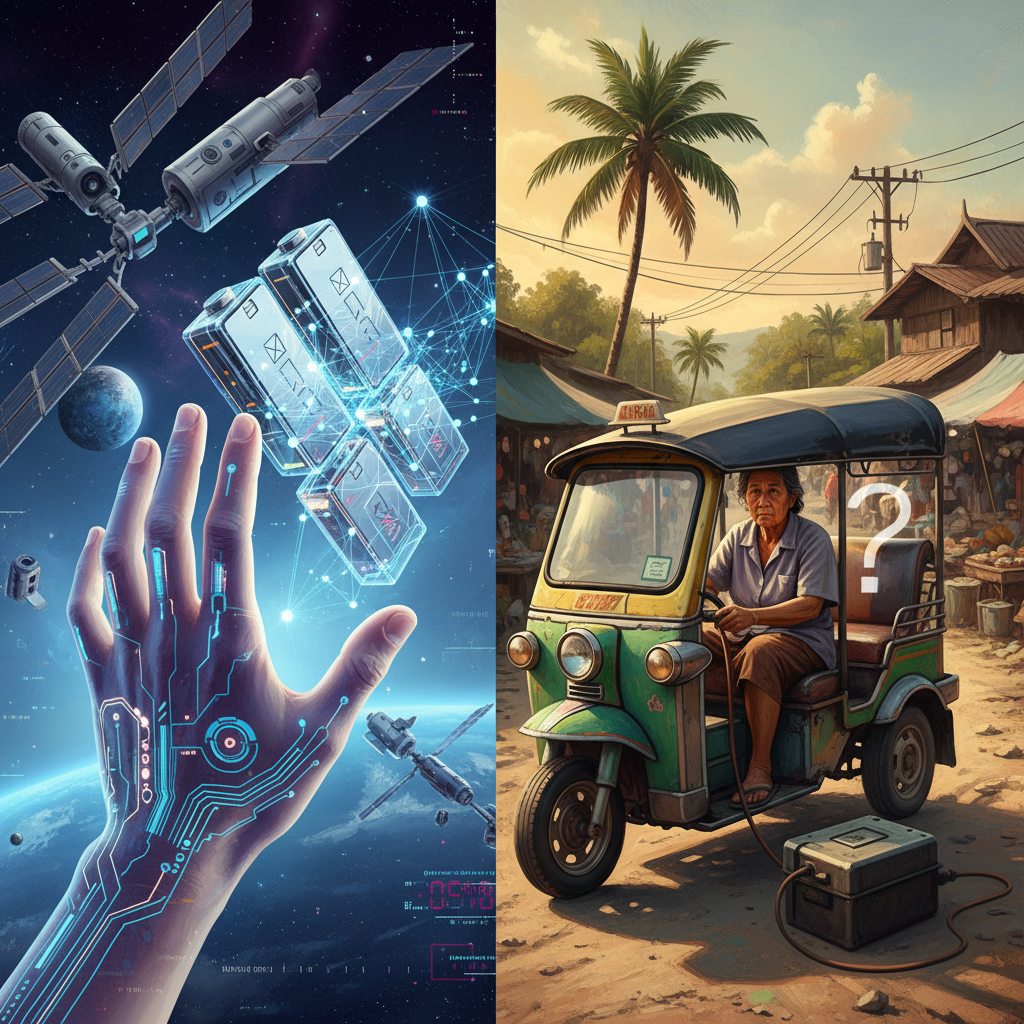

In Myanmar, the whisper of opportunity often comes wrapped in the harsh realities of our daily lives. We see the world changing, technologies advancing at a dizzying pace, and sometimes it feels like we are watching from a distance, yearning for a piece of that progress. This is especially true when we talk about artificial intelligence, a force that promises to reshape everything, from how we communicate to how we heal.
Today, I want us to look at a concept that might seem far removed from our villages and cities, but holds profound implications for our future: Sovereign AI and how companies like NVIDIA are shaping its global footprint, particularly in healthcare.
What is Sovereign AI, and Why Does NVIDIA Care?
Imagine a country deciding it wants to build its own digital brain, a national AI system that is developed, owned, and controlled entirely within its borders. This is, in essence, sovereign AI. It is about a nation's desire to cultivate its own artificial intelligence capabilities, using its own data, for its own people, without relying solely on foreign tech giants. Think of it as digital self-determination.
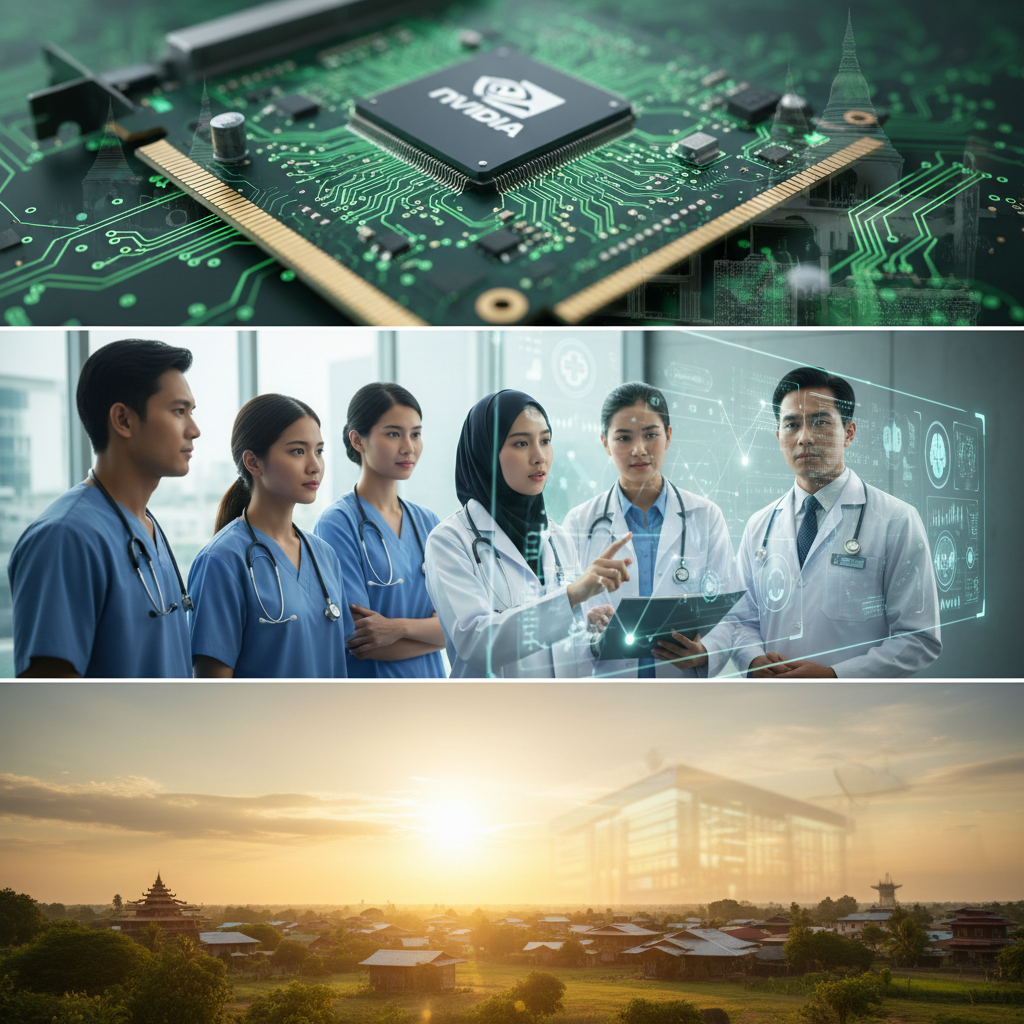
NVIDIA, the company famous for its powerful graphics processing units, or GPUs, is at the heart of this global movement. These GPUs are the engines that power most of today's advanced AI models, from large language models to complex medical imaging analysis. Jensen Huang, NVIDIA's CEO, has often spoken about the importance of nations having their own AI infrastructure. He sees a future where every country, regardless of its size, will need its own 'AI factories' to process data and develop applications relevant to its unique challenges and cultural context. NVIDIA is positioning itself as the key enabler, providing the hardware, software, and expertise to help countries build these national AI supercomputers.
Why Should You Care? The Stakes for Healthcare
For us, in Myanmar, the stakes are different. We are not just talking about economic growth or technological prestige; this is about survival, not convenience. Healthcare in our nation faces immense challenges: limited resources, a shortage of specialized doctors, and vast geographical disparities in access. Could sovereign AI offer a path to better health outcomes for our people?
Consider a scenario where an AI system, trained on anonymized data from Myanmar's diverse population, could assist doctors in remote clinics with diagnosing complex diseases, interpreting medical scans, or even predicting outbreaks of dengue fever or malaria. Such a system, built and managed locally, could be tailored to our specific epidemiological patterns and cultural nuances, offering a lifeline where traditional healthcare infrastructure struggles to reach.
Without sovereign AI, we risk a future where our most sensitive health data is processed and analyzed by systems residing in other countries, potentially subject to foreign laws and priorities. We risk relying on AI solutions designed for populations with vastly different health profiles and needs. Imagine an AI trained predominantly on data from European or North American populations trying to diagnose a rare tropical disease prevalent only in Southeast Asia. The results could be catastrophic.
How Did This Idea Develop?
The concept of sovereign AI is not entirely new, but it has gained significant traction in recent years. It stems from growing concerns about data privacy, national security, and economic competitiveness. As AI became more powerful and pervasive, governments around the world realized that relying solely on a handful of global tech companies for critical AI infrastructure could be a strategic vulnerability. The Covid-19 pandemic further highlighted the need for localized, data-driven solutions in public health.
Countries like France, Japan, and India began investing heavily in national AI strategies, aiming to foster local talent, build supercomputing centers, and develop AI models tuned to their specific languages, cultures, and industries. NVIDIA, with its dominant position in AI hardware, naturally became a crucial partner for many of these initiatives. They offer not just chips, but entire platforms like DGX systems and software suites like Cuda, making it easier for nations to jumpstart their AI ambitions.
How Does It Work in Simple Terms?
Think of it like building a national library, but instead of books, it houses vast amounts of digital information, and instead of librarians, it has super-fast computers that can read and understand this information to generate new insights. NVIDIA provides the 'shelves' (the powerful GPU hardware) and the 'reading machines' (the software tools and frameworks).
Here is a simplified breakdown:
- Data Collection and Storage: A nation gathers its own data, perhaps anonymized patient records, medical images, or public health statistics. This data is stored securely within the country's borders.
- Supercomputing Infrastructure: NVIDIA provides the high-performance computing systems, often clusters of their DGX servers, which are essentially supercomputers designed for AI. These machines are installed in national data centers.
- AI Model Development: Local researchers and engineers use these powerful machines and NVIDIA's software to train AI models on the national dataset. They might develop models for medical diagnosis, drug discovery, or personalized treatment plans.
- Deployment and Application: The trained AI models are then deployed within the country's healthcare system, assisting doctors, informing public health policies, or empowering citizens with better health information.
The key is that the entire process, from data to deployment, remains largely within the nation's control, fostering local expertise and ensuring data security.
Real-World Examples in Healthcare
Several countries are already embarking on sovereign AI initiatives with a strong healthcare focus, often in collaboration with NVIDIA:
- Japan's AI for Drug Discovery: Japan has been investing in sovereign AI to accelerate drug discovery, particularly for diseases prevalent in its aging population. By leveraging NVIDIA's DGX systems, Japanese researchers are training AI models on vast genomic and proteomic datasets to identify new drug candidates and optimize treatment protocols. This reduces reliance on foreign pharmaceutical giants and strengthens national health security.
- France's Health Data Hub: France has established a national Health Data Hub, a secure platform for sharing health data for research and innovation. They are using NVIDIA's AI infrastructure to enable French researchers to develop AI applications for personalized medicine, disease prediction, and optimizing hospital operations, all while adhering to strict European data privacy regulations like GDPR.
- India's National AI Strategy for Public Health: India, with its massive and diverse population, is exploring sovereign AI solutions for public health challenges. Initiatives include using AI for early disease detection in rural areas, optimizing vaccine distribution, and developing AI-powered diagnostic tools for conditions like tuberculosis and diabetic retinopathy, leveraging local data and talent to build scalable solutions.
- Singapore's AI Singapore (aisg): While not strictly a 'sovereign AI' initiative in the sense of building a national supercomputer from scratch, Aisg is a national program that fosters local AI capabilities. They collaborate with partners like NVIDIA to provide compute resources and expertise to local startups and researchers, developing AI solutions for healthcare, including predictive analytics for patient outcomes and AI-assisted surgery. This ensures that the benefits of AI are localized and aligned with Singapore's national priorities.
These examples show that sovereign AI is not just a theoretical concept; it is being actively pursued to address real healthcare needs.
Common Misconceptions About Sovereign AI
One common misconception is that sovereign AI means a country completely isolates itself from global AI advancements. This is rarely the case. Instead, it is about building a strong domestic foundation that can then selectively integrate global innovations on its own terms. It is about having a seat at the table, not shutting the door.
Another misunderstanding is that it is solely about hardware. While powerful GPUs are essential, sovereign AI also encompasses developing local talent, fostering an AI ecosystem, and establishing robust data governance frameworks. Without these, even the most advanced hardware remains an empty shell.
Finally, some believe sovereign AI is only for wealthy nations. While the initial investment can be substantial, the long-term benefits in terms of national security, economic independence, and improved public services, especially healthcare, can be transformative for developing nations. Technology can be a lifeline, if wielded thoughtfully.
What to Watch for Next
The road ahead for sovereign AI, especially in healthcare, is complex. We need to watch for several key developments:
- Data Governance and Ethics: How will nations balance the need for vast datasets to train powerful AI with individual privacy rights? Myanmar, like many countries, must establish clear ethical guidelines and legal frameworks. The European Union's AI Act, for instance, offers one model for stringent regulation, which could influence global standards. You can read more about global AI developments on TechCrunch.
- Talent Development: Building sovereign AI requires a skilled workforce. Nations will need to invest heavily in education and training programs to cultivate local AI engineers, data scientists, and ethicists. This is a critical area where international partnerships, perhaps with organizations like Unesco or even private companies, could play a vital role.
- Accessibility and Equity: How will sovereign AI initiatives ensure that the benefits reach all citizens, not just those in urban centers? The digital divide is a stark reality in many parts of the world, including Myanmar. Solutions must be designed with rural communities and underserved populations in mind.
- The Role of Open Source: Will sovereign AI initiatives embrace open-source AI models and frameworks, or will they lean towards proprietary solutions? The choice has significant implications for collaboration, transparency, and the pace of innovation. MIT Technology Review often covers these debates.
For us in Myanmar, understanding sovereign AI is not just an academic exercise. It is about envisioning a future where our own people can harness the power of AI to solve our own problems, particularly in healthcare. It is about ensuring that the digital revolution serves the many, not just the few, and that our data, our health, and our future remain firmly in our hands. The conversations happening today, about NVIDIA's partnerships and national AI strategies, will shape the world our children inherit. We must ensure our voices are heard in that conversation. For more on how AI is impacting global society, check out Wired's AI section.