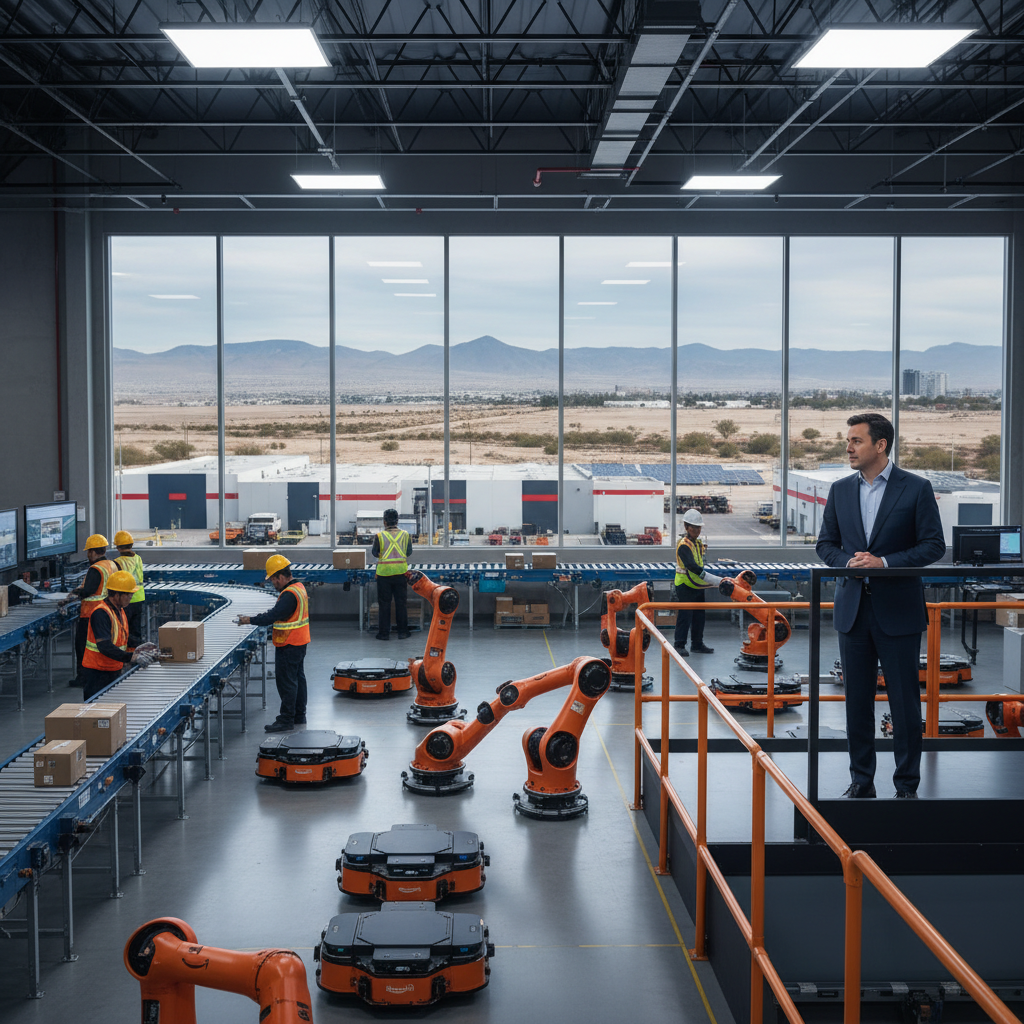

The hum of servers and the quiet click of keyboards fill the air in Kore.ai's growing Querétaro office. It is a scene that could be anywhere in the world, but here, in the heart of Mexico's burgeoning tech corridor, it signifies something more profound: a tangible link between global AI innovation and local economic opportunity. While the tech headlines often scream about OpenAI's latest moves, a company like Kore.ai, headquartered in Florida but with a significant footprint across the Americas, is quietly, effectively, and powerfully reshaping how large enterprises operate. They are not just selling AI, they are selling efficiency, intelligence, and a future where human workers are augmented, not replaced, by sophisticated digital assistants.
I have always believed that la tecnología es para todos, and Kore.ai's approach embodies this philosophy. Their focus on practical, industry-specific applications of conversational AI and generative AI is a stark contrast to some of the more abstract, generalist approaches we see from the tech giants. This company is not just building chatbots, it is building intelligent virtual assistants and process automation tools that understand context, integrate with complex enterprise systems, and deliver measurable return on investment. It is the kind of AI that truly empowers businesses, from financial institutions to healthcare providers, to serve their customers better and streamline their internal operations.
The Origin Story: From Vision to Enterprise Powerhouse
Kore.ai was founded in 2014 by Raj Koneru, a seasoned entrepreneur with a track record in enterprise software. Koneru saw the nascent potential of conversational AI long before it became a mainstream buzzword. His vision was not just to create a better chatbot, but to build an end-to-end platform that could handle the complexities of enterprise-grade interactions. This meant moving beyond simple FAQ bots to intelligent virtual assistants capable of fulfilling requests, automating tasks, and integrating seamlessly with back-end systems like CRM, ERP, and HR platforms. The company's early days involved significant investment in natural language understanding (NLU) and natural language generation (NLG) capabilities, focusing on making these interactions feel natural and intuitive for both employees and customers. They recognized early on that for AI to be truly transformative in the enterprise, it needed to be reliable, secure, and scalable.
The Business Model: AI as a Service for the Enterprise
Kore.ai operates on a software-as-a-service (SaaS) model, offering its platform to large enterprises across various industries. Their core offering, the Kore.ai Experience Optimization (XO) Platform, allows businesses to design, build, deploy, and manage intelligent virtual assistants for a multitude of use cases. These range from customer service automation, where virtual assistants handle routine inquiries and escalate complex issues to human agents, to employee support, where they assist with HR queries, IT help desk tickets, and internal knowledge management. They also provide specialized solutions for industries like banking, healthcare, and retail. The revenue model is typically subscription-based, often tiered by usage, number of virtual assistants deployed, or the complexity of the solutions. This predictable revenue stream is attractive to investors and allows for continuous reinvestment in research and development.
Key Metrics: Growth and Global Reach
While Kore.ai is a privately held company, market reports and industry analysts paint a picture of significant growth. They have consistently been recognized as a leader in the conversational AI space by firms like Gartner and Forrester, often lauded for their comprehensive platform and strong execution. The company has secured substantial funding, including a reported $50 million Series C round in 2021, and has expanded its global footprint with offices in the US, India, the UK, and, importantly, Mexico. Their client roster includes a significant number of Fortune 500 companies and large global enterprises, though specific client names are often confidential due to the nature of their work. The expansion into Mexico, particularly with an engineering and development center in Querétaro, underscores their strategic focus on nearshoring and tapping into the rich talent pool available in our country. This move allows them to serve North American clients more effectively while also exploring opportunities within the burgeoning Latin American market.
The Competitive Landscape: Navigating a Crowded Field
Kore.ai operates in a highly competitive market. On one side, they contend with established tech giants like IBM with Watson Assistant, Google with Dialogflow, and Microsoft with Azure Bot Service. These companies leverage their vast cloud infrastructures and deep pockets. On the other side, a multitude of specialized conversational AI startups and even larger enterprise software providers like Salesforce, with its Einstein Bots, offer competing solutions. The recent surge in generative AI, spearheaded by OpenAI's ChatGPT Enterprise, has also intensified the competition, with many companies now looking to integrate large language models (LLMs) into their existing platforms. Kore.ai's differentiation lies in its enterprise-grade focus, its robust security and compliance features, and its ability to offer a complete, end-to-end platform rather than just a component. They emphasize a low-code/no-code approach, empowering business users to build and manage virtual assistants without extensive programming knowledge, which is a significant advantage for large organizations with diverse technical capabilities. Their ability to integrate LLMs from various providers, including OpenAI, into their platform, allows them to offer cutting-edge generative AI capabilities while maintaining their core strengths in enterprise integration and workflow automation.
The Team and Culture: A Global Endeavor
Raj Koneru, as CEO, is known for his hands-on approach and a strong emphasis on customer success. The company culture, as reported by employees and industry observers, is one of innovation, collaboration, and a relentless pursuit of solving complex enterprise problems. With development teams in India, sales and support across North America and Europe, and a growing presence in Mexico, Kore.ai fosters a diverse, global workforce. This global perspective is critical, especially when developing AI solutions that need to understand various languages, cultural nuances, and regulatory environments. The Querétaro office, for example, is not just a call center; it is a hub for engineering talent, contributing directly to the platform's development and customization for regional needs. This investment in local talent is vital for building AI that truly resonates with diverse populations and business practices.
Challenges and Controversies: The Road Ahead
Like any rapidly growing tech company, Kore.ai faces its share of challenges. Scaling operations while maintaining product quality and customer satisfaction is a constant balancing act. The rapid evolution of AI technology, particularly the advancements in generative AI, means they must continuously innovate to stay ahead of the curve. Data privacy and security remain paramount concerns for enterprise clients, and Kore.ai must continually invest in robust safeguards and compliance with regulations like GDPR and Ccpa. Furthermore, the ethical implications of AI, such as potential job displacement or algorithmic bias, require careful consideration and transparent development practices. Integrating new AI capabilities, like those from OpenAI, while ensuring stability and performance across a vast enterprise client base is a complex technical and strategic challenge.
The Bull Case and the Bear Case: A Future Divided?
The bull case for Kore.ai is strong. The demand for intelligent automation and conversational AI in the enterprise is exploding, driven by the need for efficiency, cost reduction, and improved customer experiences. Kore.ai's established platform, strong customer base, and ability to integrate cutting-edge generative AI position it well to capture a significant share of this market. Its strategic expansion into regions like Mexico also opens up new growth avenues. As enterprises increasingly look beyond generic LLMs to tailored, secure, and integrated AI solutions, Kore.ai's value proposition becomes even more compelling. The company’s focus on industry-specific solutions, for example in healthcare, where AI can streamline patient interactions and administrative tasks, shows a clear path to continued relevance and growth. According to TechCrunch, enterprise AI spending continues to climb, creating a fertile ground for specialized players.
The bear case, however, points to the intense competition and the potential for larger players with deeper pockets to commoditize certain aspects of conversational AI. If OpenAI or Google were to offer highly customized, enterprise-ready solutions at a significantly lower cost, it could put pressure on Kore.ai's market share. The challenge of integrating new AI models and maintaining a competitive edge in a rapidly changing technological landscape is also considerable. Furthermore, the complexity of enterprise sales cycles can sometimes slow growth, and the need for significant customization for large clients can strain resources. The bear case also considers the ongoing talent war for AI engineers, which can drive up operational costs and impact innovation speed.
What's Next: AI for a Connected World
Looking ahead, Kore.ai is poised to continue its trajectory as a key player in the enterprise AI space. I expect to see further integration of advanced generative AI capabilities into their platform, allowing for even more sophisticated and human-like interactions. Their expansion in Mexico and other emerging markets is not just about cost savings, it is about building a truly global and diverse AI ecosystem. This affects every family in Latin America, as these technologies reshape industries and create new job categories. The focus will likely remain on delivering measurable business outcomes, demonstrating clear ROI for their clients, and adapting to the ever-evolving landscape of AI ethics and regulation. As companies grapple with the complexities of digital transformation, platforms like Kore.ai's will become indispensable tools, bridging the gap between raw AI power and practical business application. It is a testament to the fact that Mexico's AI story is not being told, until now, and companies like Kore.ai are helping to write its most exciting chapters. The future of enterprise AI is not just about the biggest names, it is about the companies that can deliver real, tangible value, and Kore.ai is certainly doing that. For more insights into how AI is transforming industries, you can explore reports from MIT Technology Review. The journey of AI in the enterprise, particularly in regions like ours, is just beginning, and it promises to be a fascinating one.