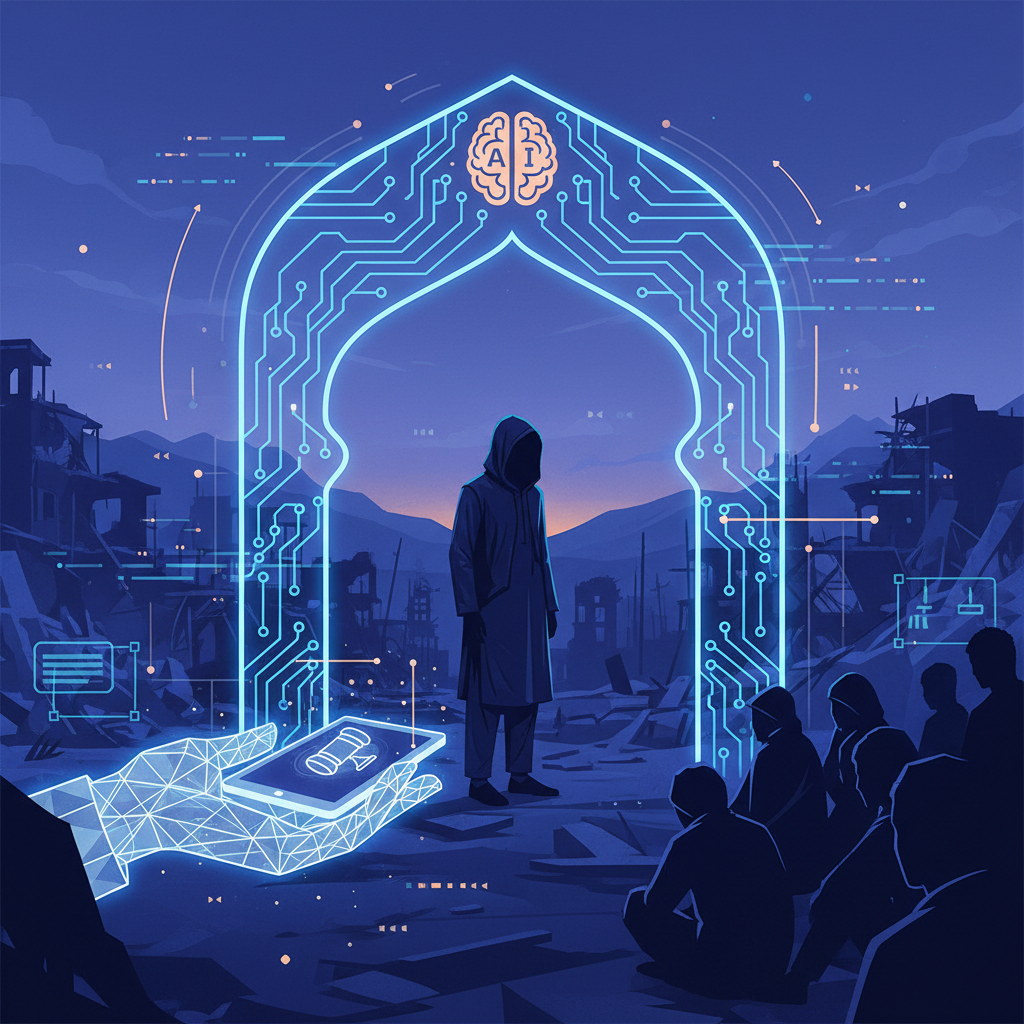
The dusty, bustling streets of Kabul, where ancient traditions meet the stark realities of modern struggle, might seem a world away from the gleaming data centers powering the latest advancements in legal artificial intelligence. Yet, the echoes of innovation, particularly in areas like contract analysis, case prediction, and automated legal research, reverberate even here. Companies like OpenAI and Google are pushing the boundaries of what machines can do, promising efficiency and access to legal information on an unprecedented scale. But from my vantage point in Afghanistan, I must ask: for whom is this efficiency, and to what end will this access lead?
The narrative often presented by tech giants is one of universal benefit, a rising tide of algorithmic precision lifting all boats. We hear of AI systems that can sift through millions of legal documents in seconds, identify critical clauses, predict case outcomes with startling accuracy, and even draft initial legal briefs. This is undeniably powerful technology. For overburdened legal systems in developed nations, the allure of streamlining processes and reducing costs is immense. However, in contexts like ours, where the legal framework itself is often fragile, access to justice is a luxury, and the rule of law is frequently contested, the introduction of such sophisticated tools without careful consideration risks widening the chasm between the privileged and the vulnerable.
Consider the fundamental premise of these AI systems: they learn from vast datasets of existing legal documents, case precedents, and judicial decisions. In Western legal traditions, this might represent centuries of established law. But what happens when these systems are applied to jurisdictions with nascent legal codes, or where customary law and religious interpretations hold significant sway alongside formal statutes? What happens when the historical data itself is riddled with biases, reflecting decades or even centuries of systemic injustice against women, minorities, or the poor? An algorithm trained on such data will not magically correct these biases; it will amplify them, embedding them deeper into the very fabric of our legal future. Behind every algorithm is a human story, and if that story is one of oppression, the algorithm will tell it again and again.
I recently spoke with Dr. Aisha Khan, a prominent legal scholar and advocate for women's rights in Afghanistan, who expressed profound skepticism. “The idea that a machine, however intelligent, can understand the nuanced interplay of local customs, tribal codes, and formal law, let alone the lived experience of a woman seeking justice in a remote village, is naive at best,” she told me. “Our legal system, despite its flaws, requires human empathy, cultural understanding, and a deep appreciation for context. An AI, even one powered by Google’s Gemini or Anthropic’s Claude, cannot replicate that. It can only process what it is fed, and what it is fed from our region is often incomplete or skewed.”
The proponents of legal AI often counter by arguing that these tools are merely assistants, designed to augment human lawyers, not replace them. They suggest that by automating tedious tasks, lawyers can focus on more complex, human-centric aspects of their work. This argument holds some weight in well-resourced environments. However, in places where legal aid is scarce and lawyers are few, the introduction of expensive, complex AI tools could further concentrate power and resources in the hands of a select few who can afford or understand them. This is not about efficiency; this is about dignity. If technology is to truly serve the most vulnerable, it must first be accessible, understandable, and culturally appropriate.
Furthermore, the very concept of “case prediction” raises ethical dilemmas that are particularly acute in fragile states. If an AI can predict with high accuracy that a certain type of case, involving a certain demographic, will likely fail, will this lead to a chilling effect, discouraging individuals from even attempting to seek legal redress? Will it create a self-fulfilling prophecy, where the AI's predictions inadvertently shape judicial outcomes by influencing legal strategy and resource allocation? The opaque nature of many proprietary AI models, often developed by companies like Microsoft or IBM, means that the underlying logic and potential biases remain hidden, making accountability nearly impossible.
“We are not merely talking about contract review for multinational corporations,” observed Professor Karimullah Safi, who teaches at Kabul University’s Faculty of Law. “We are talking about land disputes, family law, criminal justice. These are matters of life and death, of fundamental human rights. The idea of delegating even a fraction of that decision-making power to an algorithm, especially one developed thousands of miles away with little understanding of our unique societal fabric, is deeply concerning. We must demand transparency and local ownership in the development and deployment of these tools.”
My concern is not with the technology itself, but with its application and governance. The potential for AI to democratize access to legal information, to empower individuals with knowledge of their rights, and to expose systemic corruption is real. Imagine an AI system, locally developed and culturally sensitive, that could help rural communities understand complex land ownership documents, or guide women through the intricacies of family law. Imagine it translating legal jargon into local dialects, making justice comprehensible. This vision, however, requires a deliberate, ethical, and inclusive approach, one that prioritizes the needs of the marginalized over the profits of tech giants.
The path forward is not to reject AI, but to reclaim its promise. We must insist that the development of legal AI is not solely driven by Silicon Valley's priorities, but informed by the diverse needs of humanity. This means investing in local AI talent, fostering open-source initiatives that allow for transparency and adaptation, and creating regulatory frameworks that demand accountability and fairness. Organizations like the Afghanistan Independent Bar Association, despite immense challenges, could play a pivotal role in advocating for these principles.
Technology should serve the most vulnerable, not further entrench their disadvantage. If AI in legal tech is to be a force for good in places like Afghanistan, it must be built with empathy, transparency, and a profound understanding that justice is not just a matter of logic, but of human experience. Otherwise, the promise of algorithmic justice will remain a distant echo, unheard by those who need it most. We must ensure that the scales of justice, when balanced by artificial intelligence, are truly balanced for all, not just for the powerful.
For further reading on the broader implications of AI in society, consider exploring resources from Wired or MIT Technology Review. The debate on AI ethics and governance is ongoing and crucial for our collective future. You can also find more about the latest developments in AI startups and industry news on TechCrunch.