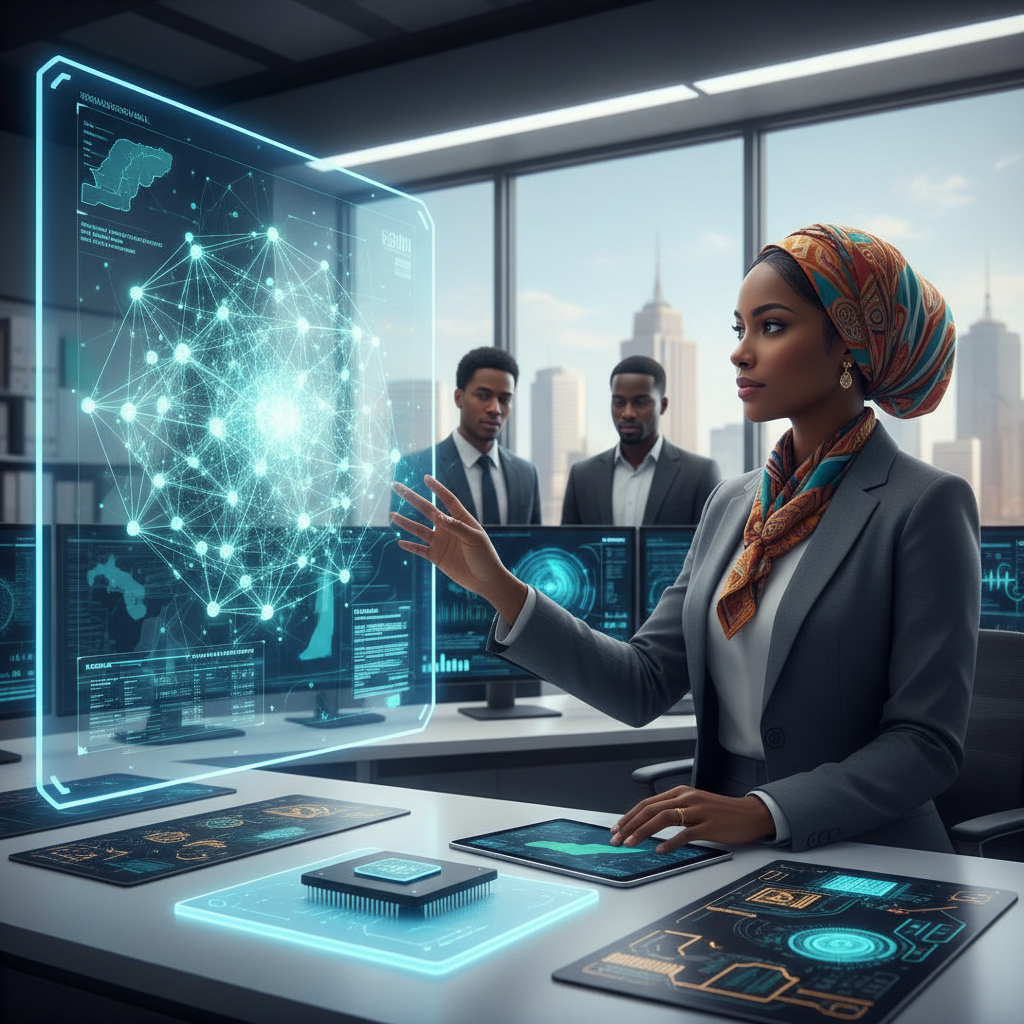
The morning sun, as it spills over the Nile Delta, often illuminates a landscape of bustling human activity. From the fields to the factories, the rhythm of life here has long been defined by people. But something new is stirring, a metallic whisper in the industrial hum, and it comes from an unexpected corner: humanoid robots. For years, we've heard the whispers of automation, the distant hum of machines taking over tasks. Now, in Egypt, one of our industrial titans, El-Sewedy Electric, is not just whispering but actively deploying these bipedal automatons in its manufacturing facilities. This isn't just about efficiency; it's a strategic gamble with profound implications for Egypt and, indeed, for the wider African continent.
The Strategic Move: El-Sewedy Electric's Robotic Embrace
El-Sewedy Electric, a name synonymous with infrastructure and manufacturing across the Middle East and Africa, has begun a phased integration of humanoid robots into its cable and electrical product manufacturing lines. While specific numbers remain proprietary, reports from within the industry suggest a pilot program involving several dozen units, primarily from Boston Dynamics and Agility Robotics, is underway, with plans for significant scaling by late 2027. These aren't just your typical industrial arms; these are robots designed for human-centric environments, capable of navigating complex spaces, handling delicate components, and even interacting with human co-workers in a limited capacity. The initial focus is on repetitive, high-precision tasks and those in hazardous environments, areas where human labor is either inefficient or unsafe.
Context and Motivation: A Desert Thirsty for Efficiency
Why now, and why here? Egypt, like many developing nations, faces a dual challenge: a large, youthful workforce seeking employment and an urgent need to boost industrial competitiveness on a global scale. Our manufacturing sector, while growing, often lags in productivity compared to East Asian or European counterparts. The motivation for El-Sewedy, and potentially other Egyptian conglomerates, is multifaceted.
Firstly, there's the relentless pursuit of efficiency. In a globalized market, every millisecond saved, every defect reduced, translates to a competitive edge. Humanoid robots, with their consistent performance and tireless operation, promise a significant leap in productivity. Think of it this way: for a factory producing kilometers of electrical cable, a robot that can precisely monitor and adjust machinery 24/7, without fatigue or error, is an invaluable asset. This isn't about replacing every human, but augmenting operations where precision and endurance are paramount.
Secondly, safety is a major driver. Many tasks in heavy industry involve risks, from handling heavy materials to working with high voltage. Deploying robots in these roles can dramatically reduce workplace accidents and improve overall worker well-being. Thirdly, there's the aspiration for technological leadership. Egypt is keen to position itself as a hub for advanced manufacturing and technology in Africa. Investing in cutting-edge robotics sends a clear signal to international partners and investors about the nation's forward-looking industrial policy.
Finally, and perhaps most subtly, it's about navigating labor costs and availability. While Egypt has a large labor pool, skilled labor for specialized manufacturing tasks can be scarce, and rising wages, while beneficial for workers, impact production costs. Robots offer a predictable, long-term cost structure once the initial investment is made.
Competitive Analysis: A Race Against Global Giants and Local Realities
El-Sewedy Electric isn't operating in a vacuum. Globally, companies like Tesla are famously pushing the boundaries with their 'Optimus' humanoid robot, aiming for mass production and deployment. Amazon is experimenting with various robotic solutions in its warehouses, including bipedal units for specific tasks. Reuters reports frequently on the accelerating pace of automation in logistics and manufacturing worldwide. Closer to home, countries like South Africa and Morocco are also exploring advanced manufacturing techniques, albeit perhaps with less public fanfare regarding humanoid deployment.
Here's what's actually happening under the hood: El-Sewedy is not just buying robots; they are also investing in the AI and software infrastructure to manage them, often collaborating with international robotics firms. This means developing custom software for task orchestration, integrating with existing ERP systems, and training a specialized workforce to oversee these new mechanical colleagues. This is where the real competitive differentiation lies, not just in owning the hardware but in mastering the complex orchestration of human-robot collaboration.
However, the competitive landscape in Egypt itself presents unique challenges. Unlike highly automated factories in Germany or Japan, many Egyptian industrial facilities still rely on labor-intensive processes. The immediate competition for El-Sewedy might not be another robot-equipped factory, but rather the traditional, low-cost production models that still dominate parts of the market. The question becomes: can the efficiency gains from humanoids offset the significant capital expenditure and the potential social friction of introducing such advanced technology?
Strengths and Weaknesses: A Double-Edged Sword
Strengths:
- Increased Productivity and Quality: Robots work tirelessly and with high precision, leading to fewer errors and higher output. This is crucial for meeting international quality standards.
- Enhanced Safety: Removing humans from dangerous tasks significantly reduces workplace injuries, a humanitarian and economic benefit.
- Technological Prowess: Positions El-Sewedy, and by extension Egypt, as a leader in industrial automation in the region, attracting further investment and talent.
- Scalability: Once proven, robotic solutions can be scaled across multiple facilities more predictably than managing a fluctuating human workforce.
Weaknesses:
- High Initial Investment: Humanoid robots are expensive, and the return on investment can be long-term, especially in an economy where capital can be tight.
- Job Displacement Concerns: This is the elephant in the room. While El-Sewedy may frame it as 'upskilling' or 're-deployment,' the fear of job losses is real and politically sensitive in a country with a large youth population.
- Maintenance and Expertise: These are complex machines requiring highly specialized maintenance and programming skills, which are currently scarce in Egypt. Relying on foreign experts indefinitely is not sustainable.
- Adaptability to Local Conditions: Factories in Egypt often operate in challenging environments, from dust to heat. Ensuring these sophisticated robots can withstand such conditions without constant breakdowns is a practical hurdle.
- Social Acceptance: Will the Egyptian workforce, and society at large, embrace these mechanical colleagues, or will they be seen as a threat to livelihoods? This is a cultural as much as a technical challenge.
Verdict and Predictions: A Cautious Optimism, with a Side of Caution
El-Sewedy Electric's foray into humanoid robotics is a bold and necessary step for Egypt's industrial future. It's a clear signal that our nation is serious about joining the global advanced manufacturing race. However, the success of this strategy hinges on more than just technical implementation; it requires a delicate balancing act of economic, social, and educational policies.
My prediction is that this initial phase will see measured success in specific, high-value manufacturing segments. The immediate impact on overall employment may be less dramatic than feared, as the focus will be on tasks humans don't want to do or can't do as efficiently. However, the long-term trajectory is clear: automation will reshape the workforce.
For this strategy to truly thrive, Egypt needs a comprehensive national strategy for AI and robotics. This includes massive investment in Stem education, vocational training programs to reskill workers for robot supervision and maintenance, and social safety nets to support those whose jobs are inevitably displaced. We need to look at what countries like South Korea have done, where automation has been embraced alongside robust educational reforms. MIT Technology Review often highlights how nations navigate these transitions.
Without such a holistic approach, El-Sewedy's admirable initiative, while beneficial for the company, risks creating a wider societal divide. The government, industry leaders, and educational institutions must collaborate to ensure that the benefits of this technological leap are broadly shared, not just concentrated in a few high-tech enclaves. Otherwise, the metallic hum of progress might just drown out the voices of those left behind. The future of work in Egypt, much like the ancient pyramids, will be built not just with advanced tools, but with careful planning and a deep understanding of our people and our unique landscape.