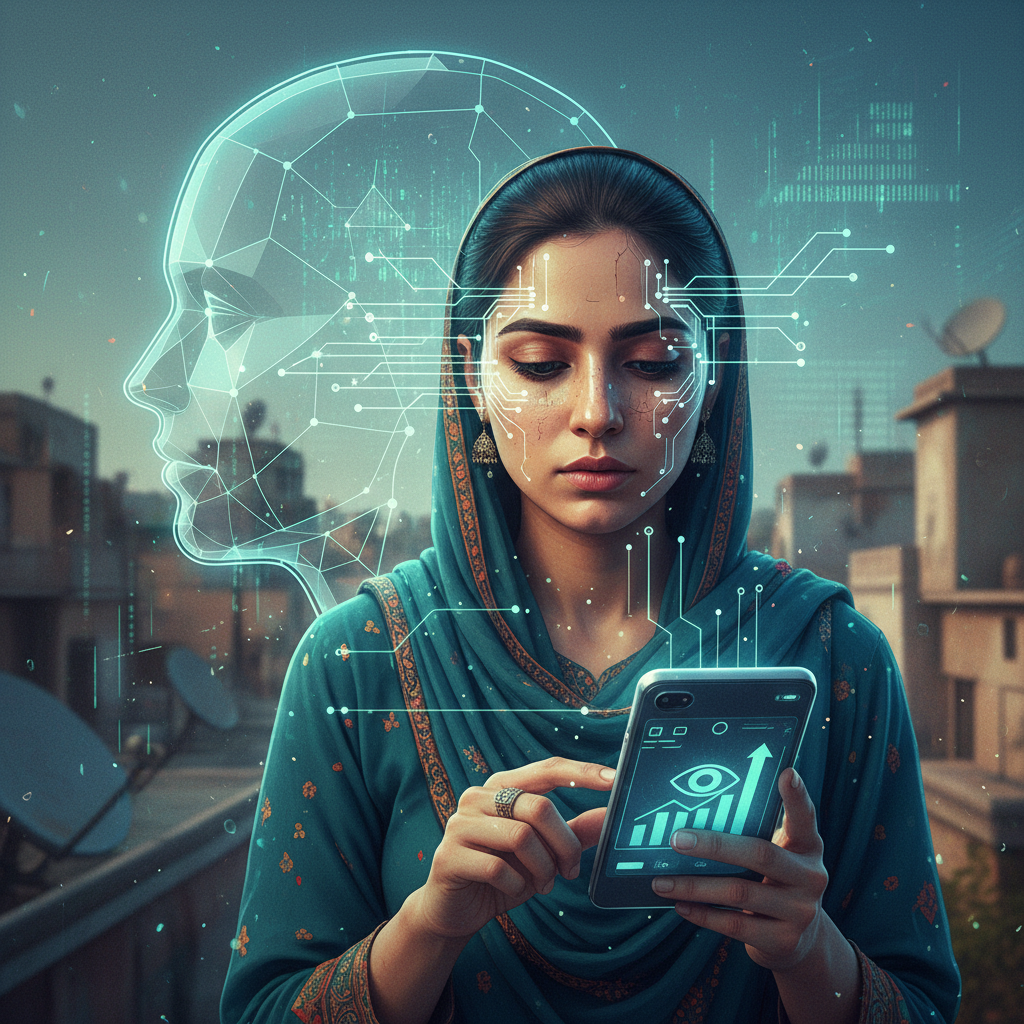

The digital landscape in Central Asia, particularly in Tajikistan, often develops along a different trajectory than the headlines emanating from Silicon Valley. While global tech giants announce grand visions of artificial intelligence transforming everyday life, our experience on the ground is frequently one of adaptation, resourcefulness, and a healthy dose of skepticism regarding promised miracles. Meta, under Mark Zuckerberg's continued leadership, has recently pushed significant AI capabilities into its dominant communication platforms, Instagram and WhatsApp. The stated aim is to make interactions richer, more efficient, and perhaps, more engaging. But for a region where connectivity can be intermittent and data costs a consideration, the question remains: are these AI additions genuinely useful, or are they simply more digital noise?
My initial impressions of Meta AI, particularly its integration into WhatsApp and Instagram, were mixed. The rollout has been gradual, and not all features are immediately available or seamlessly functional across all devices and network conditions prevalent here. On a recent trip to the Gorno Badakhshan Autonomous Region, where internet access is often a luxury, the thought of resource intensive AI features felt almost anachronistic. Yet, in Dushanbe, with more stable connections, the AI's presence was undeniable. It manifests as a conversational assistant, a content generator, and a smart search tool. The interface is largely consistent with Meta's existing design language, meaning it feels familiar, if not entirely intuitive for its new capabilities.
Let us delve into the key features. In WhatsApp, the AI primarily acts as a chatbot, capable of answering questions, generating text, and even creating simple images based on prompts. It can summarize long chat threads, translate messages, and suggest replies. For Instagram, the AI's role extends to content creation, offering tools for generating image backgrounds, drafting captions, and even suggesting popular trends. There is also an underlying AI layer that enhances search functionality across both platforms, aiming to deliver more relevant results for users seeking information or content. Meta has positioned these as tools to foster creativity and streamline communication, particularly for small businesses and content creators.
What works brilliantly, at least in theory and under optimal conditions, is the AI's ability to quickly process and summarize information. In a busy WhatsApp group chat, for instance, the AI's summary function can be a time saver, allowing users to catch up on conversations without sifting through hundreds of messages. This is particularly useful for community groups or informal business discussions, where clarity and conciseness are valued. The image generation capabilities on Instagram, while not groundbreaking compared to standalone AI art tools, offer a quick way for users to add flair to their posts without needing external applications. For a small entrepreneur in Khujand trying to market handmade goods, a quick AI generated background could be a practical advantage. As Mr. Alisher Rahmonov, a local tech entrepreneur in Dushanbe, recently told me, "Any tool that lowers the barrier to digital content creation is valuable, especially for those without access to professional design software. The question is, does it work reliably enough?" He raises a valid point regarding consistency.
However, several aspects fall short. The primary concern in Tajikistan, as in many developing regions, is connectivity and data consumption. These AI features are not lightweight. Running complex language models and image generators requires significant processing power, much of which happens on Meta's servers, necessitating a stable and fast internet connection. When network speeds drop, or data allowances are limited, these AI functionalities become sluggish or unusable. This creates a digital divide even within the AI experience itself. Furthermore, the accuracy and cultural relevance of the AI's output can be inconsistent. While it performs well with general knowledge queries, its understanding of nuanced Tajik culture, local idioms, or specific regional contexts is often lacking. This can lead to generic or even inappropriate suggestions, undermining its utility. "The reality in Central Asia is different from the headlines," I often find myself thinking when evaluating such global tech rollouts. The AI's ability to understand and generate content in Tajik, while improving, is still far from perfect, limiting its appeal for a significant portion of the population.
In comparison to alternatives, Meta's integrated AI offers convenience. Users do not need to switch applications to access these tools, unlike standalone AI chatbots like OpenAI's ChatGPT or Google's Gemini, which require separate apps or web interfaces. However, the dedicated AI platforms generally offer superior performance, greater customization, and more robust capabilities in terms of content generation and complex problem solving. For instance, for serious research or intricate creative tasks, a user would likely still turn to a specialized AI tool. Meta's offering is designed for casual use within its ecosystem, prioritizing accessibility over advanced functionality. Other messaging apps, like Telegram, have also integrated AI bots, but they are typically third party additions rather than core features, offering a different model of integration.
My verdict is that Meta's AI integration into Instagram and WhatsApp is a step towards a more intelligent communication future, but it is a step taken on uneven ground. For users in urban centers with reliable, affordable internet, these features can offer genuine, albeit incremental, improvements to their digital interactions. The ability to quickly summarize conversations or generate simple creative assets can save time and effort. However, for the majority of users in Tajikistan, where internet infrastructure is still developing and data costs are a significant factor, these AI features often feel like an expensive luxury rather than an essential utility. The practical challenges of implementation, coupled with the AI's current limitations in cultural nuance, mean that its transformative potential is yet to be fully realized here. Let's talk about what actually works for people on the ground, not just what is technically possible in a lab. For now, the core functionality of messaging and content sharing remains paramount, with AI acting as a sometimes useful, sometimes superfluous, overlay. The path to truly impactful AI in our region requires more than just integration; it demands localization, efficiency, and a deep understanding of local needs and constraints. MIT Technology Review often discusses the need for localized AI solutions, and this case highlights that necessity perfectly. We need solutions that are not just smart, but also resilient and relevant to our unique circumstances. For example, the challenges facing Tajikistan's agricultural sector, from water management to crop optimization, require Tajik solutions, not just generic AI chat functions. While Meta's AI might make sharing a photo slightly easier, its impact on the fundamental issues facing our society remains negligible. TechCrunch regularly covers the latest AI startups, but few address these specific regional needs effectively.