
Let's be honest, most people are still lost in the hype cycle, mesmerized by the latest GPT model or the promise of self-driving cars. They see AI as a shiny new toy, a productivity hack, or maybe a job-killer. What they're not seeing, what's hiding in plain sight, is the colossal, gaping chasm in global AI governance. This isn't some abstract policy debate for bureaucrats in Geneva or Brussels, this is the wild west unfolding in real-time, and it's going to hit us where it hurts most: our health, our privacy, and our very idea of justice.
This is the headline development: while nations like the US, EU, and China are racing to establish their own AI regulations, often with conflicting philosophies and priorities, the international community is struggling to find common ground. We have the EU's AI Act, a comprehensive, risk-based approach. We have the US's executive orders and voluntary commitments. China has its own suite of regulations, often emphasizing control and national security. Each is a silo, a fortress built on its own terms, and the bridges between them are few and far between. The result is not a global framework, but a patchwork quilt of rules, riddled with holes and inconsistencies. This fragmentation isn't just inefficient, it's dangerous, especially when we talk about something as sensitive and critical as healthcare AI.
Why are most people ignoring this? Simple. It's complex, it's political, and it doesn't offer immediate gratification. It's easier to marvel at what AI can do than to grapple with what it should do, or who decides. The attention economy thrives on breakthroughs, not on painstaking, multilateral negotiations. We're so busy chasing the next big thing, we're missing the foundational cracks forming beneath our feet. This isn't just about technical standards, it's about fundamental values, human rights, and the distribution of power in a world increasingly shaped by algorithms. For many, it feels too far removed from their daily lives, a problem for governments and tech giants to sort out. But trust me, it's not.
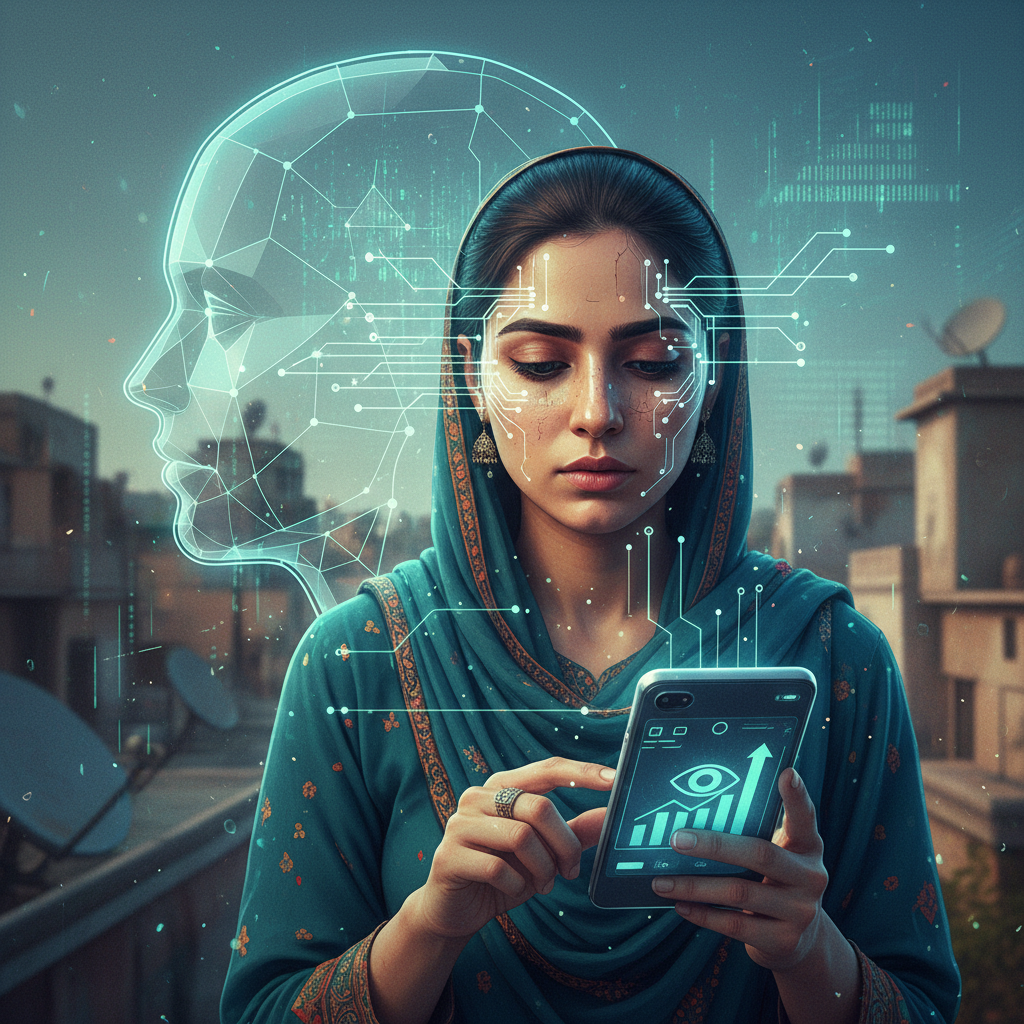
How does this affect you, sitting there, perhaps scrolling through this on your phone? Imagine an AI system, developed in one country with lax data privacy laws, trained on sensitive medical records, then deployed in another country with stricter regulations. Who is liable if it misdiagnoses a patient? What if a diagnostic AI, trained predominantly on data from one demographic, exhibits bias when applied to diverse populations, leading to poorer outcomes for some? This isn't hypothetical. We're already seeing these issues emerge. Your health data, your personal medical history, could be processed by AI models whose ethical guidelines were set halfway across the world, under a completely different legal and moral framework. If a company develops an AI-powered diagnostic tool in a jurisdiction with minimal oversight, and then sells it globally, who ensures its safety and efficacy for your family? This isn't just about a potential misdiagnosis, it's about the erosion of trust in healthcare, the potential for systemic discrimination, and the commodification of our most intimate information. The stakes are personal, profoundly so.
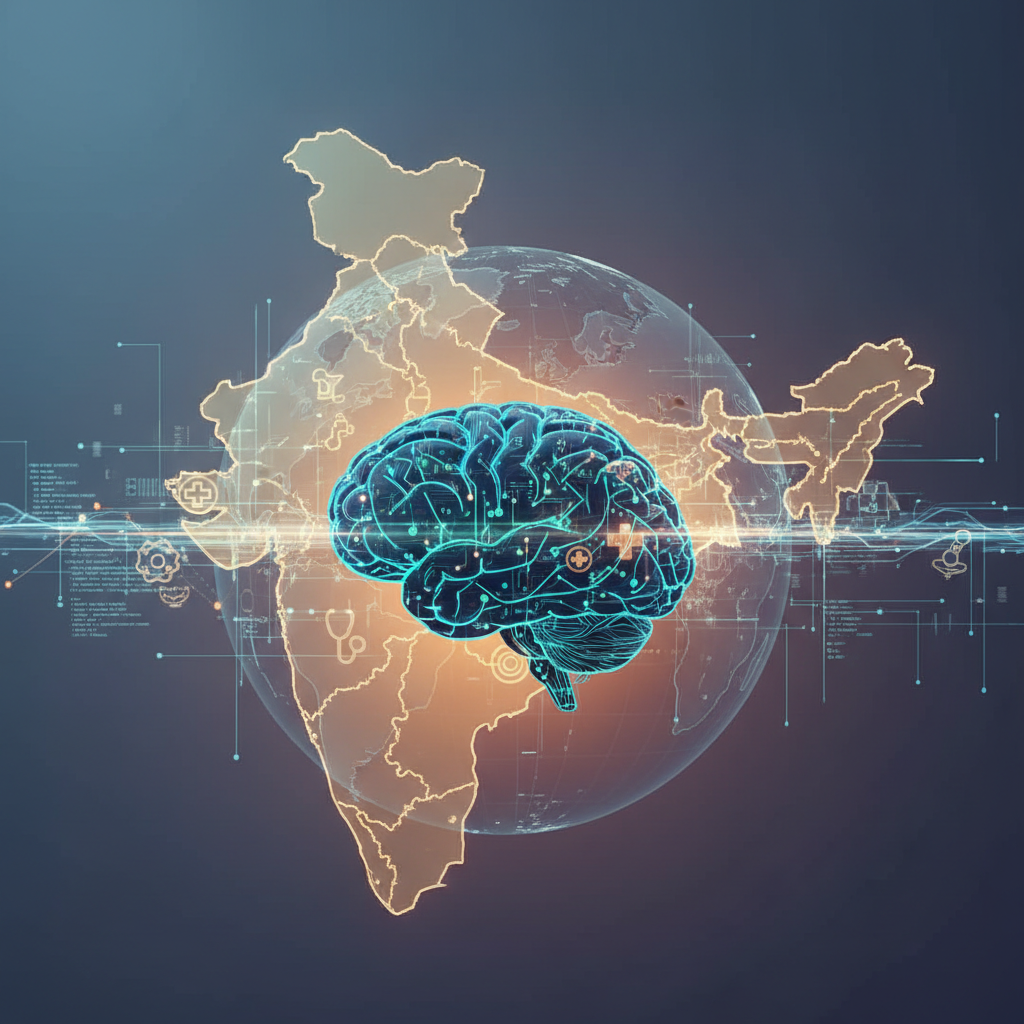
The bigger picture here, for India, is monumental. We are a nation of 1.4 billion people, with a burgeoning tech sector and a healthcare system that desperately needs innovation, but also robust protection. India will own the next decade of AI, I've said it before and I'll say it again, but that ownership comes with immense responsibility. We cannot afford to be a passive recipient of AI technologies governed by others' rules. Our diverse population, with its unique genetic makeup and socio-economic realities, demands AI models that are trained on our data, validated in our contexts, and governed by our values. If global governance fragments, we risk becoming a dumping ground for inadequately regulated AI, or worse, seeing our own innovators stifled by a labyrinth of conflicting international requirements. The economic implications are also huge. Without harmonized standards, cross-border deployment of AI solutions becomes a nightmare, hindering trade, investment, and collaboration. This isn't just about healthcare, it's about our economic sovereignty and our geopolitical standing.
What are the experts saying? It's a mixed bag, but the urgency is palpable. Brad Smith, Vice Chair and President of Microsoft, has repeatedly called for international cooperation, stating, "We need to ensure that AI is developed and deployed responsibly, and that requires a global conversation, not just national initiatives." He's right, of course, but the 'how' remains elusive. On the other hand, some, like Dr. Fei-Fei Li, co-director of Stanford's Institute for Human-Centered AI, emphasize the importance of human-centric design and ethical principles that transcend borders. She argues, "AI should augment humanity, not replace it, and that principle must be enshrined in any governance framework." Then there are voices from the Global South, like Dr. Nanjira Sambuli, a Kenyan researcher and policy analyst, who warns against a 'digital colonialism' where AI rules are dictated by a few powerful nations. She points out that "the benefits and risks of AI are not evenly distributed, and neither should be the power to govern it." Here in India, Dr. K. VijayRaghavan, former Principal Scientific Adviser to the Government of India, has stressed the need for a balanced approach, focusing on innovation while safeguarding ethical considerations and data privacy. He believes India can play a crucial role in shaping a more inclusive global AI governance dialogue.
So, what can you do about it? First, understand that this isn't just a tech problem, it's a societal one. Educate yourself. Ask questions. Demand transparency from companies and governments about how AI is being developed and used, especially in sensitive areas like healthcare. Support organizations and initiatives that advocate for ethical AI and inclusive governance. If you're in the tech sector, push for responsible AI development within your own organizations. If you're a healthcare professional, demand to know the provenance and validation of AI tools you're asked to use. Your voice, collectively, can put pressure on policymakers to prioritize international cooperation over unilateralism. We need to move beyond the 'move fast and break things' mentality when it comes to AI that touches human lives.
The bottom line is this: the global AI governance gap is not just a policy wonk's concern, it's a ticking time bomb for our collective future. In five years, if we continue down this path of fragmentation, we will see a chaotic landscape where AI-driven healthcare disparities widen, where data breaches become commonplace, and where trust in technology erodes completely. Conversely, if we manage to forge meaningful international cooperation, perhaps spearheaded by nations like India that bridge the East and West, we could unlock AI's true potential for global good, delivering equitable healthcare and prosperity. This is the inflection point. The choice between cooperation and fragmentation isn't just about technology; it's about the kind of world we want to live in, and the kind of future we want to build for our children. The time to act, to demand a unified vision, is now. Our health, our dignity, and our future depend on it. For more on the global implications of AI, check out Reuters' AI coverage and MIT Technology Review's insights. You can also find relevant discussions on TechCrunch for startup and industry perspectives.