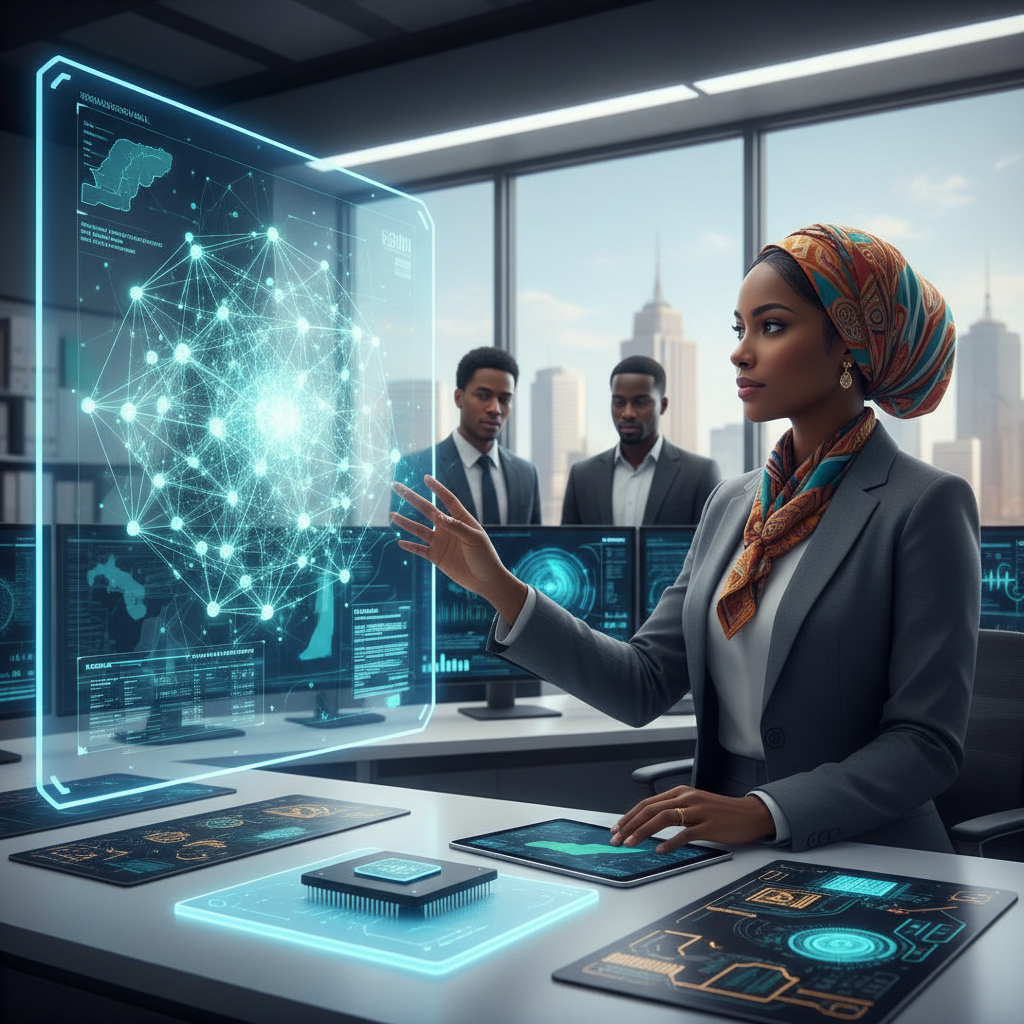
In Senegal, we have a saying, Jamm rek, which means peace only. It's a greeting, a wish, a way of life. But for many, especially in our rural communities, jamm rek in health is a daily battle. Access to timely, accurate health information can be the difference between a minor ailment and a life-threatening crisis. So, when I hear about the big tech companies, the giants like Apple, Google, and OpenAI, pouring billions into artificial intelligence, my first thought isn't about their stock prices or market share. My first thought is always: how will this touch the lives of the people I know, the mothers, the farmers, the small shopkeepers in Dakar and beyond?
The buzz right now, the waxale as we say, is all about Apple's massive overhaul of Siri. For years, Siri has been, well, Siri. A bit clunky, sometimes helpful, often frustrating. It felt like a digital assistant stuck in the past, while Google Assistant and OpenAI's ChatGPT were having lively, almost human like conversations. Now, Apple is reportedly making a huge push, integrating advanced large language models, aiming for a Siri that is not just reactive, but proactive, intelligent, and deeply personal. Can Apple truly catch up, or even surpass, its rivals in this fiercely competitive AI landscape?
To understand where we are, we need a quick look back. When Siri first launched in 2011, it was revolutionary. A voice assistant in your pocket. But as the years passed, its competitors sprinted ahead. Google Assistant, with its deep integration into Google's vast knowledge graph, became adept at answering complex questions. Then came ChatGPT, a true game changer, demonstrating the power of generative AI to understand context, write poetry, and even diagnose problems. Apple, known for its polished hardware and user experience, seemed to lag in this specific software frontier. Analysts at Bloomberg Technology have frequently pointed out Apple's perceived slowness in the generative AI race, often highlighting the company's preference for on device processing and user privacy as both a strength and a potential bottleneck.
But the tide is turning. Reports suggest Apple has been quietly acquiring AI startups and investing heavily in its own foundational models. They are reportedly leveraging their custom silicon, the A series chips in iPhones and M series in Macs, to perform complex AI tasks directly on the device, a move that could offer unparalleled speed and privacy. This on device AI approach is a cornerstone of their strategy, aiming to differentiate them from cloud heavy competitors. Tim Cook, Apple's CEO, has been quoted saying that Apple sees