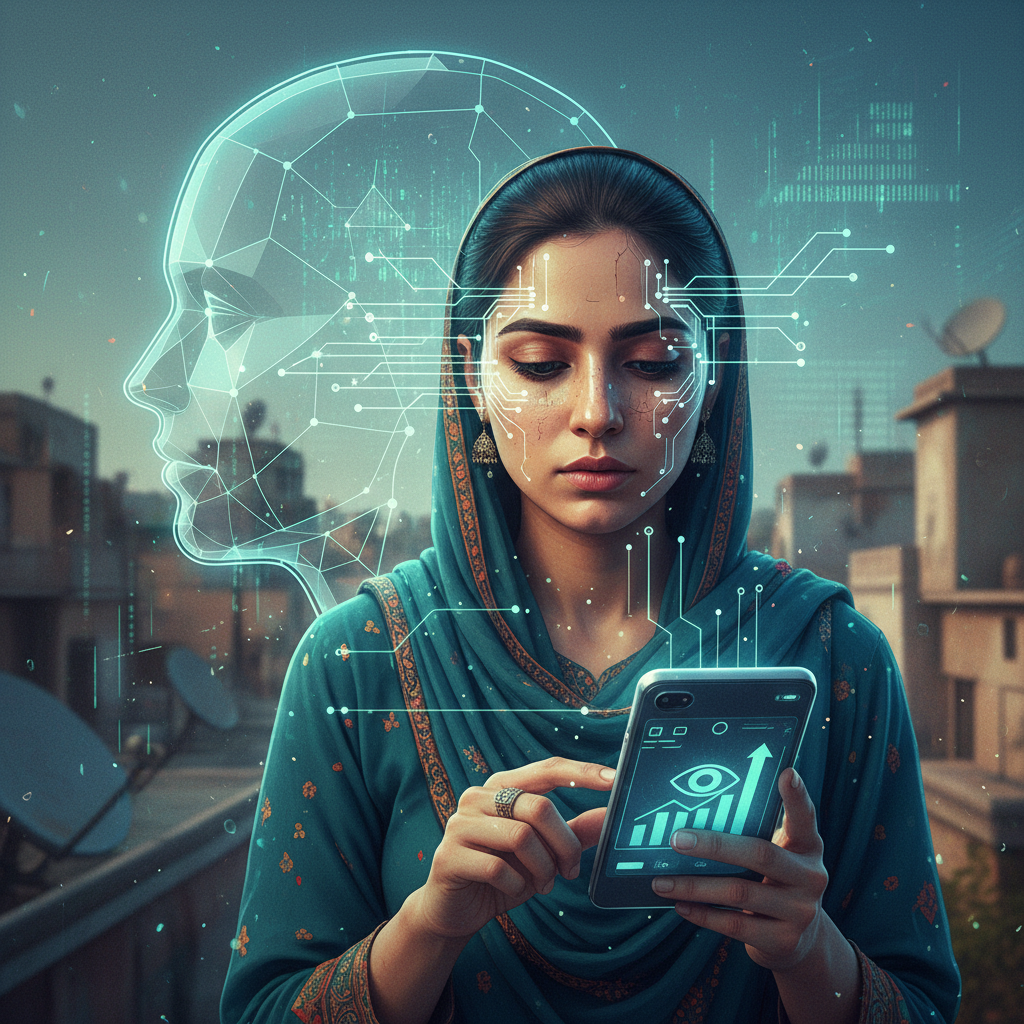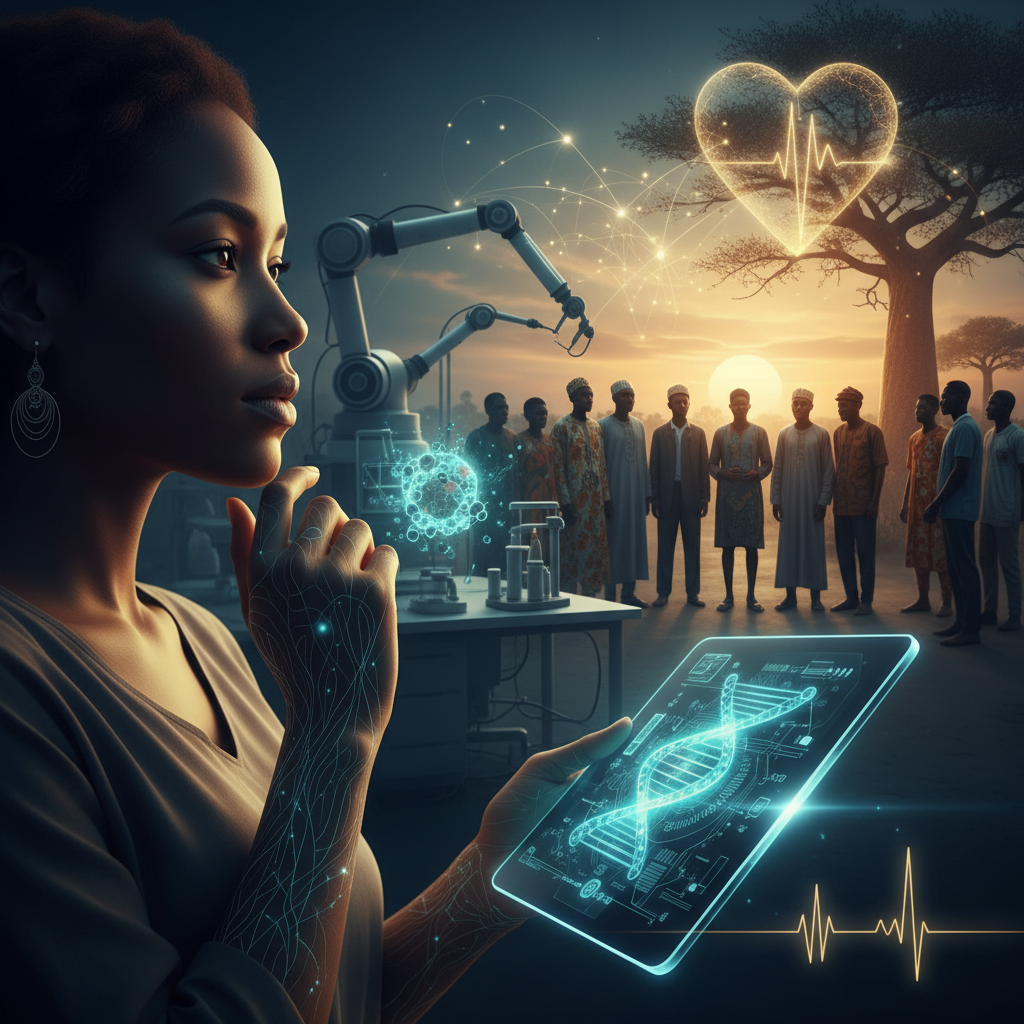
In Senegal, we have a saying, « Ndank ndank mooy jàpp golo ci ñaay, » which means, “Slowly, slowly catches the monkey in the bush.” It speaks to patience, to the understanding that good things, lasting things, often take their time. But what happens when the world around us, especially the world of medicine, decides to move at a speed that defies this ancient wisdom? This is a story about people, not algorithms, and how the lightning-fast advancements in AI-powered drug discovery are beginning to touch the very fabric of our patience and our expectations, even here in our vibrant communities.
I sat down with Madame Aïcha Diallo, a market vendor in Dakar, whose son, little Oumar, has been battling a persistent fever for weeks. She told me, her eyes heavy with worry, “Before, when a child was sick, we prayed, we waited for the doctor, we tried traditional remedies. It was a long journey, full of hope and fear. Now, everyone talks about new medicines, discovered so fast. I hear it on the radio, I see it on my nephew’s phone. It makes you wonder, why is Oumar still sick if they can find cures so quickly?” Her words echoed a sentiment I’ve heard more and more: a growing impatience, a subtle shift in how we perceive the duration of suffering and the speed of relief.
For decades, the pharmaceutical industry operated on a timeline that felt almost geological. From initial research to a drug reaching patients, the process could easily span 10 to 15 years, costing billions of dollars. Think about that, a decade and a half of meticulous, often frustrating, work. But now, artificial intelligence is rewriting this script. Companies like Google DeepMind, with their AlphaFold breakthrough, have revolutionized our understanding of protein folding, a fundamental step in drug discovery. This alone has shaved years off the early research phase. Other firms, like Recursion Pharmaceuticals, are using AI to analyze vast biological datasets and predict potential drug candidates at an unprecedented scale, moving from hypothesis to preclinical testing in a fraction of the traditional time. According to MIT Technology Review, these AI platforms are not just accelerating discovery, they are fundamentally altering the economics and timelines of pharmaceutical research, promising to cut R&D from years to mere months in some cases.
This dramatic acceleration, while undeniably a boon for public health globally, has a fascinating, perhaps even unsettling, psychological impact. Dr. Aminata Sow, a clinical psychologist at Cheikh Anta Diop University in Dakar, shared her observations with me. “We are seeing a subtle but significant change in cognitive processing, especially among younger generations. The immediacy of information, the instant gratification of social media, and now the promise of rapid medical solutions, all contribute to a reduced tolerance for delay. When people hear that AI can find a drug in months, their expectation for all medical problems shifts. They start to believe that every illness should have a quick fix, and when it doesn’t, it can lead to increased anxiety, frustration, and even a feeling of being let down by science or the healthcare system.”
She continued, “The human brain is incredibly adaptable, but it also forms habits. If we are constantly exposed to narratives of instant solutions, our capacity for sustained patience, for understanding complex, long-term processes, can diminish. This isn’t just about waiting for medicine, it’s about how we approach problems in general. If a cure isn’t found quickly, does it mean the problem is too hard, or that the system is failing?”
This shift isn’t just individual; it has broader societal implications. In Senegal, where access to advanced healthcare is still a challenge for many, the gap between the perceived speed of global drug discovery and the reality of local healthcare delivery can create a new kind of psychological burden. Imagine knowing a cure exists, developed at breakneck speed by AI, but it is not yet available in your local clinic, or is prohibitively expensive. This disparity can breed feelings of injustice, helplessness, and a deeper sense of being left behind. It’s a powerful emotional cocktail that can erode trust in institutions and create social friction.
“The rapid pace of AI drug discovery is a double-edged sword,” explained Dr. Papa Ndiaye, a public health expert with the Ministry of Health. “On one hand, it offers immense hope for diseases that have plagued our communities for too long, like malaria or tuberculosis. We are actively exploring partnerships to bring these innovations to Senegal, but the logistical and financial hurdles remain substantial. The psychological challenge is managing public expectations. We must educate our people that while discovery is faster, clinical trials, regulatory approvals, manufacturing, and equitable distribution still take time. We cannot allow the promise of AI to create a chasm of disappointment.” His eyes lit up when he told me about the potential for AI to address neglected tropical diseases, a testament to the hope these technologies bring.
So, what can we, as individuals and as a society, do to navigate this new landscape? First, cultivate a conscious awareness of our own patience. Recognize that while technology can accelerate many processes, the human body, the complexities of disease, and the realities of healthcare infrastructure still operate on their own timelines. Practice teranga, our Senegalese hospitality, which also embodies a spirit of understanding and collective well-being, acknowledging that not all problems have instant solutions.
Second, demand transparency and education from both the scientific community and our local leaders. We need clear, honest communication about what AI can and cannot do, and what the realistic timelines are for new treatments to reach our communities. This proactive approach can help manage expectations and prevent the psychological fallout of unmet promises. We must remember that technology is a tool, and like any tool, its impact depends on how we wield it and how we prepare ourselves for its consequences.
Finally, let us not forget the human element at the heart of all this. While AI accelerates drug discovery, it is still human scientists, human doctors, and human patients who are at the core of healing. The speed of discovery should not overshadow the empathy, care, and resilience that define our human experience of illness and recovery. As we embrace the future of medicine, let us also hold onto the wisdom of our ancestors, understanding that some journeys, even towards healing, require a steady, patient heart. The faster the world moves, the more we need to anchor ourselves in our humanity. You can read more about the broader implications of AI in healthcare on The Verge. This is a story about people, not algorithms, and how we learn to live with both.