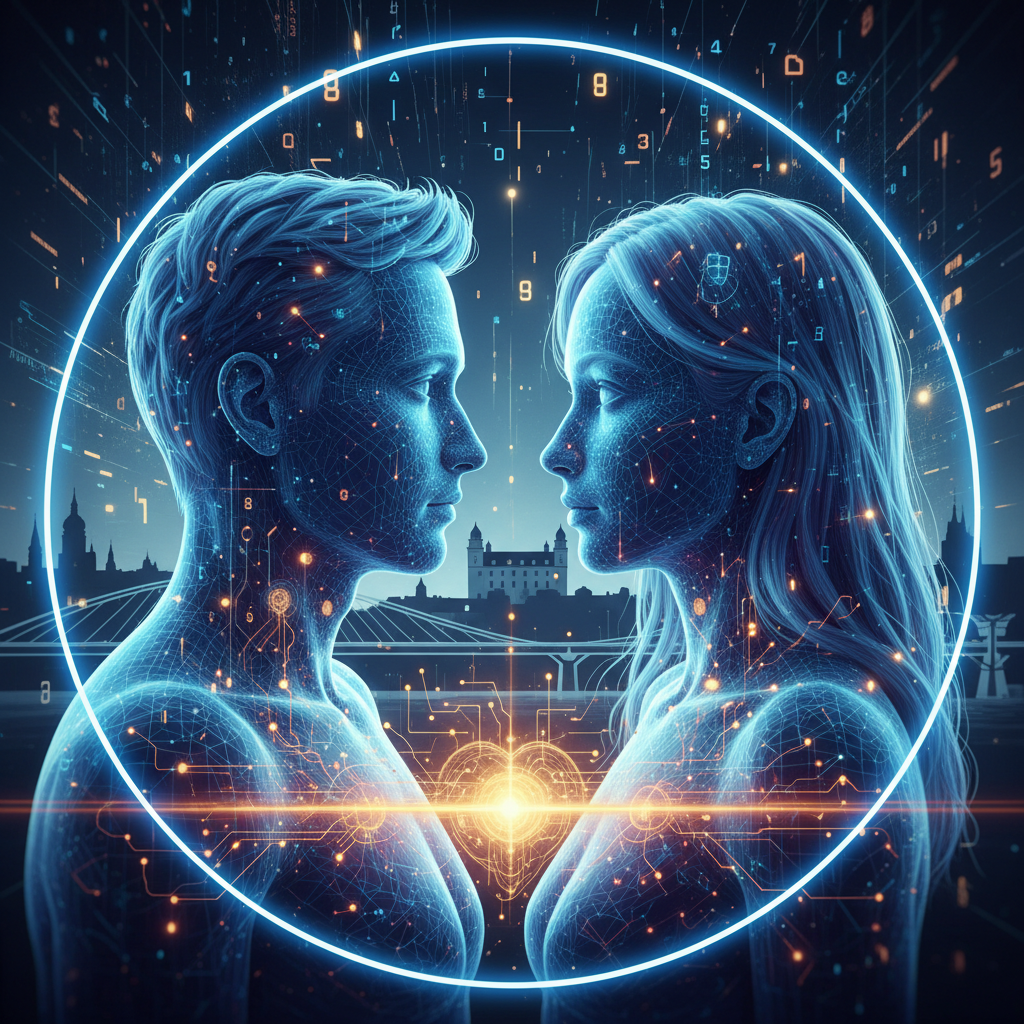
Ah, Bratislava! Our beautiful city, alive with history and buzzing with innovation. You can feel the energy, can't you? It's a place where tradition meets the future, and nowhere is this more evident than in the evolving landscape of human connection. We're talking about love, my friends, or at least the pursuit of it, now increasingly mediated by the invisible hand of artificial intelligence.
Just last week, I was chatting with my cousin, Zuzana, over a Kofola in Staré Mesto. She's a vibrant woman in her late twenties, and like many of her generation, her dating life is inextricably linked to apps. "Katarína," she sighed, scrolling through profiles on her phone, "it's like the app knows what I want even before I do. But sometimes, I wonder if it's making me pickier, or just… lonelier." Her words struck a chord, echoing a sentiment I've heard from so many young people across Central Europe. This isn't just about swiping left or right anymore; it's about how these sophisticated algorithms are subtly, yet profoundly, altering our psychology, our expectations, and our very definition of romance.
AI's role in dating apps has moved far beyond simple preference filters. Today's algorithms, often powered by advanced machine learning models similar to those used by OpenAI or Google's Gemini, analyze everything from your swiping patterns and message content to your response times and even the subtle cues in your profile photos. They learn your 'type,' predict compatibility, and curate your feed with astonishing precision. It's like having a digital matchmaker, perhaps even a digital psychologist, working tirelessly in the background. "These systems are incredibly adept at identifying patterns in user behavior and preferences," explains Dr. Eva Horváthová, a cognitive psychologist at Comenius University in Bratislava. "They create a feedback loop, reinforcing certain choices and potentially narrowing our perception of what a 'good match' truly looks." This isn't just a Slovak phenomenon, of course; it's a global trend, but its impact here, in our close-knit communities, feels particularly poignant.
One of the most fascinating cognitive effects is the concept of 'algorithmic bias' in our own decision-making. When an app consistently shows you a certain type of person, your brain starts to believe that is the only type available or desirable. It's a form of confirmation bias, amplified by AI. We might unknowingly surrender our agency to the algorithm, trusting its judgment over our own intuition. This can lead to a paradoxical situation: despite an abundance of potential matches, individuals report feeling a deeper sense of dissatisfaction or an inability to form genuine connections. The endless scroll, the gamification of dating, and the constant pursuit of the 'perfect' algorithmic match can contribute to what psychologists are calling 'decision fatigue' and 'paradox of choice,' ultimately exacerbating feelings of loneliness.
Indeed, the loneliness epidemic is a real concern, not just globally, but right here in Slovakia. While dating apps promise connection, some research suggests they might inadvertently contribute to social isolation for certain users. A study published in the MIT Technology Review highlighted how excessive reliance on digital platforms for social interaction can sometimes replace, rather than supplement, face-to-face encounters. When we spend hours curating our digital selves and evaluating others through a screen, we might miss out on the messy, unpredictable, and ultimately more rewarding aspects of real-world interaction. This is particularly relevant in a culture like ours, where personal connection and community have always been paramount.
But it's not all doom and gloom, my friends! I'm an optimist, remember? AI also offers incredible opportunities. For individuals with niche interests, or those living in less populated areas, these apps can be a lifeline, connecting them to people they might never otherwise meet. Think about someone in a remote village in the Tatras, finding love with someone in Košice, all thanks to an algorithm that spotted their shared passion for hiking or Slovak folk music. The potential for expanding our social circles and breaking down geographical barriers is immense. "AI can be a powerful tool for inclusion, helping people overcome social anxieties or find partners who truly resonate with them, regardless of their location," says Dr. Marek Kováč, a sociologist specializing in digital culture at the Slovak Academy of Sciences. "The key is to use it mindfully, to understand its mechanisms, and to maintain a healthy balance with real-world engagement."
So, what's a modern Slovak to do in this algorithmic age of romance? Firstly, recognize the algorithm for what it is: a tool, not a destiny. Understand that its primary goal is often engagement, not necessarily your lifelong happiness. Take breaks from the apps. Meet people in person, through hobbies, friends, or even just a chance encounter at the local trh. Cultivate your offline life with the same enthusiasm you might apply to your online profile. Remember that genuine connection often blossoms in unexpected places, free from the constraints of a predictive model. We also need to demand more transparency from these tech giants, like Meta and Bumble, about how their algorithms work and how they protect our psychological well-being. The European Union, with its strong stance on data privacy and digital rights, is already leading the way in regulating AI, and I believe this will extend to ensuring ethical AI practices in areas as personal as dating.
Ultimately, the future of love in the age of AI isn't about technology replacing human connection; it's about how we choose to integrate these powerful tools into our lives. It's about being aware, being intentional, and remembering that the most beautiful connections are often those that defy easy categorization. Bratislava is having its moment, not just in tech, but in redefining how we live, love, and connect in a digitally-driven world. Let's make sure our hearts, and our minds, remain firmly in charge of our own stories. And who knows, maybe the next great Slovak love story won't be written by an algorithm, but by two people who met because they both decided to turn off their phones and look up. That's the kind of future I'm genuinely excited about. You can read more about the broader impact of AI on society and human behavior on Wired or TechCrunch for global perspectives.