The digital landscape, much like the winding Vltava River through Prague, is beautiful yet fraught with hidden currents and unpredictable depths. For years, the world has marveled at the rapid ascent of artificial intelligence, a technological tide promising unprecedented progress. Yet, beneath the surface of this innovation lies a growing apprehension, a recognition that unchecked power, even algorithmic power, demands careful stewardship. This sentiment is particularly strong in Europe, where the establishment of AI safety institutes represents a pivotal shift from a purely developmental mindset to one prioritizing rigorous, pre-deployment validation.
For a nation like the Czech Republic, with its rich engineering tradition and a pragmatic outlook, the concept of AI safety is not merely an academic exercise, but a practical necessity. Our history teaches us the value of robust design and thorough testing, whether it is for Škoda automobiles or the intricate machinery that powered our industrial revolution. This same methodical approach is now being applied to the ethereal realm of artificial intelligence, a testament to our commitment to responsible technological advancement.
The impetus for these institutes stems from a global consensus that advanced AI systems, particularly large language models and autonomous agents, possess capabilities that could, if mismanaged, lead to significant societal disruption. The potential for bias, hallucination, misuse, and even systemic risk has moved from theoretical discussions to tangible concerns. Governments worldwide, including those in the European Union, are grappling with how to harness AI's potential while mitigating its perils. The European Union's AI Act, a landmark piece of legislation, serves as a regulatory framework, but legislation alone is insufficient. Practical, hands-on testing is indispensable.
These AI safety institutes, often operating as public-private partnerships or government-funded entities, are designed to be the ultimate proving grounds for AI systems before they are unleashed upon the public. Think of them as the rigorous testing facilities for a new aircraft, where every component, every system, and every potential failure mode is meticulously examined under simulated extreme conditions. This is not about stifling innovation, but about ensuring its resilience and reliability.
In the United Kingdom, the AI Safety Institute, launched in 2023, has already begun to conduct evaluations of frontier AI models. Its focus includes assessing risks related to national security, critical infrastructure, and societal harms. Similarly, the United States has established its own AI Safety Institute within the National Institute of Standards and Technology, aiming to develop benchmarks and best practices for AI safety and trustworthiness. These efforts are not isolated, but part of a coordinated global endeavor, with Europe playing a crucial role.
Within the European Union, the concept is being refined to align with the bloc's specific regulatory and ethical priorities. The Czech Republic, through institutions like the Czech Technical University in Prague and Masaryk University in Brno, is actively contributing to this discourse and exploring the establishment of its own specialized testing facilities. "The Czech approach is methodical and effective, focusing on practical solutions to complex problems," noted Dr. Jan Šedivý, a leading AI researcher at the Czech Technical University. "Our engineers understand that theoretical robustness must be proven through empirical validation. We cannot afford to deploy systems whose failure modes are unknown or unpredictable." This sentiment echoes throughout the European AI community, underscoring a shared commitment to thoroughness.
What exactly do these institutes test? The scope is vast and multifaceted. It includes, but is not limited to, the following critical areas:
- Robustness and Reliability: Ensuring AI systems perform consistently and predictably, even when faced with unexpected inputs or adversarial attacks. This involves stress-testing models for vulnerabilities that could be exploited.
- Bias Detection and Mitigation: Identifying and reducing algorithmic biases that could lead to discriminatory outcomes in areas such as employment, credit, or justice. This is particularly pertinent for high-risk applications defined by the EU AI Act.
- Explainability and Interpretability: Developing methods to understand why an AI system makes a particular decision, moving beyond opaque 'black box' models to more transparent, auditable systems. This is crucial for accountability.
- Security and Privacy: Assessing the system's resilience against cyber threats and ensuring compliance with stringent data protection regulations, such as GDPR.
- Human Oversight and Control: Evaluating the mechanisms in place for human intervention and ensuring that humans retain ultimate control over critical AI decisions.
- Societal Impact Assessment: Proactively analyzing the broader social, economic, and ethical implications of deploying an AI system, including its potential effects on labor markets, democratic processes, and cultural norms.
Consider the analogy of a bridge engineer. They do not simply design a bridge and hope it stands. They calculate loads, test materials, simulate stresses, and account for every conceivable environmental factor before construction even begins. Similarly, these AI safety institutes are the structural engineers for our digital infrastructure, ensuring that the algorithmic bridges we build are sound and safe for society to traverse. "We are moving beyond simply asking 'can AI do this?' to 'should AI do this, and if so, how can we ensure it does it safely and ethically?'" stated Margrethe Vestager, Executive Vice-President of the European Commission for a Europe Fit for the Digital Age, in a recent address. Her words underscore the profound shift in perspective.
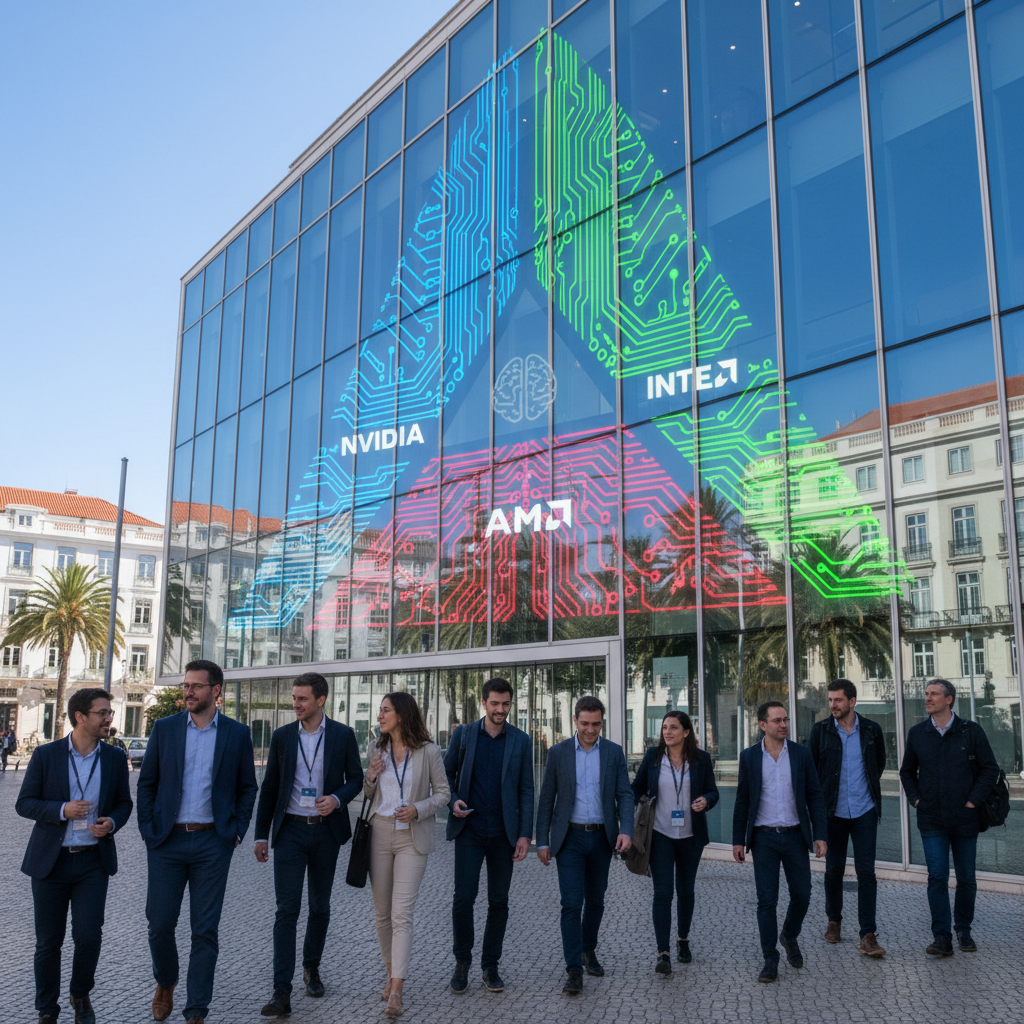
The practical implementation of these testing protocols requires significant investment in infrastructure, talent, and computational resources. Specialized hardware, including powerful NVIDIA GPU clusters, is often needed to run comprehensive evaluations on large, complex models. The institutes also foster collaboration between academia, industry, and government, creating a multidisciplinary environment where engineers, ethicists, lawyers, and social scientists can collectively address the intricate challenges of AI safety.
One of the key challenges lies in the dynamic nature of AI itself. Models are constantly evolving, and what is considered safe today might present new risks tomorrow. This necessitates an agile and adaptive approach to testing, with continuous monitoring and re-evaluation. The institutes are not static gatekeepers, but rather dynamic observatories, constantly scanning the horizon for emerging threats and developing new methodologies to address them. MIT Technology Review has frequently highlighted the need for adaptive regulatory frameworks to keep pace with rapid technological change.
The establishment of these institutes also presents an opportunity for smaller nations and regions to contribute significantly to global AI governance. For the Czech Republic, this means leveraging our strong academic base and our burgeoning startup ecosystem to develop specialized expertise in AI testing and validation. We can become a hub for specific domains, perhaps focusing on the safety of AI in critical infrastructure or in industrial automation, areas where our engineering prowess is already well-established. TechCrunch often covers the rise of specialized tech hubs outside traditional centers, and Prague's engineering tradition meets modern AI in this context.
Looking ahead, the success of these AI safety institutes will hinge on several factors: adequate funding, access to cutting-edge AI models from developers like OpenAI and Anthropic, the ability to attract top talent, and a commitment to international cooperation. The challenges are formidable, but the stakes are even higher. Just as the ancient alchemists sought to transform base metals into gold, modern AI promises to transform data into intelligence. However, unlike alchemy, the consequences of AI are very real and can profoundly impact human lives. Therefore, a cautious, data-driven approach, exemplified by these safety institutes, is not merely prudent, but essential for building a trustworthy digital future.
Ultimately, these institutes are more than just testing labs; they are expressions of a collective societal will to ensure that AI serves humanity, rather than subjugating it. They represent Europe's commitment to a human-centric approach to technology, ensuring that innovation proceeds hand-in-hand with responsibility. The path ahead is complex, but with a clear vision and rigorous methodology, we can navigate these waters safely.