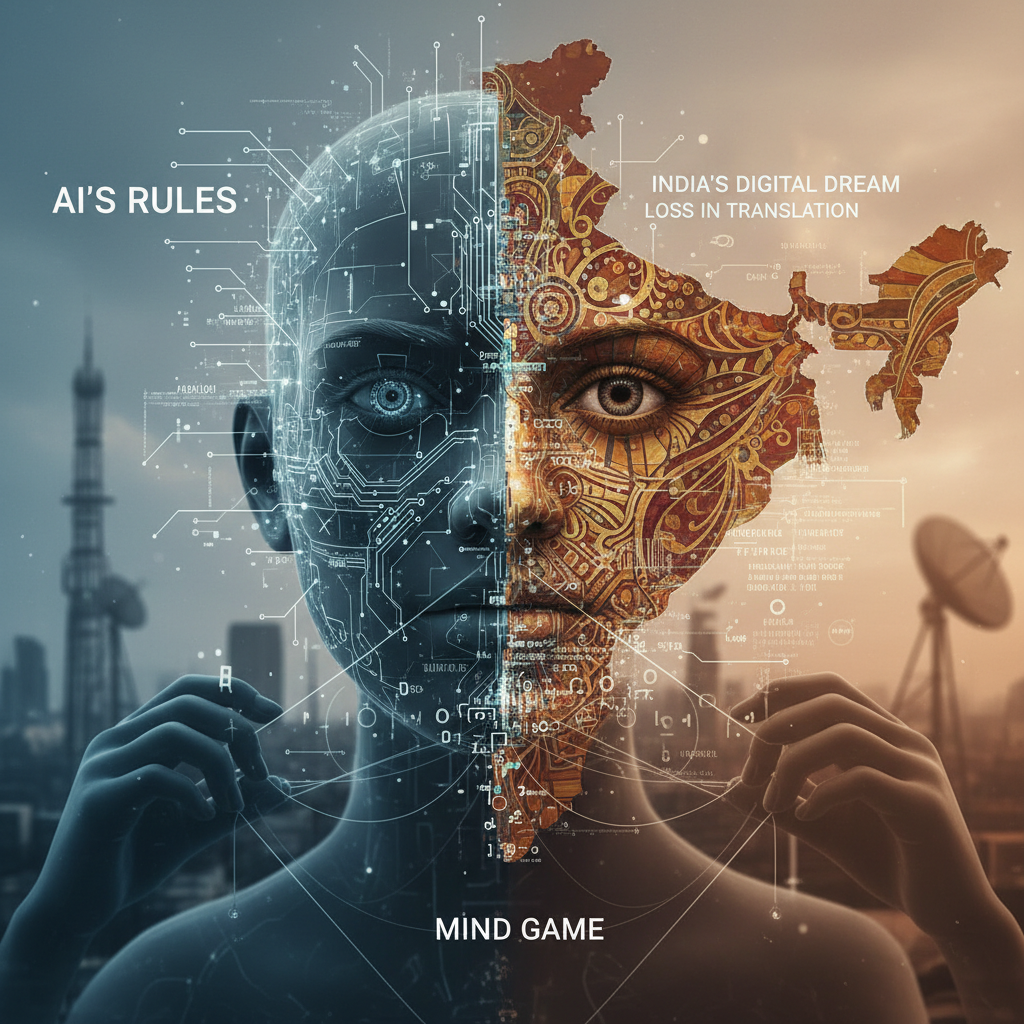

The aroma of freshly brewed chai still lingers in my memory from a recent visit to a bustling tech hub in Bengaluru, a city that pulsates with the energy of a million dreams. Amidst the whirring of servers and the quiet hum of innovation, a conversation kept circling back to a phrase I've heard more and more often: AI sovereignty. It sounds grand, doesn't it, almost like a declaration of independence in the digital realm? But what does it truly mean, beyond the headlines and the geopolitical posturing? For us in India, and for many other emerging nations, understanding AI sovereignty is not just an academic exercise, it is about securing our future.
What is AI Sovereignty?
At its heart, AI sovereignty is a nation's ability to develop, control, and deploy its own artificial intelligence technologies, infrastructure, and data, free from undue external influence or reliance. Think of it as digital self-reliance, but specifically for AI. It is about having the capacity to build your own large language models, design your own AI chips, control the data that feeds these systems, and establish your own ethical and regulatory frameworks, all without being beholden to foreign powers or corporations. It is a complex tapestry woven from technological capability, data governance, and strategic autonomy.
Why Should You Care?
Why should a farmer in rural Gujarat, or a small business owner in Chennai, care about something as abstract as AI sovereignty? Because it touches every aspect of our lives, from the healthcare we receive to the jobs we do, and even the information we consume. Imagine a scenario where the AI powering our critical infrastructure, say, our national power grid or our defense systems, is entirely controlled by a foreign entity. What if that entity decides to restrict access, or worse, manipulate it? The implications are staggering. For India, a nation with a billion dreams and a rapidly digitizing economy, AI sovereignty isn't just about national pride, it is about ensuring our economic stability, national security, and cultural preservation. It is about making sure that the algorithms shaping our society reflect our values, not someone else's. The decisions made by AI systems, whether in healthcare diagnostics or financial services, have profound societal impacts, and we need to ensure those decisions are transparent and accountable to our own people.
How Did it Develop?
The concept of AI sovereignty has evolved alongside the rapid advancement of artificial intelligence itself. In the early days of AI, the focus was primarily on research and development, largely concentrated in a few technologically advanced nations like the United States and, more recently, China. However, as AI began to permeate every sector, from defense to healthcare, and as the geopolitical landscape grew more complex, nations started realizing the strategic importance of controlling this foundational technology. The US-China tech rivalry, particularly around semiconductors and AI, has been a major catalyst. Countries like India and the European Union observed the vulnerabilities created by dependence on foreign tech giants and began to prioritize building their own capabilities. The pandemic also highlighted the fragility of global supply chains and the need for self-sufficiency in critical areas, further accelerating the push for AI sovereignty. It is a natural progression from data sovereignty and digital sovereignty, recognizing AI as the next frontier of national power.
How Does it Work in Simple Terms?
Let us imagine AI as a magnificent, intelligent elephant. For this elephant to truly serve your village, you need to own the elephant, train it with your village's wisdom, feed it with your village's harvest, and understand its every command. You cannot rely on someone else to bring their elephant, trained on their land, speaking their language, and potentially serving their interests. That is AI sovereignty in a nutshell. It means:
- Owning the Elephant (Hardware and Infrastructure): This involves developing or having secure access to advanced semiconductors, data centers, and cloud infrastructure within national borders. Think of India's push for indigenous chip manufacturing and secure data storage facilities.
- Training the Elephant (Data and Algorithms): It means collecting, securing, and processing your own national data, and then using it to train AI models that understand local languages, cultural nuances, and specific national needs. It is about building large language models like India's own BharatGPT, which can converse fluently in Hindi, Tamil, and Gujarati, not just English.
- Understanding its Commands (Talent and Research): This requires a robust ecosystem of AI researchers, engineers, and data scientists. It means investing heavily in education and fostering innovation so that a nation can not only use AI but also contribute to its fundamental advancements.
- Guiding the Elephant (Regulation and Ethics): Establishing national laws and ethical guidelines for AI development and deployment, ensuring that AI aligns with national values and protects citizens' rights.
Real-World Examples
- India's National AI Strategy: India has been vocal about its ambition to become a global AI leader, not just a consumer. The government's 'AI for All' vision emphasizes indigenous development, data localization, and building a strong talent pool. Initiatives like the National AI Portal and the proposed IndiaAI mission aim to foster research and innovation domestically. Reuters has covered extensively how India is positioning itself in the global AI landscape, balancing innovation with ethical considerations.
- European Union's AI Act: The EU is a prime example of a region asserting AI sovereignty through regulation. While not focused on indigenous hardware, the AI Act aims to establish a comprehensive legal framework for AI, prioritizing safety, transparency, and fundamental rights. This ensures that any AI system operating within the EU adheres to European values, regardless of where it was developed. This is a form of regulatory sovereignty, influencing global standards.
- China's AI Dominance: China has aggressively pursued AI sovereignty through massive state-backed investments in research, talent development, and data infrastructure. Companies like Baidu and SenseTime are at the forefront of developing AI solutions tailored for the Chinese market, often with significant government support. Their focus on surveillance technology and facial recognition demonstrates a clear national strategic direction for AI deployment.
- Indigenous Language Models: The push for AI sovereignty is particularly evident in the development of region-specific large language models. While OpenAI's GPT and Google's Gemini are powerful, they are primarily trained on Western data. Countries like India are investing in models trained on their own vast linguistic and cultural datasets to ensure that AI can truly serve their diverse populations. This is crucial for bridging the digital divide and ensuring equitable access to AI's benefits.
Common Misconceptions
One common misconception is that AI sovereignty means complete isolation, building everything from scratch and rejecting all foreign technology. This is rarely the case. True AI sovereignty is about strategic independence, not total autarky. It is about having the choice and the capability to develop your own solutions, even if you sometimes choose to collaborate or use foreign components. It is about reducing critical dependencies, not eliminating all external interactions. Another myth is that it is solely about military applications. While defense is a significant aspect, AI sovereignty extends to economic competitiveness, public services, healthcare, and even cultural expression. It is a holistic concept that impacts every facet of national life.
What to Watch For Next
The road to AI sovereignty is long and complex, paved with both opportunities and challenges. We will see continued investment in indigenous AI research and development, particularly in areas like quantum computing and advanced chip design. The geopolitical competition for AI talent will intensify, with nations vying to attract and retain the brightest minds. Expect more countries to implement robust data governance frameworks, emphasizing data localization and privacy. The ethical debate around AI will also evolve, with nations seeking to embed their unique societal values into AI systems. For India, the next few years will be crucial in defining its path. We need to foster a vibrant startup ecosystem, ensure equitable access to AI education, and build strong public-private partnerships. Meet the woman who is leading some of these initiatives in India, often against significant odds, showcasing the human spirit behind this technological push. The goal is not just to participate in the global AI race, but to lead in a way that is distinctly Indian, inclusive, and empowering for all our citizens. It is a journey that will shape our digital destiny for generations to come.