You're going to want to sit down for this, especially if you believe in the sanctity of our electoral process. Here in Zambia, where the dust from the last election still hasn't quite settled in some corners, the specter of AI-generated deepfakes is not some distant Silicon Valley problem. It is a very present, very real threat, swirling like the dry season dust devils around our political landscape. We are not just talking about funny videos of politicians dancing to amapiano; we are talking about sophisticated, AI-fabricated narratives designed to sow discord, mislead voters, and potentially derail our democracy.
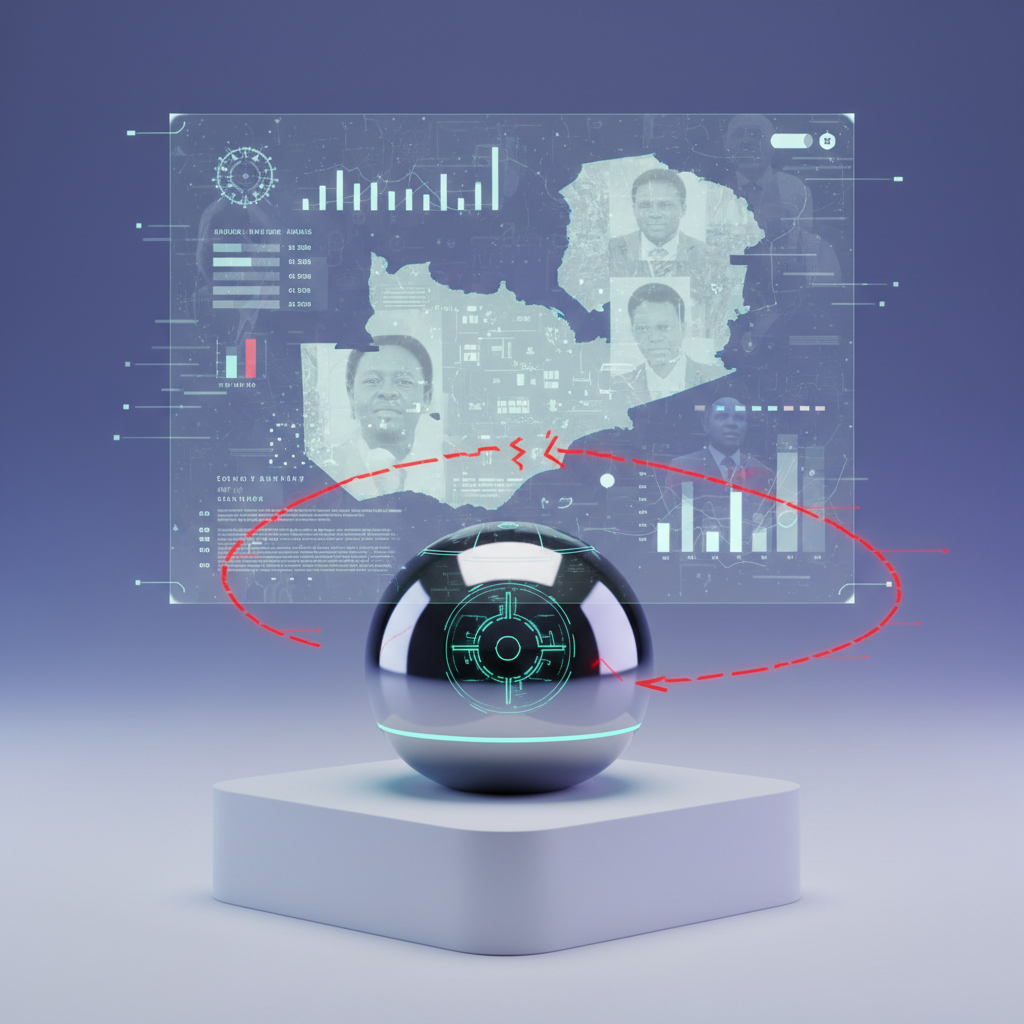
So, when news of a new deepfake detection tool, supposedly leveraging some of Meta's cutting-edge AI research, started making rounds, my ears perked up. This wasn't some grand, publicly announced product launch from a tech giant. Rather, it was an open-source initiative, a sort of 'community effort' tool that claimed to be able to identify AI-generated video and audio with impressive accuracy. For the sake of this review, and because I'm always up for a challenge, let's call it 'VeritasGuard.' The promise was simple: upload a suspicious video or audio clip, and VeritasGuard would give you a probability score of whether it was AI-generated or authentic. A digital truth serum, if you will.
First Impressions: A Shiny New Toy in a Muddy Arena
My initial interaction with VeritasGuard was through a web interface, clean and minimalist, much like you'd expect from something born out of a tech giant's labs, even if it's open-source. The upload process was straightforward. Drag and drop, click 'analyze,' and wait. It felt like using a high-tech washing machine; put in the dirty laundry, hope it comes out clean. But here in Zambia, our 'dirty laundry' is often steeped in complex socio-political dyes, not just simple dirt.
I started with some easy targets: publicly available deepfake examples from the US and Europe, the kind that make headlines. VeritasGuard purred along, spitting out high confidence scores for AI generation. '98% AI-generated,' it would declare, with a little green checkmark. Impressive, I thought. Perhaps this digital sentinel could indeed stand guard over our elections.
Key Features Deep Dive: The Algorithm's Inner Workings
VeritasGuard, from what I gathered from its somewhat technical documentation and a few online forums, employs a multi-modal approach. It analyzes visual cues, looking for inconsistencies in facial movements, eye blinks, and subtle distortions often left by generative adversarial networks (GANs) or diffusion models. It also scrutinizes audio waveforms, checking for unnatural speech patterns, tonal anomalies, and synthetic vocal characteristics. The developers claim it's trained on a vast dataset of both real and AI-generated media, including outputs from models like OpenAI's Sora, Google's Gemini, and Meta's own Llama-powered video generation tools.
It even boasts a 'temporal consistency' check, which supposedly identifies how well different frames in a video flow together, catching the tell-tale jitters or glitches that advanced deepfakes sometimes leave behind. On paper, it sounds like a formidable defense. It's like having a team of forensic experts, a digital CID, scrutinizing every pixel and every sound wave. The idea is to catch the subtle digital fingerprints left by the AI artists.
What Works Brilliantly: The Low-Hanging Fruit
VeritasGuard genuinely shines when dealing with less sophisticated deepfakes or those generated by older, publicly known models. It's fantastic at identifying the kind of 'face-swap' videos that were popular a few years ago. If someone tried to pass off a poorly synchronized video of our President delivering a speech in a voice that clearly isn't his, VeritasGuard would flag it instantly. It's a great tool for the casual user who wants to verify a suspicious video from their WhatsApp group before sharing it widely. For educational purposes, showing people what a deepfake looks like and how it can be detected, it's quite effective. Its user interface is intuitive, making it accessible even for those who aren't tech-savvy.
What Falls Short: The Zambian Reality Check
Here's where the rubber meets our dusty Zambian road. I started feeding VeritasGuard some clips that have genuinely circulated in our political discourse, particularly during the run-up to the last general election. These weren't always Hollywood-level productions, but they were effective because they played on existing societal tensions or amplified whispers. For instance, a video surfaced last year purporting to show a prominent opposition leader making inflammatory remarks about a specific ethnic group. The video was widely shared, sparked outrage, and was later debunked by local fact-checkers, but the damage was already done. When I ran this through VeritasGuard, it returned a '55% AI-generated' score. A coin toss. Not exactly the definitive answer needed to quell a brewing political firestorm.
Then there was an audio clip, seemingly of a government official discussing illicit campaign financing. Again, it spread like wildfire. VeritasGuard gave it a '62% authentic' rating, implying it was likely real. Yet, the official vehemently denied it, and the context was highly suspicious. The tool's confidence level was simply too low to be useful in a high-stakes scenario like an election, where every percentage point matters. This isn't a game of chance; it's about trust and truth.
The irony is almost too perfect: a tool designed to combat misinformation struggles most with the very kind of nuanced, locally-tailored misinformation that thrives in our information ecosystem. As Dr. Nsama Mukuka, a leading Zambian media ethics researcher at the University of Zambia, put it in a recent panel discussion, 'The sophistication of deepfakes isn't just in their visual fidelity, but in their cultural resonance. An AI model trained on Western data might miss the subtle linguistic or contextual cues that make a deepfake potent here.' She emphasized that local context is paramount, and generic global models often fall short.
Furthermore, the tool's performance degraded significantly when confronted with clips that had been re-encoded, compressed, or shared multiple times through social media platforms like WhatsApp, which is a primary vector for information dissemination in Zambia. The digital artifacts introduced by compression seemed to confuse VeritasGuard, making its analysis less reliable. It's like trying to identify a person from a blurry, photocopied image; the original details are lost.
Comparison to Alternatives: A Race Against the Shadow
VeritasGuard isn't alone in this fight. Companies like Adobe have been developing content authenticity initiatives, and academic researchers globally are constantly pushing the boundaries of detection. Google's DeepMind and OpenAI are also heavily invested in understanding and mitigating the risks of their own generative models, which includes detection. However, many of these efforts are either proprietary, research-focused, or not readily available as a simple, public-facing tool for a Zambian citizen or journalist.
Other open-source tools I've dabbled with, often community-driven projects on GitHub, tend to be even less user-friendly and require a deeper technical understanding. They might offer more granular data, but they lack the immediate, digestible feedback that VeritasGuard attempts to provide. The problem is, the creators of deepfakes are often just as, if not more, motivated and innovative than the detectors. It's a continuous arms race, and the attackers often have the advantage of surprise and novelty.
As Sam Altman, CEO of OpenAI, has often stated, 'The pace of AI development means that detection will always be playing catch-up. We need a multi-pronged approach that includes provenance, education, and robust reporting mechanisms, not just detection.' His point resonates deeply here. Relying solely on detection is like trying to catch every drop of rain with a sieve; some will always get through.
The Verdict: A Promising Start, But Not Our Savior
VeritasGuard is a commendable effort, a step in the right direction. It demonstrates the potential of AI to fight AI, a digital ouroboros. For identifying obvious fakes, or for general awareness, it serves a purpose. However, for the nuanced, high-stakes environment of Zambian elections, where political actors are increasingly sophisticated and desperate, it simply isn't robust enough. It's a good shield against pebbles, but not against the boulders that misinformation campaigns can hurl.
We need more than just a detection tool; we need a comprehensive strategy. This includes media literacy programs for our citizens, robust fact-checking initiatives embedded within our local media, and clear legal frameworks to hold those who intentionally spread deepfake misinformation accountable. It also means tech companies like Meta, Google, and OpenAI must invest more directly in localized solutions, understanding that a deepfake in Lusaka might look very different from one in London.
The threat to democracy worldwide from AI-generated deepfakes is not theoretical; it is unfolding in real-time, in places like Zambia. While tools like VeritasGuard offer a glimmer of hope, they also highlight the immense challenge ahead. We cannot outsource our critical thinking or our democratic vigilance to an algorithm, no matter how advanced. The fight for truth, especially during election season, remains a profoundly human endeavor. For more insights into how AI is shaping global politics, you might find some interesting perspectives on MIT Technology Review. You can also follow the latest developments in AI ethics and societal impact on Wired. The battle for truth in the digital age is far from over, and we are all on the front lines.