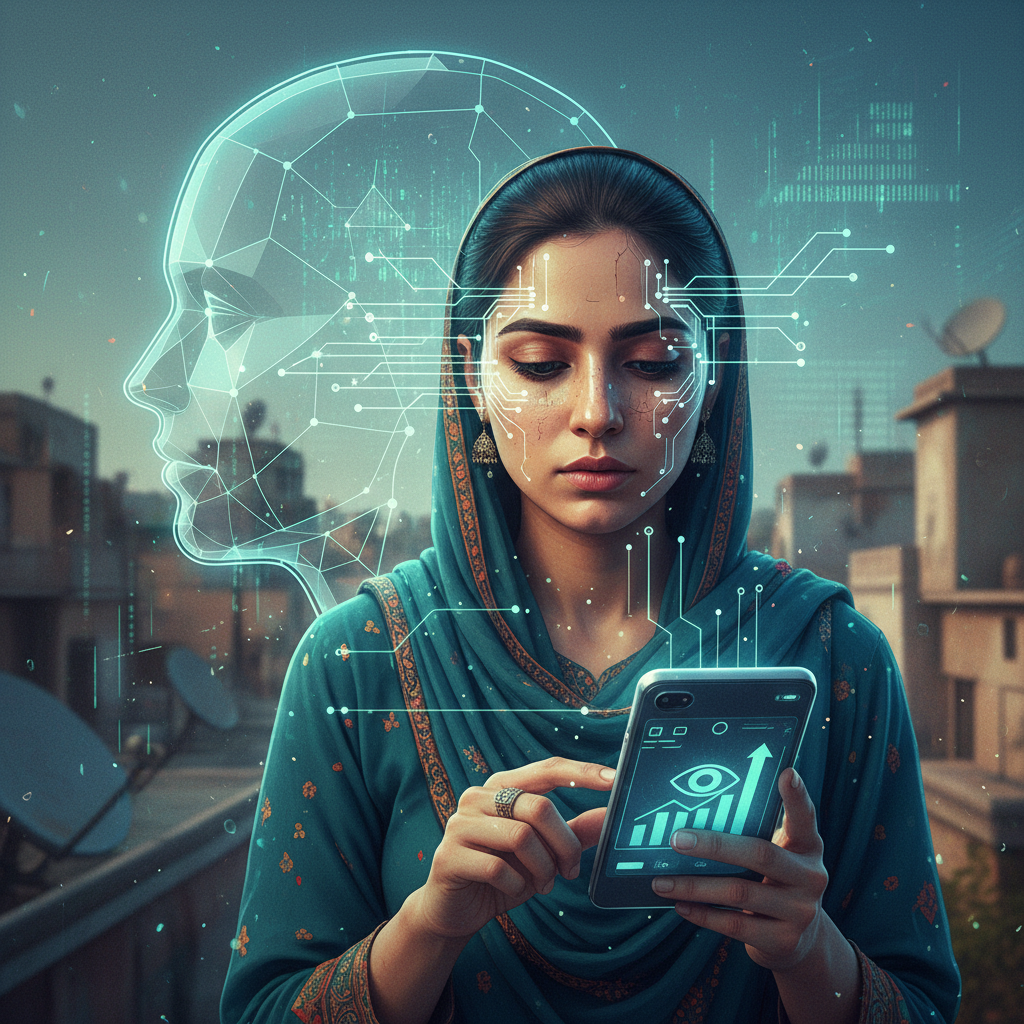
The air in Dr. Priya Sharma's clinic in Pune usually hums with the soft chatter of patients, the rustle of paper files, and the reassuring presence of her reception staff. But today, a different kind of hum fills the space. It is the gentle whir of the new 'MediBot' her clinic has adopted, a sleek, automated system that handles everything from appointment scheduling and patient intake to preliminary symptom analysis. Priya, a pediatrician with a heart as warm as a fresh cup of chai, watches it process a patient's details with a speed that makes her human assistant, young Rohan, look a little wistful. "It is efficient, yes," she muses, "but where is the smile, the comforting word?" This is the question many in India are asking as the promise of 'human-free businesses' and fully automated companies begins to touch our lives, especially in the critical sector of healthcare.
This story will change how you think about the future of work and care in our diverse nation. The idea of businesses running with minimal or no human intervention, powered by advanced AI and robotics, once felt like science fiction. Yet, here in April 2026, it is becoming a tangible reality, reshaping industries from manufacturing to our most intimate services, like healthcare. The push is driven by the desire for efficiency, cost reduction, and scalability, particularly in a country like India where access to quality healthcare remains a significant challenge for millions.
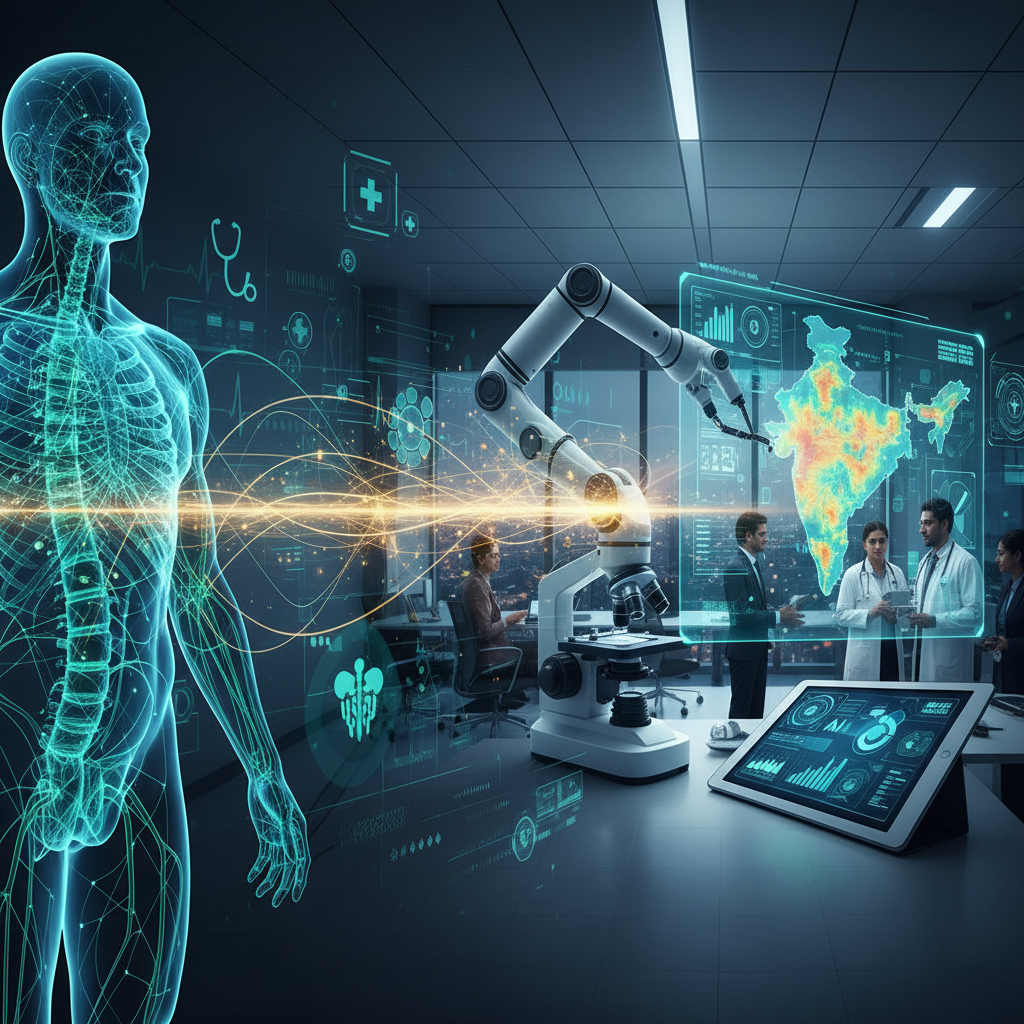
Recent data from the Niti Aayog's AI Strategy report, updated for 2026, indicates a significant acceleration in AI adoption across Indian enterprises. While manufacturing and finance led the initial wave, healthcare is catching up rapidly. Approximately 35% of large hospital chains and nearly 15% of standalone clinics in urban centers have integrated some form of AI-driven automation into their operations, a jump from just 8% two years ago. The projected return on investment (ROI) for these systems is compelling, with early adopters reporting an average 20-25% reduction in operational costs within the first year, primarily from reduced administrative overhead and optimized resource allocation. According to Reuters, global investment in healthcare AI alone is expected to reach hundreds of billions of dollars by the end of the decade.
So, who are the winners and losers in this silent revolution? On one hand, companies like 'Arogya AI Solutions,' a Bangalore-based startup, are booming. Their flagship product, 'MediBot,' which Dr. Sharma uses, is an end-to-end patient management system. It uses natural language processing to interact with patients, computer vision for initial diagnostic screening, and predictive analytics to manage hospital bed allocation. "Our goal is not to replace humans, but to augment them, to free up doctors and nurses for tasks that truly require human empathy and complex decision-making," explains Dr. Anjali Rao, CEO of Arogya AI Solutions. "We are seeing a 40% increase in patient throughput in clinics using our system, without compromising on care quality." Her company, founded by a team of IIT graduates, recently secured a significant Series B funding round, highlighting investor confidence in this model.
However, the picture is not entirely rosy. Small and medium-sized healthcare providers, especially in tier-2 and tier-3 cities, often lack the capital and technical expertise to implement such sophisticated systems. "For us, a new AI system means a massive upfront cost and the headache of retraining staff, many of whom are not tech-savvy," says Mr. Rajesh Kumar, who manages a small nursing home in Nashik. "We rely on our personal touch, our known faces. How do you automate trust?" These smaller players risk being left behind, unable to compete with the efficiency and lower costs of larger, automated rivals.
Then there are the workers. Rohan, Dr. Sharma's assistant, is a bright young man from a village near Pune. He came to the city with dreams, and this job was his first step. Now, he feels the cold breath of automation on his neck. "The MediBot does my work faster, yes, but what about my family?" he asks, his voice barely a whisper. "My salary supports my parents and my younger sister's education." His concern is echoed by countless others. A recent survey by the Indian Medical Association indicated that 60% of administrative and support staff in healthcare facilities expressed anxiety about job displacement due to AI automation.
Dr. Kavita Singh, a leading labor economist at the Indian Institute of Management Ahmedabad, offers a nuanced perspective. "We are at a critical juncture. While automation inevitably displaces certain roles, it also creates new ones. The challenge is to bridge this gap through massive re-skilling initiatives," she states. "The government and private sector must collaborate to equip our workforce with skills in AI supervision, data analysis, and ethical AI deployment. Otherwise, we risk creating a significant social divide." She emphasizes that the human element, particularly in healthcare, can never be entirely removed. "Empathy, intuition, and complex problem-solving are uniquely human. AI is a tool, not a replacement for the soul of care."
Meet the woman who is trying to bridge this gap. Sangeeta Patel, a former nurse from Ahmedabad, now runs 'CareConnect,' a non-profit focused on training healthcare workers in AI literacy. "Our people are resilient, they are adaptable," Sangeeta says with conviction, her voice resonating with Gujarati warmth. "We teach them how to interact with AI systems, how to interpret their outputs, and how to use them to enhance patient care, not replace it. It's about empowering them, not fearing the machine." Her organization has already trained over 5,000 healthcare professionals, giving them a fighting chance in this evolving landscape.
The future, as I see it, is not about entirely human-free businesses, at least not in India's healthcare. It is about a delicate dance between cutting-edge technology and our deeply ingrained cultural values of compassion and community. While AI promises to make healthcare more accessible and efficient, it must be implemented with a conscious effort to preserve the human touch that defines our approach to well-being. The challenge lies in finding that sweet spot, where technology serves humanity, rather than dominating it. The path ahead requires careful planning, ethical considerations, and a commitment to our people. For more insights into the societal impact of AI, Wired often covers these evolving dynamics. This is not just about algorithms and data; it is about the heart of India. It is about ensuring that as we embrace the future, we do not lose the essence of what makes us human. What will happen to Rohan, and millions like him, depends on the choices we make today.