
Bangkok, Thailand, The air conditioning units in my office building are working overtime today, but it is not just the April heat making everyone sweat. A new kind of digital heatwave has hit Thailand, courtesy of Spotify. Their revamped AI DJ and personalization engine, which has been quietly rolling out globally, just landed with full force in the Land of Smiles, and let me tell you, the reverberations are already echoing louder than a temple fair loudspeaker.
For years, we have been told that AI would change everything. We nodded, we scrolled, we ate our mango sticky rice. But now, it feels like it is finally knocking on the door of something deeply personal: our music. Spotify is not just suggesting songs anymore, it is practically whispering sweet nothings into our ears, curating a soundtrack to our lives with an algorithmic precision that is both impressive and, frankly, a little unnerving. And the speed at which it is adapting to Thai listening habits, well, it is almost as fast as a Bangkok motorcycle taxi weaving through Sukhumvit traffic.
This is not just about a new feature. This is about a fundamental shift in how millions of Thais, from the bustling markets of Chatuchak to the serene beaches of Phuket, will discover and consume music. Spotify claims its new AI DJ, powered by a sophisticated blend of generative AI and deep learning, can analyze not only your listening history but also contextual cues like time of day, mood, and even local cultural trends. It is designed to feel like a real human DJ, complete with conversational interjections and insights about the music. It is a bold move, and one that has the entire local music ecosystem buzzing, some with excitement, others with a healthy dose of skepticism.
“We are seeing an unprecedented level of engagement with the new AI DJ feature in Southeast Asia, particularly in Thailand,” stated Alex Norström, Spotify’s Chief Business Officer, in a recent virtual press conference. “Our data shows a 35% increase in daily active users interacting with the AI DJ since its full regional launch last week. The system is learning rapidly, adapting to the nuances of Thai pop, traditional folk, and even obscure indie bands from Chiang Mai.”
That 35% jump is not just a number, it is a seismic event in the streaming world. It suggests that Thai listeners are, perhaps surprisingly, embracing this algorithmic companion with open arms. But what does this mean for the human element of music discovery, for the local DJs spinning tunes in Khao San Road bars, or for the independent music curators who have long championed emerging Thai talent? This is where the plot thickens, like a good bowl of Massaman curry.
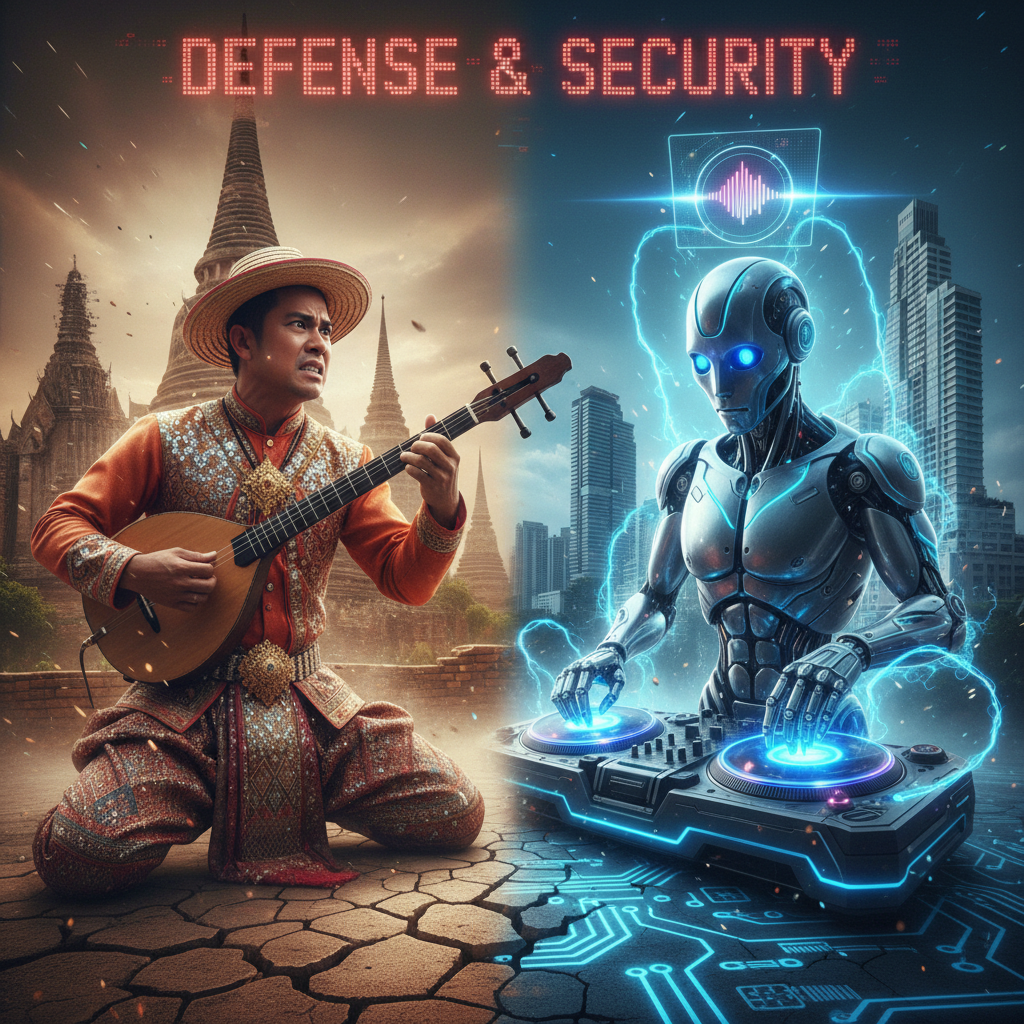
For years, Thai artists have struggled for global recognition, often finding their biggest audiences within the country. Genres like 'luk thung' and 'mor lam', with their distinct rhythms and storytelling, are deeply ingrained in the Thai cultural fabric. Will Spotify’s AI, with its global dataset, truly understand and promote these unique sounds, or will it subtly push listeners towards more internationally palatable pop? This is the million-baht question, and one that keeps many in the industry up at night.
“The potential for global exposure for Thai artists is immense, but so is the risk of homogenization,” warned Dr. Preeya Somsak, a renowned musicologist at Chulalongkorn University. “If the AI prioritizes algorithms that favor global trends, our rich musical heritage could be sidelined. We need to ensure that the AI is trained on diverse datasets that truly represent the depth and breadth of Thai music, not just what is popular on the top 40 charts.” Her concern is valid, a fear that 'Thai-style innovation' might be swallowed by a global algorithm.
Indeed, the early reactions are mixed. Some independent artists are thrilled. “My streams have jumped by 50% in the last week,” beamed Nattapon 'Nat' Sriracha, a Bangkok-based indie folk artist whose music often blends traditional Thai instruments with modern electronic beats. “The AI DJ picked up on my unique sound and started recommending me to people who had never heard of me. It is like having a personal promoter working 24/7. It is a game-changer for someone like me who does not have a big label behind them.”
On the other hand, established local music industry veterans are eyeing the development with caution. “This is a double-edged sword,” remarked Ms. Supaporn Kittikorn, CEO of Siam Music Group, one of Thailand’s largest record labels. “While we appreciate the reach, we are also concerned about the black box nature of these algorithms. How do we ensure fair play? How do we prevent a scenario where the AI dictates taste rather than reflects it? We are in constant dialogue with Spotify to understand their ethical guidelines and ensure transparency.”
This brings us to a crucial point: the ethical implications. Who is responsible when an AI subtly shapes cultural preferences? What happens if the AI inadvertently creates echo chambers, only feeding listeners more of what they already like, thus stifling true discovery of new, diverse sounds? These are not just theoretical questions, they are real concerns that need immediate attention from policymakers and tech companies alike. According to a recent report by Wired, the ethical frameworks for AI in creative industries are still very much in their infancy.
The Thai government, always keen to embrace digital transformation, is also watching closely. The Ministry of Digital Economy and Society (mdes) has indicated that it plans to engage with Spotify and other streaming platforms to discuss the impact of AI on local content. “Our priority is to foster a vibrant digital economy while preserving our cultural identity,” stated Dr. Anan Pongsathorn, Director of Digital Content Policy at Mdes. “We are exploring guidelines to ensure that AI technologies serve to augment, not diminish, local creative industries.”
What happens next? The rollout of Spotify’s AI DJ is still in its early stages, but its impact is undeniable. We are likely to see more personalized, AI-driven experiences across all digital platforms. For music, this means a future where your listening journey is less about following charts and more about a bespoke, algorithmically-guided adventure. The challenge will be to ensure that this adventure includes all the rich, diverse, and sometimes wonderfully weird sounds that make up the global music tapestry, especially those from places like Thailand.
Only in Bangkok, where tradition and technology often clash in the most spectacular ways, could a digital DJ cause such a stir. The Land of Smiles has a new expression because it is called 'disruption', and it is playing a tune that everyone, from the street food vendor to the corporate executive, is now listening to. Whether it is a harmonious symphony or a discordant cacophony, only time, and the algorithms, will tell. For now, I am just hoping my AI DJ does not forget my favorite 'luk krung' classics. You can read more about the broader implications of AI in creative fields on TechCrunch. The conversation around AI’s role in shaping cultural consumption is just beginning, and it is a discussion that will define our digital future, as highlighted by MIT Technology Review. The stakes are high, and the playlist is just getting started.