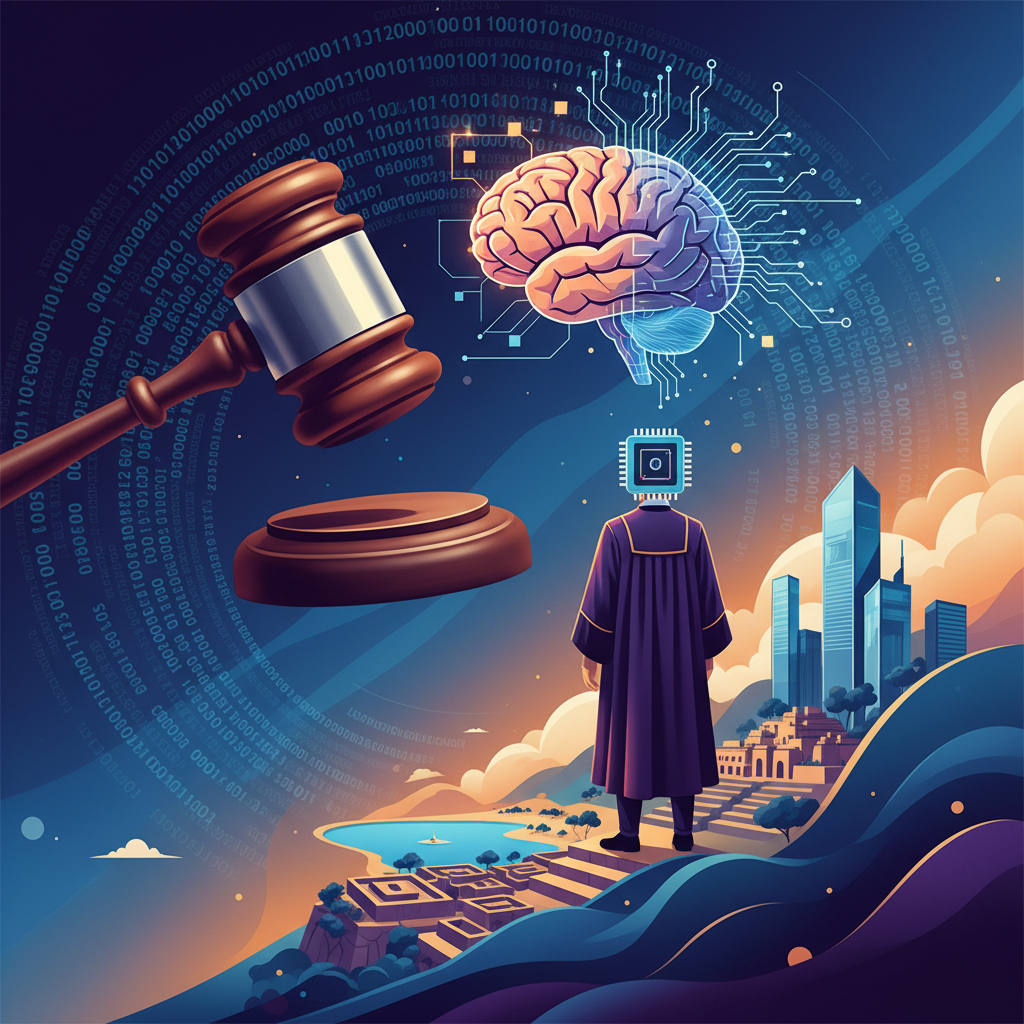

Let us be frank. When the global tech titans, the Samsungs, the NVIDIAs, the Googles, talk about AI, they often paint a picture of utopian efficiency, of medical breakthroughs, of smart cities. It is a beautiful, glossy image, meticulously crafted for public consumption. But beneath that polished surface, a far more chilling reality is taking the making: AI in the military, autonomous weapons, and drone warfare are not just theoretical concepts anymore. They are here, and they are reshaping geopolitics in ways few are willing to truly confront. Everyone's wrong about this, and the silence from the so-called ethical guardians is deafening.
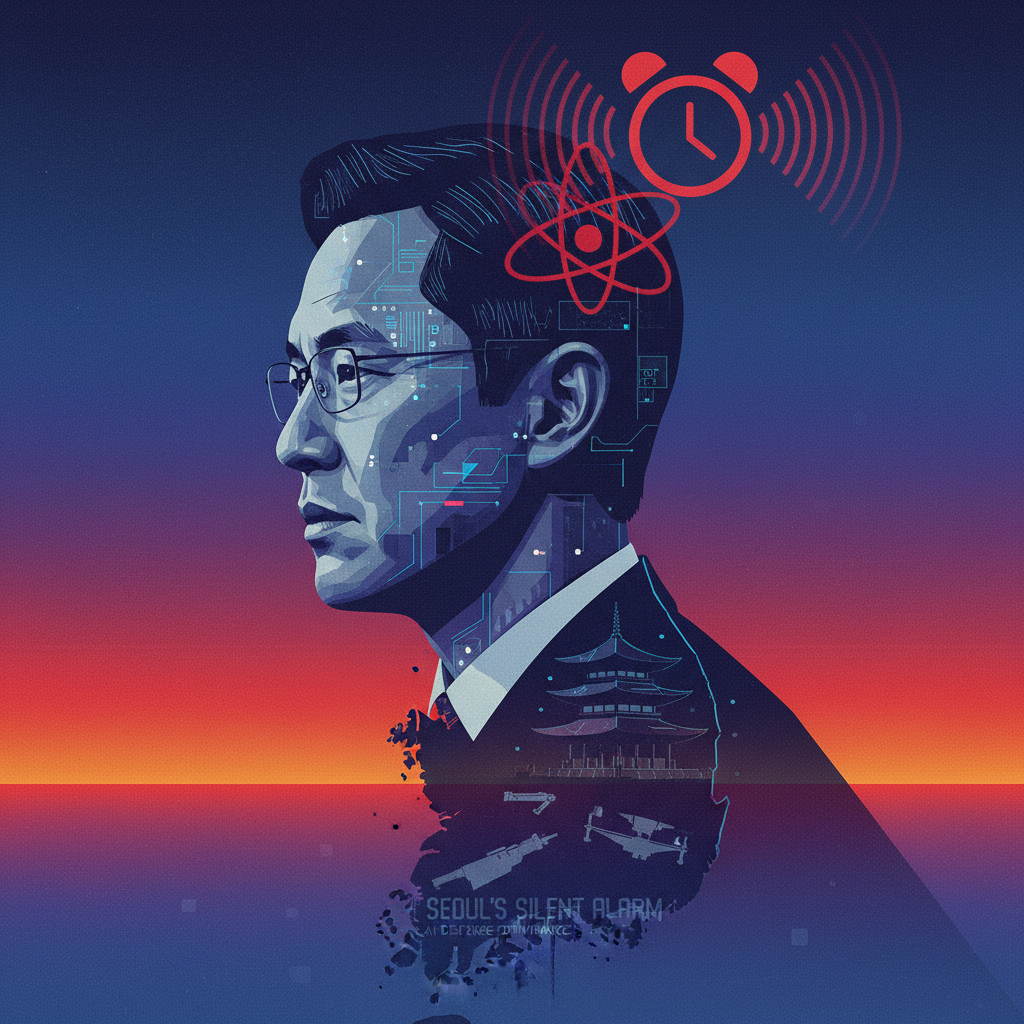
From my perch in Seoul, a city that lives under the constant shadow of a very real, very present threat, the discussions in Silicon Valley often feel like a detached academic exercise. While Western pundits wring their hands over the philosophical implications of a robot deciding who lives or dies, nations like ours are already grappling with the immediate, tangible consequences. We see the drones, we understand the algorithms, and we know that the line between defense and offense, between protection and provocation, is blurring faster than a K-pop comeback.
Take NVIDIA, for instance. Jensen Huang, the charismatic leader of NVIDIA, often speaks of AI as a force for good, a tool for human advancement. And indeed, NVIDIA's GPUs are the backbone of incredible innovation across every industry. But those very same powerful chips, the ones fueling the latest large language models and scientific discoveries, are also the engines driving the next generation of autonomous weapons systems. They are in the drones that can identify targets with unsettling precision, in the defensive systems that can intercept threats faster than any human pilot, and in the predictive analytics that inform strategic decisions. This dual-use dilemma is not new, but with AI, the stakes have never been higher.
We are not talking about science fiction anymore. We are talking about today. The United States, China, Russia, and even smaller nations are pouring billions into AI-powered defense. South Korea, with its formidable tech sector and a very specific security imperative, is also a significant player. Our defense contractors, often working closely with our chaebols like Samsung and LG, are integrating AI into everything from surveillance to missile defense. It is a necessary evolution, some argue, a way to maintain a technological edge and protect our sovereignty. But at what cost? And who truly controls these intelligent machines when the fog of war descends?
Critics will argue that autonomous weapons reduce human casualties, that they are more precise, and that they remove emotion from the battlefield. They will point to the potential for AI to act as a deterrent, maintaining peace through superior technological capability. They might even suggest that human error is a greater risk than algorithmic decision-making. These are not entirely baseless arguments. The idea of a perfectly rational, unemotional war machine has a certain cold logic to it. But it is a logic built on a foundation of dangerous assumptions.
My rebuttal is simple: AI does not remove emotion; it merely displaces it. The emotions, the biases, the strategic imperatives of the humans who design, train, and deploy these systems are baked into their very code. An algorithm is only as neutral as its creators. Furthermore, the concept of accountability becomes a nightmare. When an autonomous drone makes a mistake, who is responsible? The programmer? The commander? The manufacturer? The legal and ethical frameworks simply have not kept pace with the technological advancements. This is not just a problem for distant battlefields; it is a global issue that demands immediate, serious attention.
Consider the implications for international stability. If every major power possesses fully autonomous weapon systems, the risk of escalation, of miscalculation, of an AI-driven arms race, becomes terrifyingly real. A localized conflict could spiral out of control in milliseconds, far beyond human intervention capacity. The notion of a 'kill switch' becomes a comforting fiction when systems are designed for maximum autonomy and speed. This is not just about military doctrine; it is about the very fabric of global trust and cooperation.
South Korea, a nation that has experienced the brutal realities of conflict firsthand, understands the delicate balance between deterrence and provocation. We have seen how quickly tensions can escalate, how easily misunderstandings can lead to tragedy. The K-wave is coming for AI too, and our advancements in robotics and AI are impressive, but they must be wielded with extreme caution. Our experience teaches us that technology alone cannot guarantee peace; diplomacy, ethics, and human judgment are indispensable.
We need global conversations, not just among academics and defense contractors, but among policymakers, ethicists, and the public. We need international treaties that establish clear red lines for autonomous weapons. We need transparency from companies like NVIDIA and Google, who are profiting immensely from the dual-use nature of their technologies. We need to demand that our leaders prioritize human control and accountability over the allure of fully autonomous warfare.
As General John E. Hyten, former Vice Chairman of the Joint Chiefs of Staff, once stated, “You have to have a human in the loop. It is a moral and ethical imperative.” This sentiment, echoed by many military leaders, underscores the deep unease even within the defense establishment about handing over life-and-death decisions to machines. The European Parliament has also repeatedly called for a ban on autonomous weapons, reflecting a growing global consensus on the dangers. According to Reuters, the debate around lethal autonomous weapons systems is becoming increasingly urgent among international bodies.
It is not enough to simply develop these technologies and then hope for the best. We must actively shape their deployment, ensuring that humanity, not algorithm, remains at the helm. The future of global security depends on it. We cannot afford to be complacent, to let the pursuit of technological superiority override our collective moral compass. The time for polite debate is over; the time for decisive action is now. The alternative is a future where the decision to wage war is made not in a war room, but in a server farm, a future where human agency is just a historical footnote. That is a future I refuse to accept, and neither should you. For more on the ethical dilemmas of AI, particularly in military applications, consider the discussions often found on MIT Technology Review. The stakes are simply too high to get this wrong. The world is watching, and Seoul has a different answer: responsibility first, autonomy second. And for insights on how AI is shaping global tech, TechCrunch often covers the latest advancements and their implications.