
The sun beat down on the Treichville market, a symphony of voices, colors, and the irresistible aroma of attiéké and grilled fish. Amidst this vibrant chaos, I met Adjoa, a woman whose smile could light up the whole lagoon. Adjoa sells fabrics, beautiful pagne with intricate patterns, and she has built her small business with sweat, prayer, and an unwavering belief in her community. But lately, a new kind of shadow has fallen over her bright spirit, one cast not by the market's awnings, but by something far more intangible: data.
Picture this: a government program, funded by international partners and powered by Palantir's Foundry platform, designed to optimize resource allocation, track public health metrics, and streamline administrative processes. On paper, it sounds like progress, a step towards a more efficient, data-driven Côte d'Ivoire. But what happens when the algorithms begin to make decisions that feel opaque, distant, and sometimes, deeply unfair to the very people they are meant to serve?
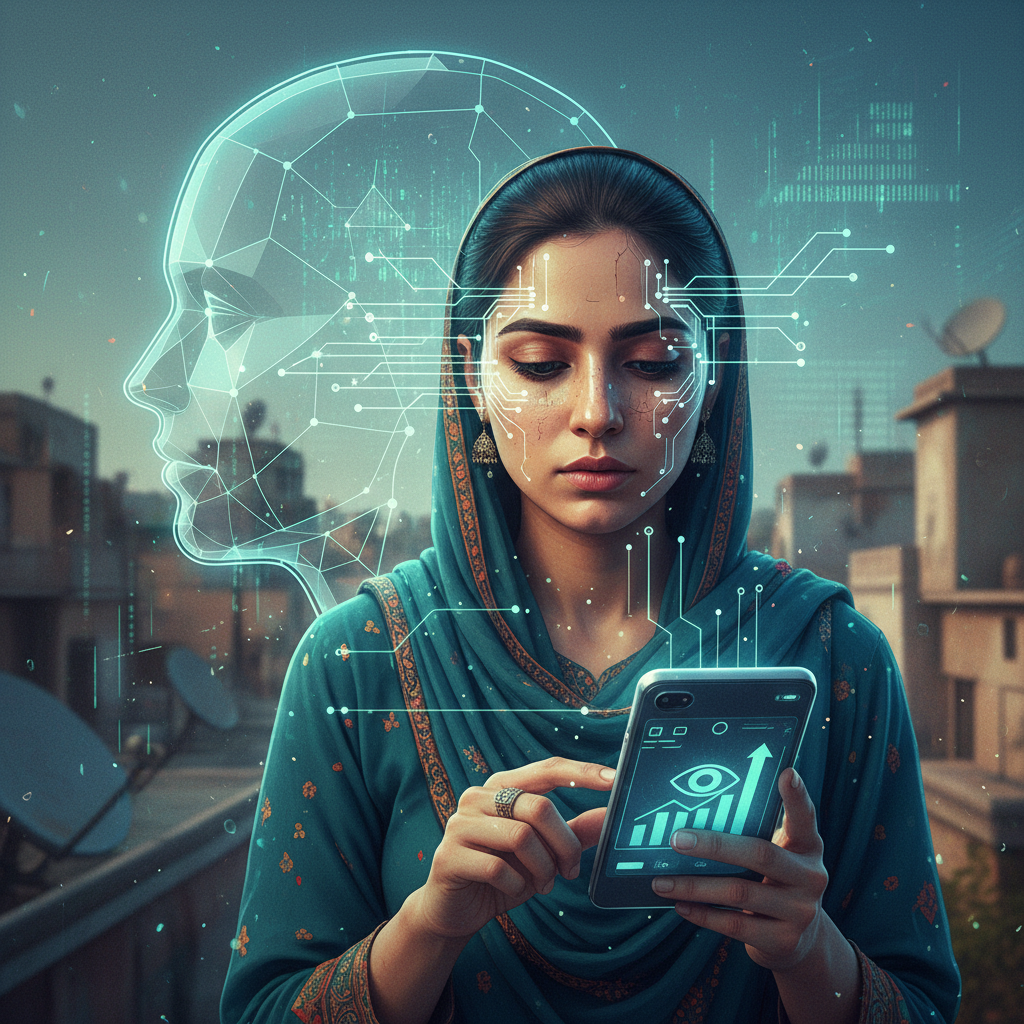
Adjoa told me something I'll never forget. "Before, if there was a problem with my business license, I knew who to talk to. I knew the face, the name, the process. Now, they say 'the system decided.' What system? Who is 'the system'? It feels like a djinn, invisible and powerful, making choices we don't understand." Her words echo a growing sentiment I've heard from many across Abidjan and beyond, a quiet unease about the unseen hand of AI in public life.
Palantir, a company known for its deep ties to government and intelligence agencies globally, has been expanding its footprint across Africa. Their Foundry platform, a sophisticated data integration and analysis tool, promises to transform how governments operate, from public health surveillance to financial oversight. In Côte d'Ivoire, its implementation has been lauded by some officials as a leap forward in governance. "We are bringing our nation into the 21st century," declared Monsieur Jean-Luc Kouassi, Director of Digital Transformation at the Ministry of Public Service. "Palantir's AI allows us to identify inefficiencies, predict needs, and serve our citizens with unprecedented precision. We've seen a 15% improvement in public service delivery times in pilot regions, and a 10% reduction in fraudulent claims for social benefits." These numbers, while impressive on paper, don't always capture the human cost or the psychological impact.
Psychologically, the shift from human-centric decision-making to algorithm-driven outcomes can be profound. Dr. Aminata Diallo, a cognitive psychologist at the Université Félix Houphouët-Boigny, explained it to me over a cup of strong coffee. "When decisions are made by an algorithm, even a highly sophisticated one like Palantir's, it can erode what we call 'procedural justice.' People need to feel that the process is fair, transparent, and that they have a voice. When the 'why' behind a decision is hidden within a black box, it fosters a sense of powerlessness and distrust." She pointed to research indicating that individuals are more likely to accept an unfavorable outcome if they perceive the decision-making process as fair and understandable. "The opacity of some AI systems, especially those used in sensitive government contracts, directly challenges this fundamental human need for clarity and agency." According to Wired, the debate around AI explainability and transparency is intensifying globally, particularly in government applications.
This isn't just about efficiency; it's about the social fabric. In Ivorian culture, relationships, personal connections, and community trust are paramount. When a system, however efficient, bypasses these established channels of interaction and accountability, it can create a disconnect. "Our elders teach us that a problem shared is a problem halved. But how do you share a problem with a computer program?" Adjoa mused, her brow furrowed. This isn't to say that all human systems are perfect, far from it. Corruption and inefficiency have long plagued many bureaucracies, and the promise of AI to circumvent these issues is undeniably attractive. However, the solution cannot be to replace one set of problems with another, particularly one that alienates citizens from their own governance.
The broader societal implications are significant. If citizens feel increasingly disconnected from the processes that govern their lives, it can lead to civic disengagement. A recent survey conducted by the Institut National de la Statistique in collaboration with a local NGO found that 40% of Ivorians in urban areas reported feeling less understood by public services since the introduction of new digital platforms, and 25% expressed concerns about how their personal data was being used. This is the story they don't want you to hear: the quiet erosion of trust, not through malice, but through the sheer, unfeeling logic of algorithms.
Consider the concept of 'algorithmic bias.' While Palantir claims its platforms are designed to be fair, the data fed into them often reflects existing societal biases. If historical data shows disparities in access to resources or opportunities for certain communities, the AI, if not carefully trained and monitored, can perpetuate or even amplify these inequalities. "The algorithm is only as good as the data it learns from, and human societies, unfortunately, are not free of prejudice," explained Dr. Diallo. "Without rigorous oversight and diverse teams building and auditing these systems, we risk automating injustice." The issue of algorithmic bias is a critical area of study, as highlighted by various reports on MIT Technology Review.
What then, is the practical advice for us, the citizens, and for our leaders? Firstly, demand transparency. Citizens have a right to understand how decisions are made, especially when those decisions impact their livelihoods and well-being. Governments employing such powerful AI tools must invest in clear, accessible explanations of their workings, not just for technical experts, but for the everyday person like Adjoa. Secondly, advocate for human oversight and intervention points. AI should augment human judgment, not replace it entirely, especially in sensitive areas. There must always be a human in the loop, someone accountable, someone who can listen, understand, and, if necessary, override an algorithmic decision. Finally, digital literacy is crucial. Empowering citizens with the knowledge to understand how these systems work, what their rights are, and how to navigate digital interfaces can help bridge the gap between people and technology. Perhaps a deeper dive into the complexities of AI governance, like in this article on From Algiers to Silicon Valley: How Africa's AI Ambitions Challenge the Global Tech Hegemony of Google, Baidu, and OpenAI [blocked], could offer further insights.
The promise of AI in governance is immense, offering paths to efficiency and equity that were once unimaginable. But as we embrace these powerful tools, we must never forget the human element. The heart of any nation beats in its people, in their trust, their understanding, and their sense of belonging. If AI, even with the best intentions, erodes these fundamental human connections, then we must pause and ask ourselves: at what cost comes progress? We must ensure that the algorithms serving our governments also serve our souls, preserving the warmth and humanity that define us, even in a world increasingly shaped by cold, hard data. The future of Côte d'Ivoire, and indeed, of many nations, depends not just on the technology we adopt, but on how we ensure it harmonizes with the very essence of who we are.