
The proliferation of artificial intelligence has undeniably reshaped our technological landscape, yet beneath the shimmering veneer of innovation lies a growing unease. Governments, recognizing the profound implications of powerful AI systems, have begun to establish dedicated AI safety institutes. These bodies are tasked with the unenviable mission of testing and evaluating cutting-edge AI before its widespread deployment, ostensibly to mitigate risks ranging from bias and misinformation to autonomous decision-making in critical infrastructure. But as a Belgian, observing these developments from the very nexus of European policy, one cannot help but ask: are these institutes truly effective, or are they simply a bureaucratic response to a complex, rapidly evolving challenge?
The United Kingdom, the United States, and more recently, the European Union, have all announced or launched their versions of these critical oversight bodies. The UK's AI Safety Institute, for instance, has been actively engaging with models from leading developers such as OpenAI, Google DeepMind, and Anthropic. Their stated goal is to develop robust evaluation techniques for frontier AI models, focusing on areas like cybersecurity, biosecurity, and autonomous replication. This is commendable in theory, yet the practicalities present a formidable hurdle. How does one comprehensively test a system whose capabilities are still being discovered, even by its creators?
Consider the sheer scale and complexity of models like OpenAI's GPT-4 or Google's Gemini Ultra. These are not static pieces of software; they are dynamic, emergent systems capable of novel behaviors. Traditional software testing methodologies, which rely on predefined specifications and exhaustive test cases, often fall short when confronted with the probabilistic and often opaque nature of large language models. As Professor Dr. Isabelle Van der Velde, a leading expert in AI ethics at KU Leuven, recently stated, "The challenge is not merely to identify known vulnerabilities, but to anticipate unknown unknowns. We are testing systems that can learn and adapt, sometimes in ways we did not explicitly program. This demands a paradigm shift in our approach to safety." Her words resonate deeply with the pragmatic skepticism often found in our Belgian academic circles.
The EU's approach, often characterized by its comprehensive regulatory ambition, is attempting to integrate safety evaluations within the broader framework of the AI Act. While the Act focuses heavily on risk classification and compliance, the operationalization of testing still largely falls to national bodies or specialized European agencies. This distributed model, while potentially fostering diverse expertise, also risks fragmentation and inconsistent application of safety standards across member states. Brussels has questions and so should you, particularly regarding the harmonization of these testing protocols. Will a system deemed safe in Estonia meet the same rigorous standards applied in France or Germany?
One of the primary difficulties lies in the definition of 'safety' itself. Is it merely the absence of immediate harm, or does it encompass broader societal impacts, such as job displacement, cultural erosion, or the subtle manipulation of public discourse? The U.S. AI Safety Institute, under the National Institute of Standards and Technology (nist), has emphasized the development of technical standards and benchmarks. This is a crucial step, providing a common language and methodology for evaluation. However, the pace of AI development often outstrips the deliberative process required to establish such standards. By the time a comprehensive benchmark is agreed upon, the technology it seeks to evaluate may have already evolved significantly.
Furthermore, the resources required for truly exhaustive testing are immense. Access to cutting-edge models, specialized hardware, and a diverse pool of expert evaluators are all necessary. This often means relying on the very companies developing these systems for access and cooperation, creating a potential conflict of interest. While companies like Anthropic have publicly committed to safety research, including their 'Constitutional AI' approach, the inherent drive for market dominance can sometimes overshadow the more cautious path of thorough, independent scrutiny. The financial incentives are simply too powerful to ignore. According to recent market analyses, the global AI market is projected to reach over $1.8 trillion by 2030, a figure that underscores the economic imperative driving rapid deployment see Reuters for more.
From a Belgian perspective, where consensus-building and meticulous detail are often prioritized, the rush to deploy AI without fully understanding its long-term implications is a source of considerable apprehension. We have seen the complexities of regulating digital platforms, and AI presents an even more intricate web of challenges. The EU's approach deserves more credit than it gets, not for its speed, but for its foundational commitment to ethical considerations and human-centric design. The AI Act, for all its perceived bureaucratic heft, is an attempt to build a regulatory floor, ensuring that certain fundamental rights and safety parameters are non-negotiable.
However, the question remains: how do these institutes translate policy into actionable, preventative measures? It is one thing to identify a potential bias in a training dataset; it is another to prevent that bias from manifesting in real-world decisions made by an autonomous system, particularly when those decisions affect individuals' lives, credit scores, or access to essential services. The concept of 'red-teaming' AI models, where experts actively try to provoke harmful behaviors, is a promising avenue. Yet, even the most sophisticated red-teaming exercises are limited by the imagination and resources of the human testers. The AI might discover novel attack vectors or generate unforeseen outputs that no human could have predicted.
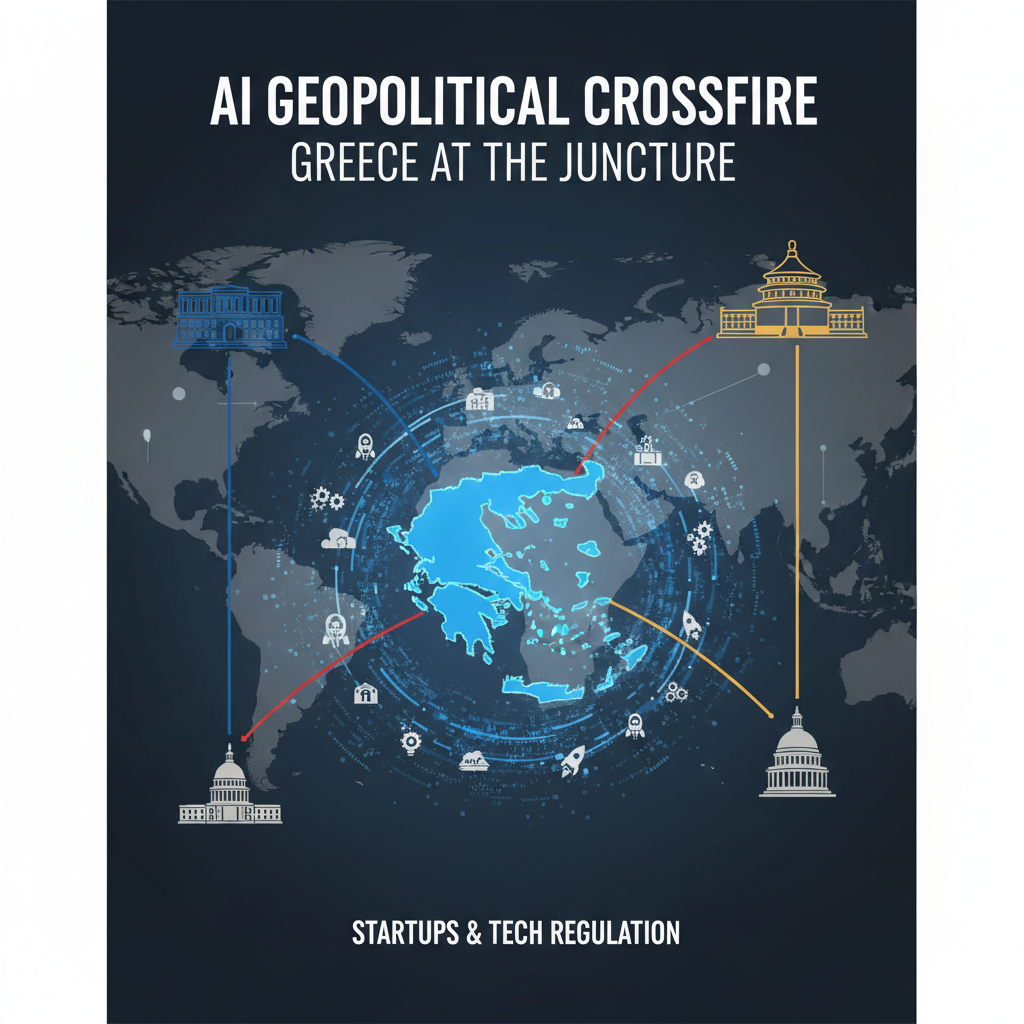
Moreover, the geopolitical dimension cannot be overlooked. As nations vie for leadership in AI, the pressure to accelerate development can sometimes eclipse safety concerns. China, for instance, has its own robust framework for AI governance, often emphasizing control and national security. The interplay between these different national approaches to AI safety will be crucial in shaping global standards. Will there be a convergence of best practices, or will we see a fragmented landscape where different safety thresholds apply, potentially leading to a 'race to the bottom' in terms of safeguards?
The establishment of AI safety institutes is a necessary, albeit nascent, step in managing the profound societal transformation brought about by advanced AI. However, their efficacy will ultimately depend on several factors: genuine independence from commercial pressures, sufficient funding and technical expertise, and a willingness to continually adapt testing methodologies as AI capabilities evolve. Without these, they risk becoming mere symbolic gestures, offering a false sense of security while the true challenges of algorithmic governance remain unaddressed. As we Belgians understand, true pragmatism demands not just good intentions, but robust, verifiable results. The path ahead is fraught with complexity, and the stakes could not be higher for our collective future, a future that will be shaped by the very systems we are now attempting to understand and control. For further insights into the broader implications of AI regulation, one might consider the ongoing discussions around AI ethics and societal impact. The conversation is far from over, and indeed, it has only just begun.