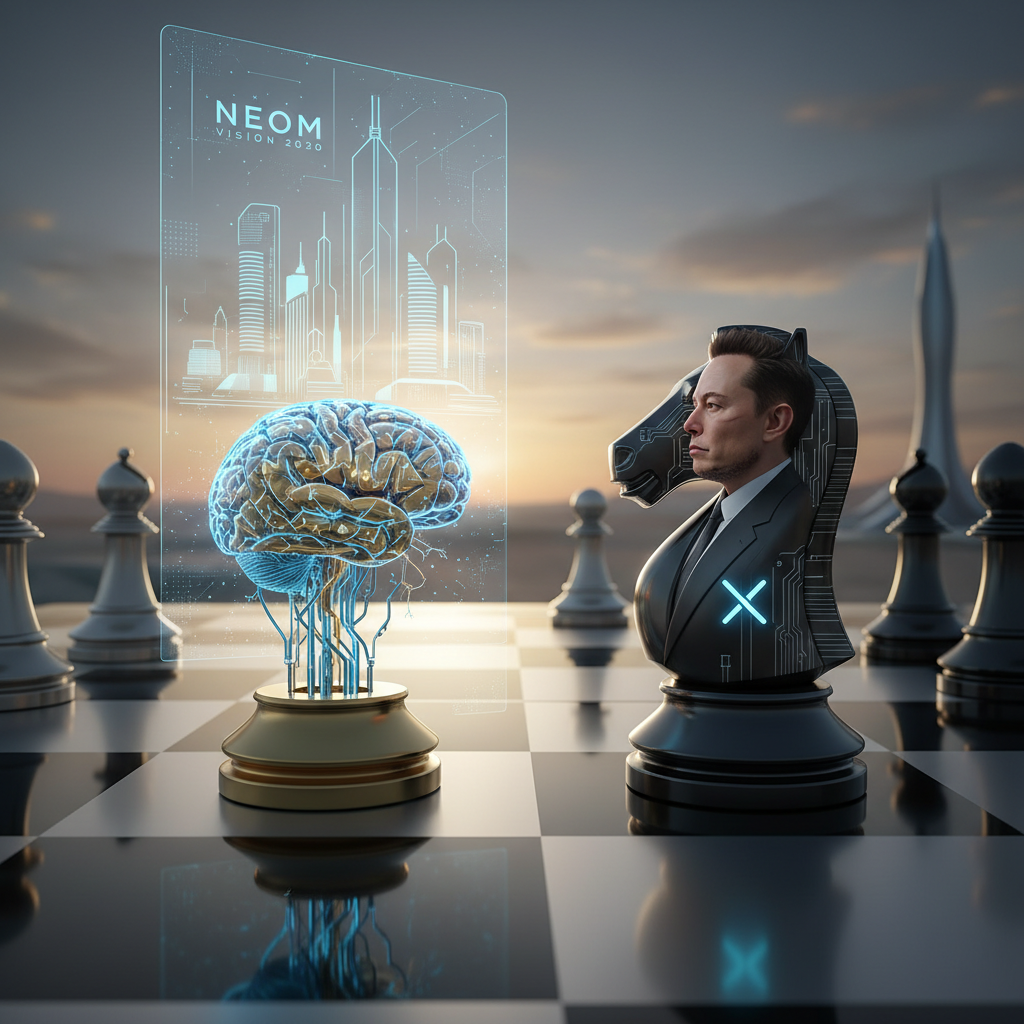
The Kingdom's Vision 2030 demands results, not promises, particularly when it comes to transformative technologies. In the sprawling, futuristic landscape of Neom, where the desert is blooming with data centers and innovation is the currency, the concept of brain-computer interfaces, or BCIs, has moved from science fiction to strategic imperative. The focus is not merely on incremental improvements but on a paradigm shift in human capability and healthcare, with companies like Elon Musk's Neuralink often cited as the vanguard.
The Strategic Move: NEOM's Neurotech Embrace
Neom, Saudi Arabia's flagship smart city project, is not just building infrastructure, it is constructing an ecosystem for future industries. Its strategic interest in BCIs, powered by advanced artificial intelligence, is a clear signal. This move is less about speculative research and more about identifying technologies with the potential for profound societal impact and economic diversification. The goal is to position Neom as a global hub for neurotechnology, attracting talent, investment, and pioneering research. The immediate applications are clear: restoring sight, speech, and movement for individuals with neurological impairments, a humanitarian endeavor that aligns with the Kingdom's broader commitment to improving quality of life.
This strategic pivot is underpinned by significant capital. Oil money meets machine learning in a concerted effort to accelerate development in areas traditionally dominated by Western research institutions. The intent is to leapfrog conventional development cycles, leveraging substantial financial resources to foster rapid innovation and deployment. This includes potential partnerships, direct investments, and the creation of specialized research facilities within Neom dedicated to neurotechnology and AI integration.
Context and Motivation: Beyond Oil, Towards Human Potential
The motivation behind NEOM's aggressive pursuit of BCI technology is multifaceted. Economically, it is a crucial component of Vision 2030's diversification agenda, aiming to create non-oil revenue streams and high-tech industries. Socially, it addresses a pressing global health challenge. Neurological disorders, strokes, and spinal cord injuries impose immense burdens on individuals and healthcare systems worldwide. By investing in BCIs, Saudi Arabia aims to become a leader in solutions that offer tangible improvements to human well-being, enhancing its global standing as a responsible innovator.
Furthermore, there is a clear national security and talent retention aspect. Developing cutting-edge capabilities in neurotechnology creates high-value jobs, attracts top scientific minds, and reduces reliance on external expertise. It cultivates a knowledge-based economy, a cornerstone of Vision 2030. As Dr. Fahad Al-Turaif, a leading neuroscientist at King Faisal Specialist Hospital and Research Centre, recently stated, "Our investment in brain-computer interface research is not just about medical breakthroughs, it is about building a future where Saudi Arabia is at the forefront of human augmentation and rehabilitation technology, serving our people and the world." His words underscore the dual ambition of humanitarian impact and technological leadership.
Competitive Analysis: A Crowded, Complex Field
The BCI landscape is highly competitive, populated by a mix of well-funded startups, academic institutions, and established tech giants. Neuralink, founded by Elon Musk, is perhaps the most visible player, known for its ambitious goals and high-profile demonstrations. Its approach involves implanting ultra-fine threads directly into the brain to record and stimulate neural activity, aiming for high bandwidth communication. Other notable players include Synchron, which uses a less invasive endovascular approach, and Blackrock Neurotech, a veteran in the field with FDA-approved devices already in use for communication and control.
Traditional tech companies like Meta and Google are also exploring neurotechnology, albeit often with a focus on non-invasive or less invasive interfaces for augmented reality and virtual reality applications. Meta's Reality Labs, for instance, has openly discussed research into wrist-worn devices that interpret neural signals for interface control. The competitive edge often lies in the balance between invasiveness, bandwidth, safety, and regulatory approval. Neuralink's highly invasive approach promises greater precision and data but faces significant regulatory hurdles and public apprehension.
For Neom, the challenge is not just to invest, but to choose the right partners and technologies. While Neuralink offers a high-risk, high-reward proposition, the Kingdom must also consider more mature, albeit less flashy, technologies that can deliver tangible results sooner. The ethical and societal implications of invasive BCIs are also a critical factor, demanding careful consideration and robust regulatory frameworks, an area where Neom aims to set new global standards.
Strengths and Weaknesses of NEOM's BCI Strategy
Strengths:
- Unparalleled Financial Backing: The sheer scale of investment available through the Public Investment Fund (PIF) and Neom allows for moonshot projects and sustained research efforts that few other entities can match. This financial muscle can attract top global talent and accelerate infrastructure development.
- Greenfield Opportunity: Neom is being built from the ground up, offering a unique opportunity to integrate neurotechnology into urban planning, healthcare systems, and regulatory frameworks without legacy constraints. This includes dedicated zones for research, development, and manufacturing.
- Humanitarian Imperative: Focusing on restoring lost function provides a strong ethical foundation and a clear pathway for early adoption and public acceptance, particularly within a society that values community and care for the vulnerable.
- Strategic Vision 2030 Alignment: The BCI initiative perfectly aligns with the Kingdom's broader goals of economic diversification, technological leadership, and human capital development.
Weaknesses:
- Talent Acquisition and Retention: While financial incentives are strong, attracting and retaining world-class neuroscientists and AI engineers to a new, albeit futuristic, environment requires more than just money. Cultural integration and academic freedom are critical considerations.
- Regulatory Complexity: The ethical and regulatory landscape for invasive BCIs is nascent and highly complex. Navigating international standards while establishing local frameworks will be a significant challenge, especially for technologies that touch upon fundamental aspects of human identity and autonomy. The Kingdom must demonstrate a commitment to global best practices in this sensitive domain.
- Technological Maturity: Many promising BCI technologies, particularly those offering high bandwidth, are still in early stages of development and face substantial technical hurdles related to longevity, reliability, and biocompatibility. Over-reliance on unproven technologies carries inherent risks.
- Public Perception: The concept of brain implants can evoke strong reactions. Managing public perception, both domestically and internationally, will be crucial for widespread adoption and avoiding ethical controversies.
Verdict and Predictions: A Calculated Risk with High Stakes
NEOM's strategy to embrace AI-powered BCIs is a calculated risk, but one with potentially transformative rewards. The commitment is clear, the resources are substantial, and the motivation is profound. However, success hinges on more than just capital. It requires meticulous execution, ethical leadership, and the ability to foster a truly collaborative international research environment.
My assessment is that Neom will likely pursue a multi-pronged approach. While high-profile ventures like Neuralink will undoubtedly capture attention, Neom will also invest in less invasive, clinically proven BCI technologies to deliver immediate impact. Expect to see significant announcements regarding partnerships with established neurotech firms and academic institutions in the coming 12 to 18 months, focusing on specific applications such as prosthetics control and communication devices for locked-in patients. The initial emphasis will be on rehabilitation rather than enhancement, building trust and demonstrating tangible benefits.
The regulatory framework developed within Neom for neurotechnology will be a critical bellwether. If it can strike a balance between innovation and ethical oversight, it could become a global model. The Kingdom's ambition here is not merely to adopt technology but to define its responsible evolution. As one senior official at the Neom Authority, who preferred to remain unnamed due to ongoing negotiations, confided, "We are not just building a city, we are building a new way of life. That includes redefining what is possible for human health and potential, but always with a firm hand on ethical governance." This sentiment reflects a pragmatic understanding of the immense responsibility that comes with pioneering such technology.
In the long term, if Neom can overcome the formidable challenges of talent, regulation, and public acceptance, its BCI strategy could indeed position Saudi Arabia as a global leader in neurotechnology. The vision is audacious, but the resources and political will are aligned. The world will be watching to see if the desert can truly bloom with not just data centers, but also with the neural pathways of a revitalized humanity. For more insights into the broader AI landscape, you can explore reports on AI research and analysis or follow the latest in AI product news. The journey will be arduous, but the potential rewards for human well-being and economic diversification are too significant to ignore. For a deeper dive into the broader implications of AI in healthcare, consider reading about AI's role in diagnostics [blocked].
The integration of AI into these interfaces is paramount. Advanced machine learning algorithms are essential for interpreting complex brain signals, adapting to individual user patterns, and providing seamless, intuitive control. Without sophisticated AI, BCIs would remain rudimentary tools, far from the sophisticated systems envisioned for Neom. This synergy between neurobiology and artificial intelligence is where the true potential lies, offering personalized and highly effective solutions for individuals seeking to regain lost capabilities. The Kingdom's commitment to this convergence underscores its understanding of the foundational technologies required for such a leap forward. For continuous updates on the rapidly evolving AI industry, TechCrunch remains an invaluable resource.