
Let me tell you something, friends. When I look at the global tech landscape, especially this wild, exhilarating AI space, I see giants. And among them, Microsoft, with its Azure AI services, stands like a baobab tree, roots deep, branches wide, casting a long shadow over the enterprise world. Everyone is talking about OpenAI's GPT models, about Copilot, about how these tools are changing everything. And rightly so. But what often gets missed, what we need to really chew on, is the infrastructure underneath it all, the cloud that powers these wonders. That, my friends, is where Microsoft has played a masterstroke, and it has profound implications for places like Zimbabwe, for the entire African continent.
I'm calling it now: Microsoft's cloud dominance, particularly with Azure AI, isn't just about market share, it's about setting the rhythm for the next few decades of digital development. They have woven their services so deeply into the fabric of global business, from finance to healthcare to creative industries, that opting out feels less like a choice and more like a self-imposed exile. Think about it: every major enterprise, every startup with serious ambitions, they are all looking at Azure, at AWS, at Google Cloud. But Microsoft's strategy, integrating OpenAI's cutting edge models directly into Azure, has given them an edge that feels almost insurmountable right now. It's like they've built the superhighway and then bought all the best cars to drive on it.
From my desk in Harare, I watch this unfold with a mix of awe and apprehension. Awe, because the sheer scale and innovation are breathtaking. The ability for businesses, even here, to tap into world-class AI models without building their own supercomputers is a game changer. Imagine a small Zimbabwean textile company using Azure AI to predict fashion trends with pinpoint accuracy, optimizing their supply chain, or even designing new patterns with generative AI. The potential for efficiency, for unlocking new markets, is immense. "The future is African," I always say, and AI is undoubtedly a key to that future. But apprehension creeps in when I consider the concentration of power, the potential for a single entity to dictate the terms of engagement for our digital destiny.
Satya Nadella, Microsoft's CEO, has been clear about their vision. He often speaks about democratizing AI, making it accessible to everyone. In a recent interview, he reportedly stated, "We want to empower every person and every organization on the planet to achieve more, and AI is the most transformative technology of our time to help us do that." This sounds noble, and in many ways, it is. Their investment in OpenAI, reportedly a multi-billion dollar commitment, has cemented Azure as the go-to platform for many of the most advanced AI capabilities. This means that if you want to leverage GPT-4, or the latest Dall-e models, or even build your own custom AI solutions with cutting edge tools, Azure is often the path of least resistance. It's a powerful offering, a potent lure.
But let's be real. When one company holds so much of the infrastructure, so much of the intellectual property, and so much of the data, it creates a dependency. For African nations, still building our digital economies, still trying to define our technological sovereignty, this is a critical point. Are we simply becoming digital tenants in someone else's skyscraper? We saw this with traditional software, where we became consumers rather than creators. With AI, the stakes are even higher, because AI isn't just a tool, it's becoming the brain of our future economies, our creative industries, our governance.
Now, I hear the counterarguments. Some will say, "Zinhlée, you're being overly cautious. This is about efficiency, about progress. Why reinvent the wheel when Microsoft has already built a Rolls-Royce?" Others might argue that the benefits of immediate access to advanced AI outweigh the long-term risks of dependency. They'll point to the sheer cost and complexity of building alternative cloud infrastructure, especially for developing nations. And they'd be right, to an extent. The investment required to build data centers, to train local AI talent, to develop our own foundational models, is monumental. It's not something you conjure up overnight, like a traditional Shona folk tale.
But my rebuttal is this: the cost of not building our own capacity, of not fostering local alternatives, will be far greater in the long run. It's not about rejecting global partners, it's about strategic engagement. It's about understanding that while Microsoft offers incredible tools, we must also cultivate our own digital gardens. Imagine if all our stories, all our music, all our visual art, were processed and interpreted through AI models trained predominantly on Western datasets. What nuances would be lost? What biases would be amplified? What unique African perspectives would be flattened?
This isn't just an abstract concern. It's a very real one for artists, musicians, and storytellers across Africa. For example, the vibrant art scene in Mbare, Harare, or the incredible digital artists emerging from Lagos and Nairobi, they need AI tools that understand their context, their languages, their aesthetic sensibilities. If the dominant AI models are trained on a world that doesn't fully represent them, their creative output will always be filtered through someone else's lens. This is why initiatives to build African-centric datasets, to train local language models, and to develop open source AI frameworks are so crucial. We need to ensure that the AI revolution is truly global, not just a few major players dictating the terms from their Silicon Valley or Seattle campuses.
We need to push for more transparency, more interoperability, and more localized control over the AI systems that will increasingly shape our lives. Governments and private sectors across Africa should be investing in local cloud infrastructure, fostering AI education from primary school to university, and incentivizing local AI innovation. This isn't about isolation, it's about empowerment. It's about ensuring that when we say "the future is African," we mean it in a way that allows us to be active architects of that future, not just passive recipients of technologies developed elsewhere.
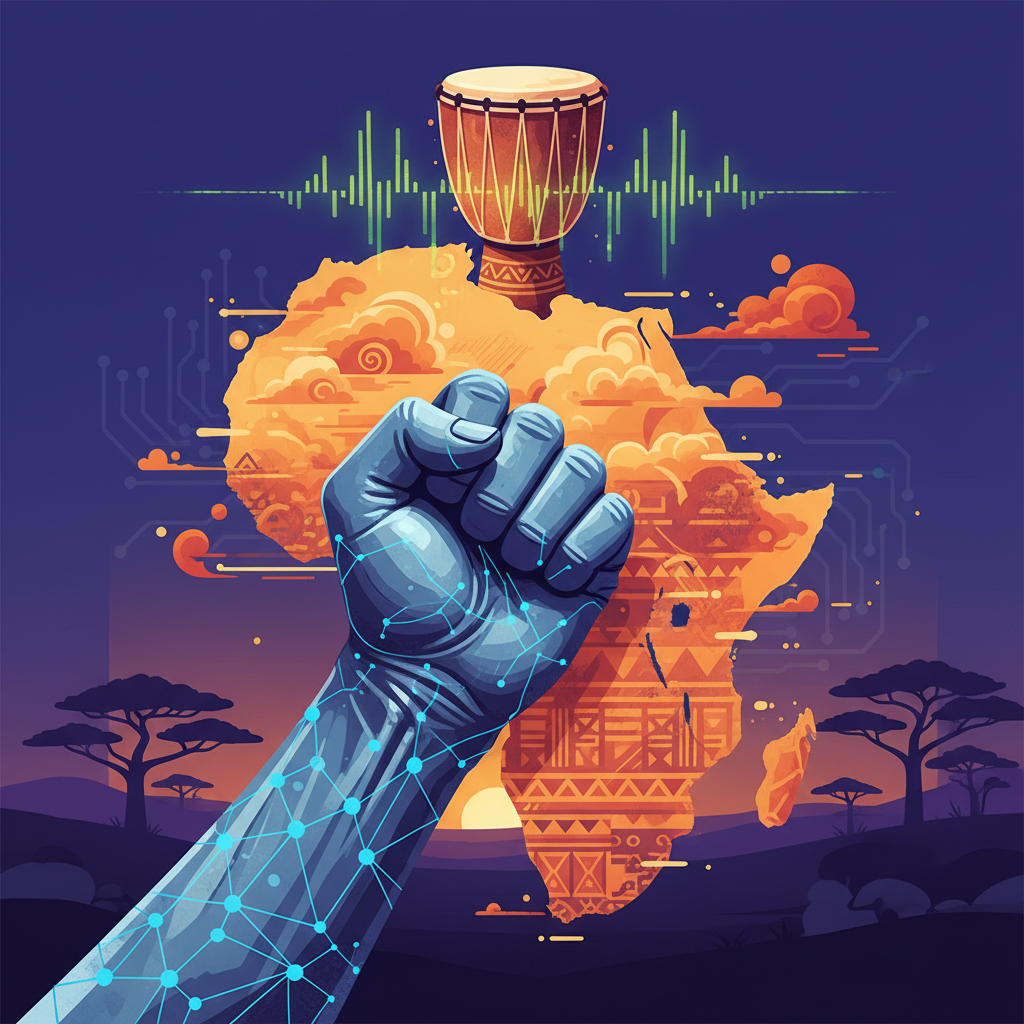
Watch this space. The conversation around AI sovereignty, data localization, and ethical AI development is only going to intensify. Microsoft's Azure AI is a powerful force, no doubt, but the responsibility lies with us, with Africa, to ensure that this power serves our vision, our culture, and our people. We must demand a seat at the table where the rules of this new digital world are being written, and if necessary, build our own table. The drumbeat of innovation should echo our own rhythms, not just those from distant shores. The journey is long, but the destination, a truly empowered and digitally sovereign Africa, is worth every step. For more on the global AI landscape, you can always check out Reuters Technology for business insights or MIT Technology Review for deeper analysis of the tech itself. We're building something significant here, something that will define generations. And we need to make sure we're building it right. For a different perspective on AI's global impact, you might find this article interesting: When Mistral AI's Lean Models Challenge OpenAI's Giants: A New Economic Equation for Buenos Aires [blocked]. The future is not just happening to us, we are making it. And Africa has a critical role to play. We must ensure that our voice is heard, loud and clear, in this global AI symphony. The stakes are too high to be silent. We need to be creators, not just consumers, of this incredible technology. And that starts with understanding the infrastructure, the very foundations, upon which this new world is being built. For more insights on the broader tech world, TechCrunch is always a good read.```