
The tech world, bless its ever-optimistic heart, is currently awash in praise for Hugging Face. You've heard the numbers, I'm sure. A staggering $4.5 billion valuation, over a million models hosted on its platform, a community of millions of developers. It's a gold rush, a digital boomtown built on the promise of open-source AI. But as a Nigerian journalist, someone who has seen countless promises from the global North fall flat or, worse, become tools of exploitation in the global South, I have to ask: Is this truly a revolution, or just a more sophisticated form of digital colonialism in the making?
Let's be clear, the idea of open-source AI is seductive. It conjures images of collaboration, accessibility, and a level playing field. Historically, technology has often been a gated community, with the keys held tightly by a few powerful corporations. Think back to the early days of computing, when mainframes were the exclusive domain of governments and massive enterprises. The internet itself, initially a bastion of academic freedom, quickly became commercialized and centralized. We've seen this play out repeatedly. Proprietary software, closed ecosystems, the constant battle for market dominance. The narrative has always been about who controls the technology, who sets the standards, and ultimately, who benefits.
Hugging Face emerged as a breath of fresh air in this landscape. Founded in 2016, it started as a chatbot company, but its pivot to becoming a platform for machine learning models and datasets, particularly for natural language processing, was nothing short of brilliant. They capitalized on the burgeoning interest in AI, offering a space where researchers and developers could share their work, collaborate, and build upon each other's innovations. The numbers speak for themselves: over a million models, including everything from large language models like Meta's Llama 2 to specialized models for image recognition and audio processing, are now readily available. This repository has become the de facto GitHub for AI, a central hub for the global AI community. Its valuation, reportedly reaching $4.5 billion after a funding round that included giants like Google, Amazon, and NVIDIA, signals immense confidence from Silicon Valley's elite.
But this is where my skepticism kicks in. Everyone's celebrating, but I have questions. When Big Tech invests heavily in an 'open-source' platform, what are the unspoken terms? Is it truly about fostering a democratic AI ecosystem, or is it about shaping the future of AI development in a way that ultimately benefits their own commercial interests? As Professor Joy Buolamwini, founder of the Algorithmic Justice League, famously stated, "AI is a mirror, not a window." She argues that the biases embedded in the data and algorithms reflect the biases of their creators. If the vast majority of these open-source models are developed in specific geographical and cultural contexts, how truly 'open' or universally applicable are they?
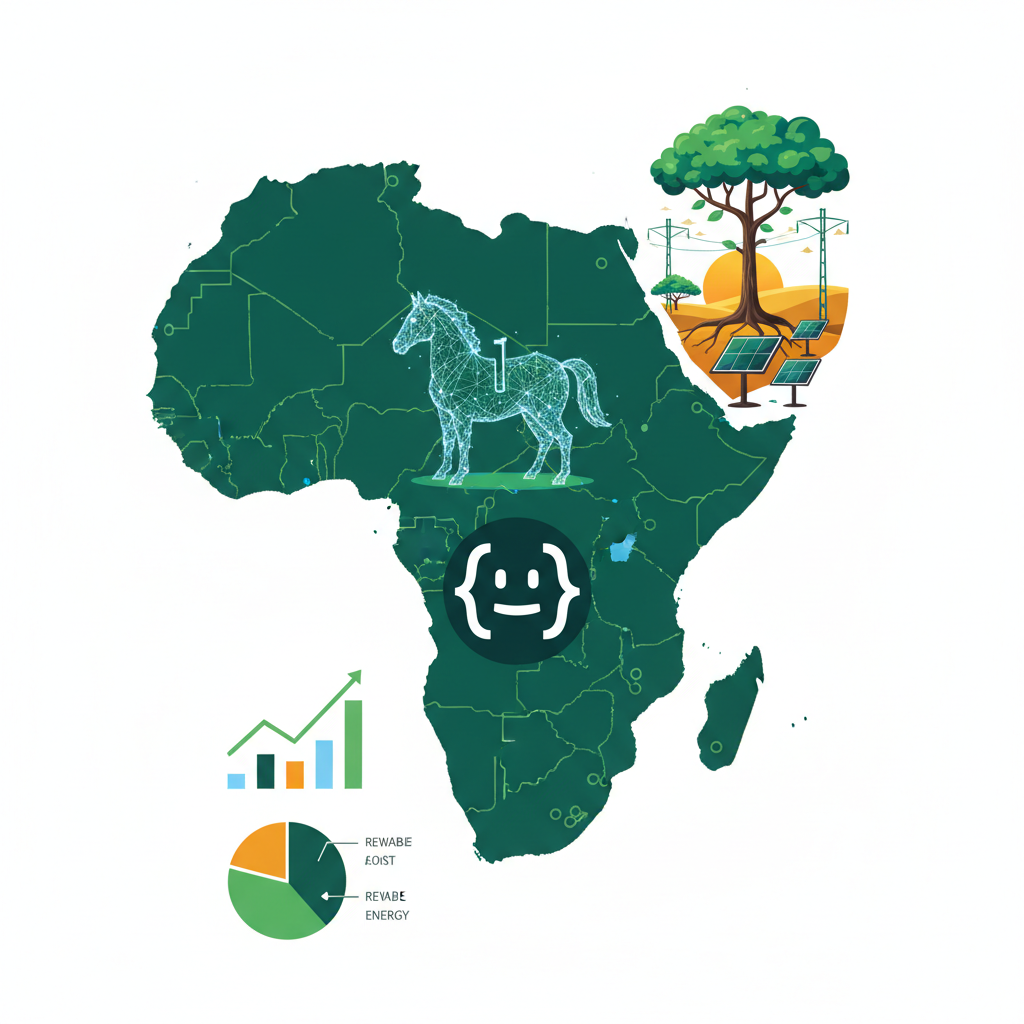
Consider the implications for a continent like Africa. We have a vibrant, rapidly growing tech scene. From Lagos to Nairobi, Accra to Cape Town, innovators are building solutions tailored to local challenges, often with limited resources. The promise of Hugging Face is that these developers can access powerful models without having to train them from scratch, saving time and computational cost. This is undeniably valuable. However, the models available are predominantly trained on data reflecting Western languages, cultures, and socio-economic realities. What happens when these models are applied to Nigerian languages, our unique social structures, or our specific economic challenges? The biases, subtle or overt, can have profound consequences, from flawed financial algorithms to discriminatory facial recognition systems.
Dr. Bitange Ndemo, a former Permanent Secretary of Kenya's Ministry of Information and Communication, has often emphasized the importance of data sovereignty and local content creation. He once remarked, "If we don't own our data, we don't own our future." This sentiment resonates deeply. While Hugging Face provides access to models, the underlying data, the very fuel of AI, often remains outside our control. We become consumers of pre-packaged intelligence, rather than co-creators of truly localized, culturally relevant AI. This isn't just about language models; it extends to everything from agricultural AI to healthcare diagnostics. If the 'open' models are not trained on diverse African datasets, their utility and fairness for our communities will always be compromised.
Furthermore, the sheer scale of Hugging Face's platform, while impressive, also centralizes power. It becomes the dominant repository, the go-to place. This creates a dependency. What if their business model shifts? What if they introduce fees for certain functionalities or prioritize models from their investors? The 'open-source' label can sometimes mask commercial ambitions. It's an unpopular opinion, I know, but we must scrutinize the motivations behind such massive investments. Are these corporate behemoths truly altruistic, or are they strategically positioning themselves to control the infrastructure of future AI development, much like they control cloud computing or operating systems today? The history of technology is replete with examples of 'free' services eventually becoming monetized, often to the detriment of smaller players.
Let's talk about what nobody wants to discuss: the environmental cost. Training and running these massive models, even open-source ones, consumes enormous amounts of energy. Data centers hum with power, contributing to carbon emissions. While Hugging Face itself doesn't directly train all the models on its platform, it facilitates their distribution and use, implicitly contributing to the overall energy footprint of AI. As we in Nigeria grapple with climate change and energy access, we must ask if the benefits of readily available, often biased, models outweigh their environmental impact, especially when local, more efficient solutions might be overlooked in favor of global, resource-intensive ones.
My verdict? Hugging Face is not a fad; it is undeniably a new normal for AI development. Its platform has democratized access to powerful AI tools in ways that were unimaginable just a few years ago. For developers in Nigeria and across Africa, it offers a springboard, a chance to experiment and build without the prohibitive costs of training foundational models. This is a significant positive. However, it is not a panacea, nor is it without its perils. The 'open-source' label should not blind us to the underlying power dynamics. We must remain vigilant, demanding transparency, advocating for diverse data representation, and actively building our own localized AI ecosystems rather than passively consuming what is offered.
The true revolution for Africa will come not just from accessing global models, but from owning the data, the expertise, and the infrastructure to build AI that genuinely reflects and serves our diverse peoples and needs. Hugging Face offers a powerful tool, but like any tool, its impact depends on who wields it and for what purpose. We must ensure it empowers, rather than entrenches, existing imbalances. For more on the evolving landscape of AI and its global implications, you can read analyses on TechCrunch or MIT Technology Review. The conversation around AI's ethical implications, particularly concerning bias, is also crucial, as highlighted by this documentary.