
The sands of time, much like the dunes of our desert, are constantly shifting, revealing new horizons with each passing decade. In the relentless march of technological progress, few developments capture the imagination and strategic foresight quite like the emergence of advanced humanoid robotics. The recent capital injection of $2.6 billion into Figure AI, a California-based startup, by an alliance of tech giants including Microsoft, OpenAI, NVIDIA, and Amazon, is not merely an investment; it is a profound declaration of intent. It signifies a collective conviction that humanoid robots are not a distant dream, but an imminent reality poised to redefine industrial labor, particularly within the vast, intricate networks of global logistics and warehousing.
This colossal investment, which reportedly valued Figure AI at over $2 billion pre-money, underscores a pivotal moment in the AI and robotics landscape. The company's flagship creation, Figure 01, a bipedal humanoid robot designed for general purpose tasks, has demonstrated capabilities that extend beyond mere repetitive movements. Its ability to learn, adapt, and interact with its environment, powered by sophisticated AI models, positions it as a potential successor to human labor in environments that are often physically demanding, monotonous, and prone to high turnover rates. The implications for sectors like e-commerce, manufacturing, and supply chain management are nothing short of revolutionary.
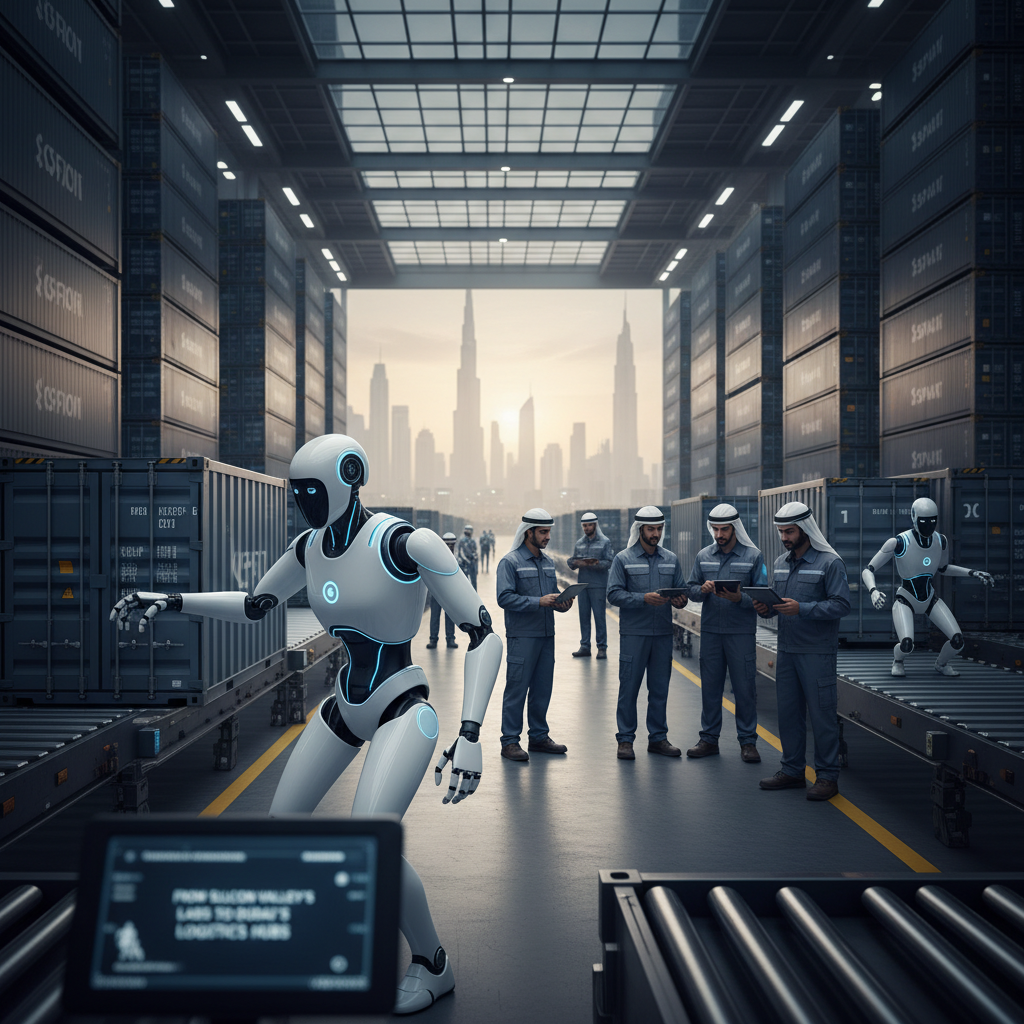
For the United Arab Emirates, a nation that has consistently demonstrated a proactive stance towards embracing and implementing future technologies, this development resonates deeply. Our vision for smart cities, advanced logistics, and a diversified, knowledge-based economy places automation at its very core. Dubai, in particular, doesn't just adopt the future, it builds it. The integration of advanced robotics into our sprawling logistics parks, such as those operated by DP World, is not a question of if, but when and how effectively.
Consider the sheer scale of operations in our regional distribution centers. The movement of goods, from inbound processing to outbound shipping, involves millions of tasks daily. While current automation largely relies on automated guided vehicles (AGVs) and robotic arms, humanoid robots like Figure 01 promise a new level of versatility. They can navigate complex, unstructured environments, manipulate diverse objects, and even interface with existing human-centric infrastructure without extensive retooling. This adaptability is critical for maximizing efficiency and minimizing disruption during technological transitions.
Data from the International Federation of Robotics indicates a consistent upward trend in robot installations globally, with logistics and warehousing being a significant growth driver. The Asia-Pacific region, including the UAE, is at the forefront of this adoption curve. The strategic imperative is clear: enhance productivity, reduce operational costs, and improve safety in hazardous work environments. As His Excellency Omar Sultan Al Olama, UAE Minister of State for Artificial Intelligence, Digital Economy and Remote Work Applications, recently stated, “The UAE’s AI strategy is decades ahead. We are not just thinking about the next five years, but the next fifty, ensuring our infrastructure and talent are ready for truly transformative technologies.” This sentiment perfectly encapsulates our nation's forward-looking approach to innovation.
The $2.6 billion bet on Figure AI is not just about replacing human hands; it is about augmenting human potential and creating new economic paradigms. While concerns about job displacement are valid and warrant careful consideration, the historical precedent of technological revolutions suggests a shift in the nature of work, rather than its outright elimination. New roles in robot supervision, maintenance, programming, and ethical oversight are likely to emerge, requiring a re-skilling of the workforce. The UAE's robust educational initiatives and vocational training programs are already adapting to these evolving demands, preparing our youth for the jobs of tomorrow.
Leading figures in the technology world have been vocal about this trajectory. Sam Altman, CEO of OpenAI, whose company is a key investor in Figure AI, has repeatedly emphasized the transformative power of general-purpose AI and robotics. His vision aligns with the idea that AI-powered robots will eventually perform tasks across a wide spectrum of human activities, not just in factories or warehouses. This ambition is what drives the significant investment, moving beyond specialized industrial robots to truly versatile, intelligent machines. As reported by TechCrunch, the funding round for Figure AI was one of the largest in the robotics sector, signaling strong investor confidence.
The integration of humanoid robots into our logistical backbone also presents unique opportunities for the UAE to solidify its position as a global innovation hub. By piloting these advanced systems in our free zones and smart logistics parks, we can refine the technology, develop best practices, and export this expertise to the world. This is what ambition looks like: not just adopting technology, but mastering it and contributing to its global evolution. The lessons learned here, from optimizing robot-human collaboration to developing robust AI governance frameworks, will be invaluable.
However, the path forward is not without its challenges. The ethical considerations surrounding autonomous decision-making, data privacy, and the societal impact of widespread automation require careful navigation. Regulatory frameworks must evolve in tandem with technological advancements to ensure responsible deployment. The UAE, through initiatives like the Artificial Intelligence Office, is actively engaged in developing ethical guidelines and policies that balance innovation with societal well-being. Our commitment to human-centric AI development is paramount, ensuring that technology serves humanity, not the other way around.
Looking ahead, the collaboration between Figure AI and its high-profile investors, particularly OpenAI, hints at a future where robots are not just physically capable but also possess sophisticated cognitive abilities. OpenAI's expertise in large language models and general intelligence could imbue Figure 01 with unprecedented levels of understanding and problem-solving capabilities, making it a truly versatile workforce asset. This synergy between physical robotics and advanced AI is the frontier we are now exploring, and the UAE is eager to be a part of this journey.
The investment in Figure AI is a clear signal that the era of humanoid robots in industrial settings is dawning. For the UAE, with its strategic vision and commitment to technological leadership, this represents an unparalleled opportunity to further enhance our economic competitiveness and quality of life. The future of labor is being written, not just in Silicon Valley labs, but also in the smart warehouses and logistics hubs being built across our nation. The question is no longer whether robots will work alongside us, but how we will collaboratively build a more efficient, productive, and prosperous future. The insights from this global shift will undoubtedly inform discussions on the future of work and automation, as detailed in analyses from MIT Technology Review. This journey, like all great endeavors, requires foresight, investment, and a relentless pursuit of what is possible.