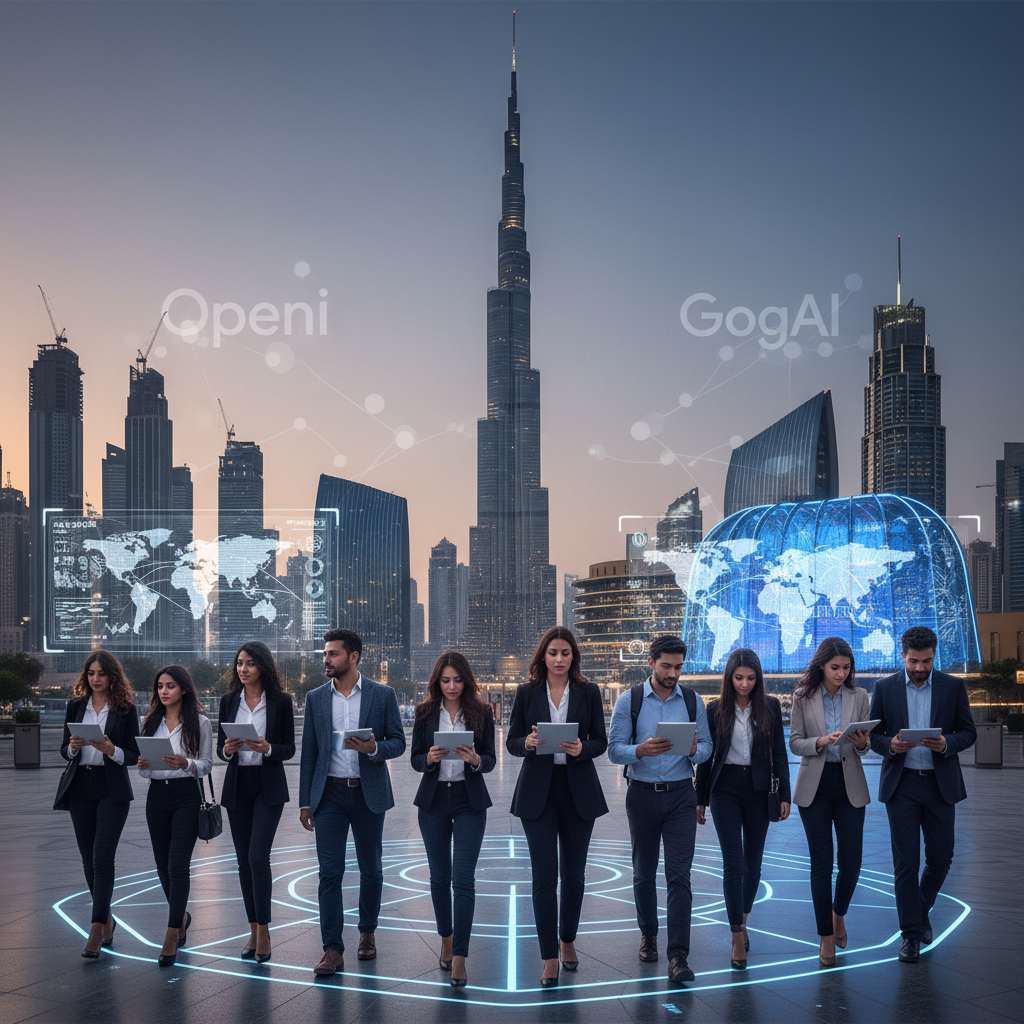
The global scramble for artificial intelligence expertise has reached a fever pitch, transforming the landscape of employment and innovation. As seven-figure salaries become increasingly common for elite AI researchers and engineers, a profound brain drain threatens established tech hubs, yet in the heart of the Arabian Gulf, a different narrative unfolds. Dubai, with its visionary leadership and unparalleled infrastructure, is not merely participating in this talent war; it is actively reshaping its dynamics, drawing the world's most sought after AI minds to its shores.
For decades, the gravitational pull of Silicon Valley, home to giants like Google and OpenAI, seemed insurmountable. Its ecosystem, venture capital, and academic prowess created an almost mythical allure. However, the sheer financial incentives, coupled with an unparalleled quality of life and a clear, long-term national AI strategy, are now presenting a compelling alternative. Data from a recent report by the UAE's Ministry of Artificial Intelligence, Digital Economy, and Remote Work Applications indicates a 45% increase in highly skilled AI professionals relocating to the Emirates in the past two years, with a significant portion hailing from North America and Western Europe. This is not merely an economic migration; it is a strategic realignment of global intellectual capital.
“The salaries being offered are astronomical, yes, but it is more than just money,” explains Dr. Aisha Al-Hajri, Director of AI Research at the Mohamed bin Zayed University of Artificial Intelligence (mbzuai), a world-leading institution based in Abu Dhabi. “We offer a unique confluence of resources: access to vast datasets, state-of-the-art computing power, and a direct pipeline to government-backed projects that aim for societal impact on a grand scale. Many researchers are tired of incremental improvements; they want to build the future.” Dr. Al-Hajri’s sentiment echoes a growing desire among top talent for purpose driven innovation, something the UAE's national vision provides in abundance.
The competition for talent is fierce. Companies like OpenAI and Anthropic are reportedly offering base salaries exceeding 1 million USD for senior research scientists, often supplemented by substantial equity packages that can push total compensation into the multi-million dollar range. This financial arms race is forcing smaller startups and even some established corporations to re-evaluate their compensation structures or risk losing their most valuable assets. The impact is particularly acute in regions without the deep pockets of major tech firms or the strategic national backing seen in the UAE.
However, Dubai doesn't just adopt the future, it builds it. The UAE's AI strategy is decades ahead, meticulously planned and aggressively executed. This foresight has positioned the nation as a global leader in AI adoption and development. Consider the recent announcement by G42, the Abu Dhabi based AI powerhouse, of its new 'Falcon Frontier' initiative. This program, backed by an initial investment of 10 billion AED, aims to attract 500 of the world's top AI engineers and scientists over the next three years, offering not only competitive remuneration but also unparalleled research autonomy and access to sovereign computing resources. Such initiatives are a testament to the nation's unwavering commitment.
“We are witnessing a fundamental shift in where innovation happens,” states Mr. Omar Al-Fahim, CEO of InnoTech Ventures, a Dubai based venture capital firm specializing in AI startups. “The traditional centers are facing unprecedented pressure. The regulatory environment, the cost of living, and even the pace of innovation in some Western hubs are becoming deterrents. Here, we offer agility, a clear vision, and a government that acts as an enabler, not an obstacle.” His firm recently invested in 'CogniFlow AI', a startup founded by a former Google DeepMind lead who chose Dubai over London for its more favorable ecosystem and direct access to smart city projects.
The strategic importance of this talent acquisition cannot be overstated. The individuals being lured to the UAE are not just coders; they are the architects of tomorrow's intelligent systems, the minds behind the next generation of large language models, autonomous vehicles, and personalized healthcare solutions. Their presence accelerates the development of local AI capabilities, fosters a vibrant research ecosystem, and strengthens the UAE's position as a global technology hub. The ripple effect extends to education, with institutions like Mbzuai seeing a surge in applications from international students eager to learn from these newly arrived luminaries.
This phenomenon is not without its challenges. The sheer demand for AI talent globally means that even with substantial incentives, securing the very best requires continuous effort and innovation. Moreover, integrating diverse global talent into a cohesive research and development framework requires cultural sensitivity and robust support systems. However, the UAE has a proven track record of successfully attracting and integrating expatriate talent, making this a manageable hurdle.
Looking ahead, the trajectory is clear. The global AI talent war will intensify, driven by the insatiable demand for advanced AI systems across every sector. While the seven-figure salaries will continue to make headlines, the underlying narrative is about where the future is being built. The UAE, with its bold vision and strategic investments, is carving out an undeniable niche, proving that innovation is not bound by geography but by ambition. This is what ambition looks like, a nation not just dreaming of the future, but actively constructing it, silicon by silicon, mind by mind. The movement of these brilliant minds to the Gulf signals a profound rebalancing of global tech power, a shift that will define the coming decades. For further insights into the evolving tech landscape, readers can explore reports on AI industry developments and analyses from MIT Technology Review. The story of global AI talent is far from over, and the next chapters are being written in places like Dubai and Abu Dhabi.