
The scent of jasmine tea and stale cigarette smoke hung heavy in the air of Mr. Li’s cramped real estate office, just off the bustling Huaihai Road in Shanghai. For thirty years, Li Wei, a man whose face was a roadmap of the city’s economic booms and busts, had brokered deals here, guiding families through the labyrinthine process of buying and selling homes. Now, his desk was piled not with property deeds, but with notices from his franchise, urging him to adopt ‘SmartNest AI’. He looked at the glowing screen of his tablet, a cold, efficient interface displaying property valuations generated by algorithms, not human intuition. “They say it’s progress,” he muttered, his voice raspy. “I say it’s a machine telling me my life’s work is obsolete.”
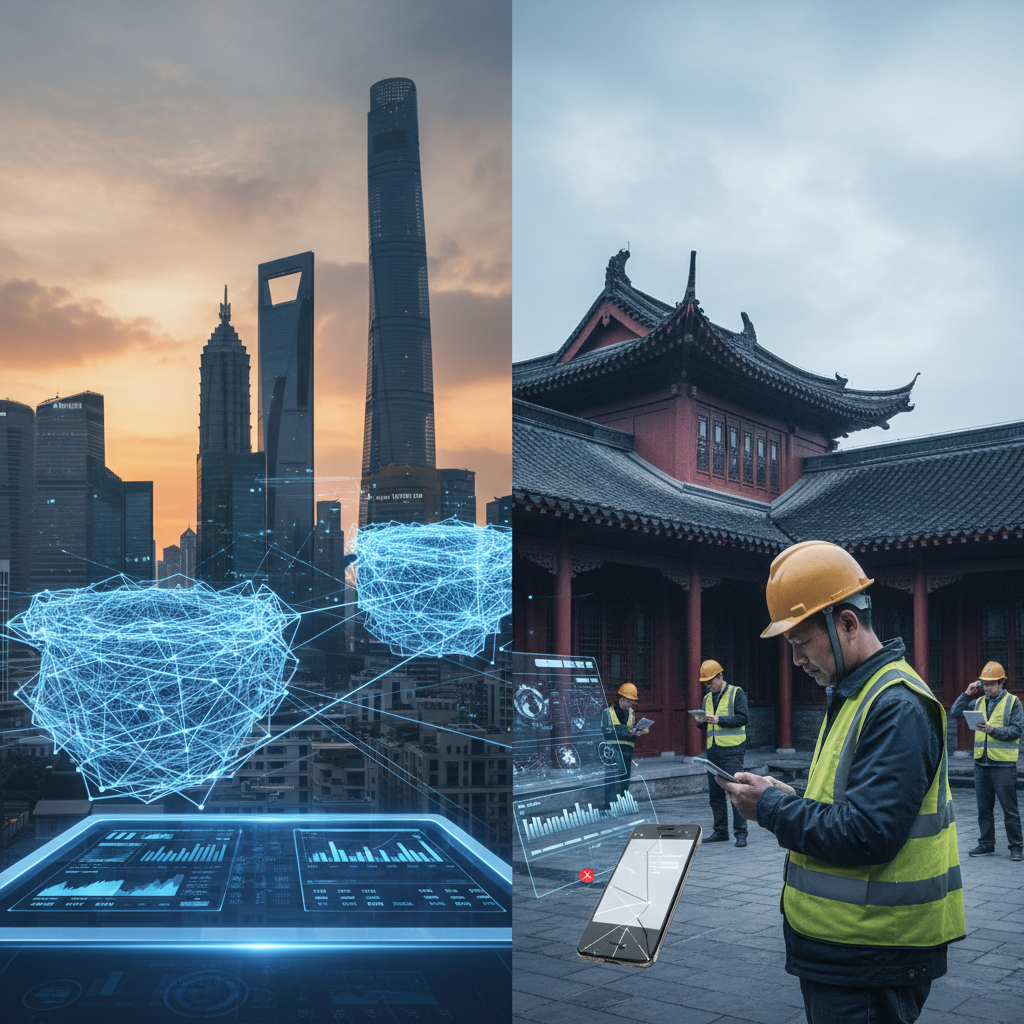
Mr. Li’s predicament is not unique. Across China, from the gleaming skyscrapers of Shenzhen to the ancient alleyways of Xi’an, the real estate sector is undergoing a seismic shift, powered by artificial intelligence. This isn't just about smart home gadgets, though those are certainly part of it. This is about algorithmic pricing models, predictive analytics for market trends, AI-driven property management, and automated client matching. The scale and speed of adoption, particularly within China’s unique market structure, are staggering.
According to a recent report by the China Real Estate Information Corporation (cric), AI adoption in property valuation and transaction processing among major developers and agencies in first and second-tier cities has jumped by 65% in the last 18 months alone. The return on investment, for those who embrace it, is compelling. Large real estate conglomerates like Evergrande and Country Garden, despite their recent struggles, have been early adopters, reporting up to a 20% reduction in sales cycle times and a 15% increase in lead conversion rates through AI optimization. Baidu, a key player in this transformation, boasts that its ‘SmartNest’ platform, leveraging its vast data reserves and advanced machine learning capabilities, can predict property price fluctuations with 92% accuracy over a six-month period, far outperforming traditional human analysts.
“We are seeing a complete redefinition of efficiency,” explains Dr. Chen Ling, Chief Technology Officer at Baidu’s Smart Living Group, speaking from their Beijing headquarters. “SmartNest integrates everything from satellite imagery and public transport data to local economic indicators and social media sentiment. It’s not just about pricing; it’s about understanding the entire urban fabric and predicting where demand will emerge, what amenities will be valued, and how properties will perform. Our goal is to make real estate transactions as seamless and predictable as online shopping.”
This technological wave is creating clear winners and losers. On one side are the tech giants and large developers. Baidu, with its deep pockets and AI expertise, is arguably the biggest winner, positioning SmartNest as the indispensable backbone for the industry. Companies like Vanke and Poly Developments are investing heavily in AI-powered property management systems, using predictive maintenance algorithms to reduce operational costs by an average of 10-12%. Their smart home divisions, integrating Baidu’s DuerOS AI, are seeing a 30% higher premium on new properties equipped with advanced automation, from intelligent climate control to AI-powered security systems.
On the other side are the smaller, independent real estate agencies and individual agents. Mr. Li’s story is a common one. Many agents, particularly those over 40, find themselves struggling to adapt to the new digital tools. Their decades of local knowledge, their personal networks, their ability to read a client’s unspoken needs, these are increasingly undervalued by algorithms that prioritize data points. A survey by the Chinese Academy of Social Sciences indicated that nearly 40% of traditional real estate agents in major cities feel their jobs are threatened by AI, with 15% already having left the industry in the past year. The real story is in the supply chain, where the human element is being systematically squeezed out.
“It’s not just about losing jobs; it’s about losing a sense of purpose,” says Ms. Wang Fen, a former agent in Chengdu who now drives for a ride-sharing service. “I used to help young couples find their first home, or elderly parents find a quiet place to retire. It was a meaningful job. Now, the apps just tell people where to go, what to pay. They don’t need me to tell them about the best noodle shop nearby, or the good school district that isn’t on the official map.” Her sentiment echoes a broader unease among workers whose skills, once honed over years, are now being rendered obsolete by lines of code.
Beijing isn't saying this publicly, but the government's approach to AI in real estate is a delicate balancing act. On one hand, they champion technological advancement and efficiency, seeing AI as a tool to stabilize the volatile housing market and improve urban planning. On the other, they are keenly aware of the social implications of widespread job displacement and the potential for algorithmic bias to exacerbate existing inequalities. There are whispers of new regulations coming, perhaps mandating human oversight in critical AI-driven decisions or providing retraining programs for displaced workers. However, the pace of technological change often outstrips the speed of policy formation.
“The challenge lies in ensuring that this technological leap serves the people, not just profits,” states Professor Gao Ming, an urban planning expert at Tsinghua University. “While AI can bring transparency and efficiency, we must also consider the ethical implications. Algorithms can perpetuate biases present in historical data, leading to redlining or discriminatory pricing without human intervention. We need robust regulatory frameworks that demand explainability and fairness from these systems.” He points to the need for greater collaboration between technologists, urban planners, and social scientists to navigate this complex terrain.
Looking ahead, the integration of AI into China’s housing market will only deepen. We can expect to see more sophisticated predictive models, not just for pricing, but for urban development, infrastructure planning, and even community design. Smart homes will become the norm, with AI managing everything from energy consumption to personalized living environments. The lines between real estate, technology, and urban management will blur further. The question remains: as we connect the dots between data, algorithms, and our living spaces, will we create more equitable, sustainable cities, or merely automate existing inequalities?
For further insights into the evolving landscape of AI in business, you can explore reports on Reuters Technology or delve into the latest research on MIT Technology Review. The journey of AI in China's real estate, like Mr. Li's future, remains uncertain, but one thing is clear: the foundations are being rewritten, byte by byte. For more on how AI is impacting various industries, consider reading about enterprise AI solutions on DataGlobal Hub [blocked]. This shift is not just an economic story; it is a human one, playing out in millions of homes and livelihoods across the nation. The algorithms are here, and they are changing everything. It is up to us to ensure they build a better future for everyone.