The world watches with bated breath as Microsoft and OpenAI navigate the intricate dance of technological advancement and market dominance. A reported $13 billion investment by Microsoft into OpenAI has reshaped the artificial intelligence landscape, propelling generative AI into boardrooms and bedrooms across the globe. Yet, from my home in Afghanistan, a land often overlooked in the grand narratives of global tech, the question echoes with a different resonance: is this colossal investment truly paying off, not just for shareholders, but for humanity, especially the most vulnerable?
For many, the success of this partnership is measured in the rapid deployment of tools like ChatGPT, Copilot, and the integration of advanced AI capabilities into Microsoft's vast ecosystem. We see headlines celebrating unprecedented user growth, new product announcements, and the relentless pursuit of artificial general intelligence. Indeed, the technological leaps are undeniable. OpenAI's models, powered by Microsoft's Azure infrastructure, have demonstrated capabilities that were once the stuff of science fiction, from generating coherent text to assisting with complex coding tasks.
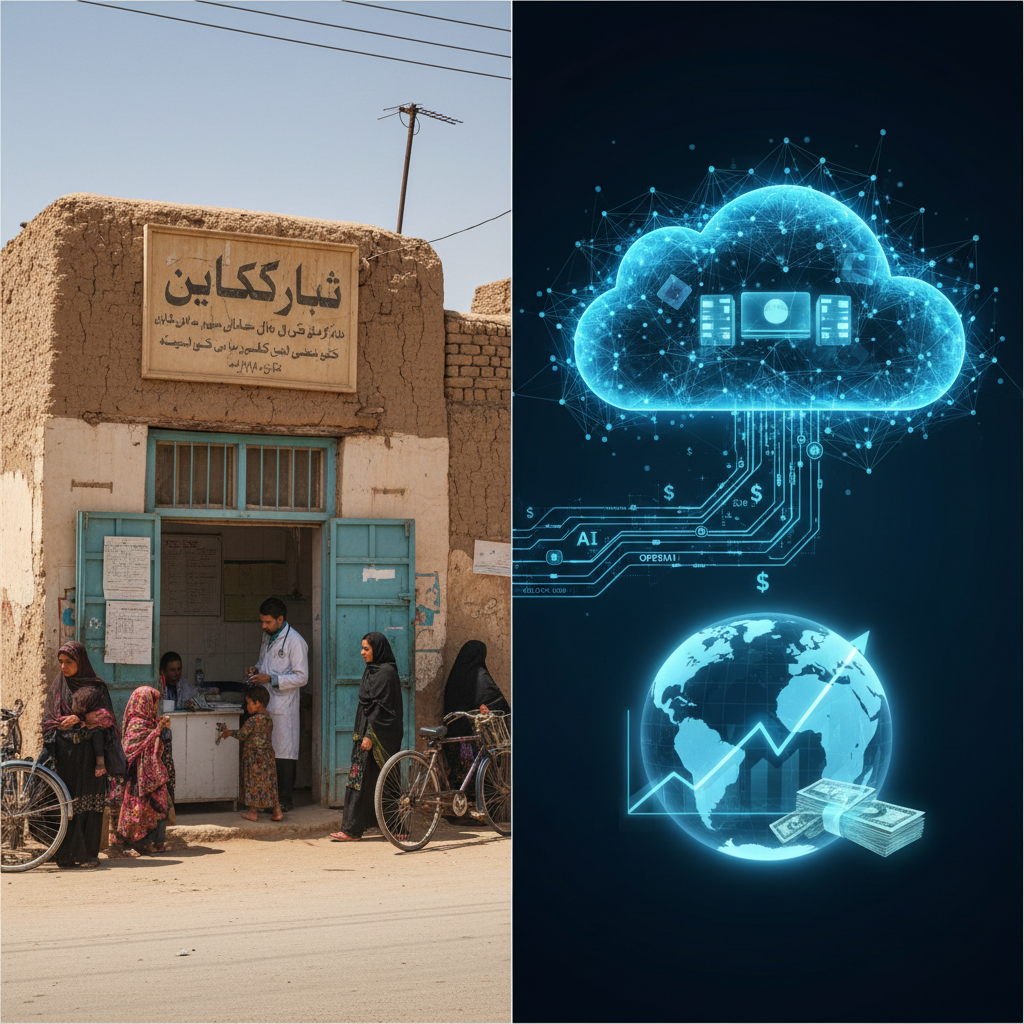
However, the true test of any technology, particularly one backed by such immense capital and promise, lies in its capacity to address the world's most pressing challenges. Here in Afghanistan, where access to basic healthcare remains a daily struggle for millions, the potential of AI in medicine is not an abstract concept; it is a desperate hope. We speak of healthcare AI not as a luxury, but as a necessity, a potential lifeline in a system stretched thin by decades of conflict and underinvestment.
Consider the plight of a doctor in a remote Afghan village, perhaps in Badakhshan, struggling to diagnose a rare condition with limited resources and even less access to specialists. Imagine if an AI, trained on a vast corpus of medical knowledge, could serve as a diagnostic aid, offering insights and guiding treatment protocols. This is not a fanciful dream; it is precisely the kind of application where the power of OpenAI's models, integrated into accessible platforms, could transform lives. The promise of AI to democratize medical knowledge, to bring expert-level assistance to underserved populations, is immense.
Yet, the reality on the ground often diverges sharply from the gleaming visions presented in Silicon Valley. The infrastructure required to deploy and utilize these advanced AI systems effectively is largely absent in many parts of Afghanistan. Reliable internet connectivity, stable electricity, and the necessary digital literacy are not universal. Furthermore, the ethical considerations surrounding data privacy, algorithmic bias, and the potential for misuse become even more acute in fragile contexts. When an algorithm makes a diagnostic suggestion, who is accountable if it errs, especially when the patient's language and cultural context might not be adequately represented in the training data?
Satya Nadella, Microsoft's CEO, has often spoken about the company's commitment to responsible AI development. In a recent interview, he emphasized,