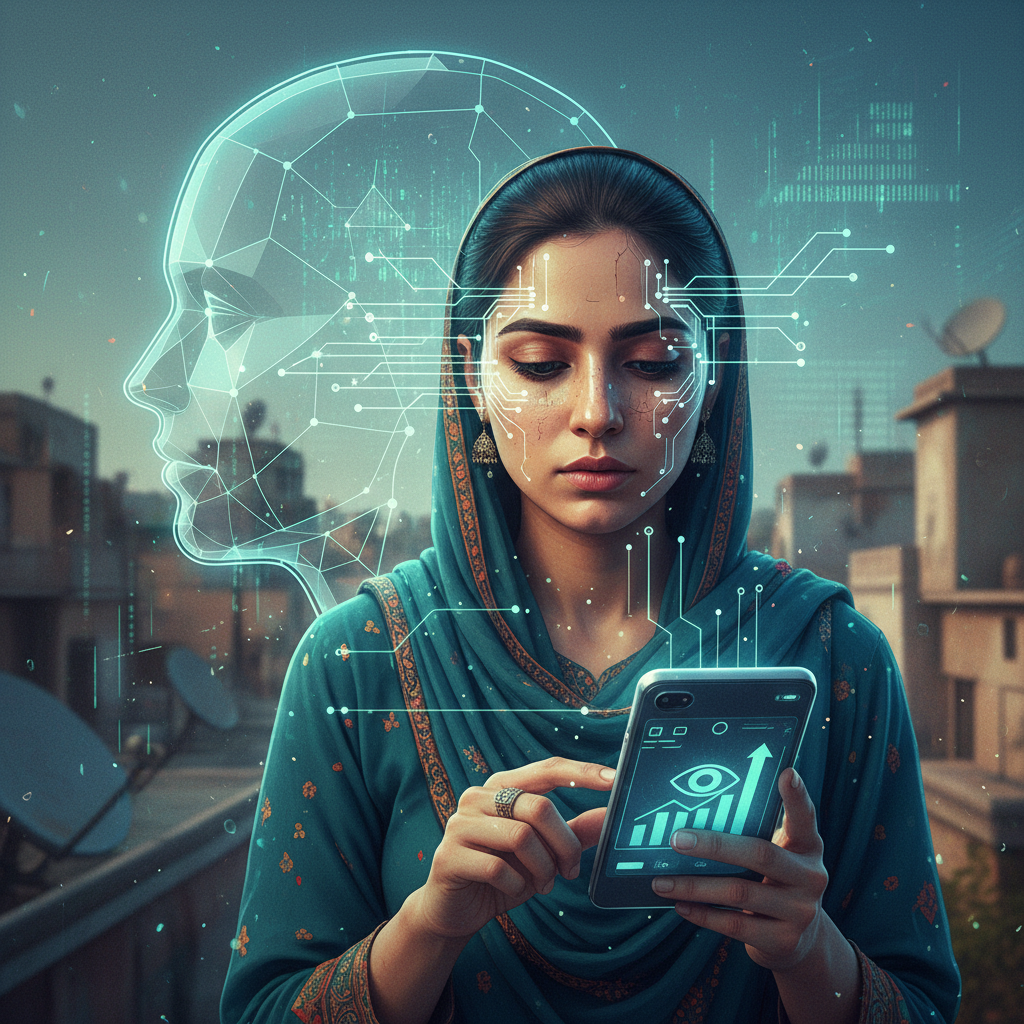

Let me tell you, when I first heard about AI in healthcare, my mind immediately went to the big, flashy stuff: cancer detection, heart disease prediction, all that jazz. And yes, those are critical, life-saving applications. But as a journalist based here in Harare, looking at our own challenges, I always wonder, where does Africa fit into this grand narrative? How do these global innovations actually touch the lives of people in Mbare, in Chitungwiza, in rural Chimanimani?
That's why I'm calling it now: the real game-changer, the one that truly resonates with the quiet struggles many face, might just be in mental health. And that's where Aifred Health, a Canadian startup, has caught my eye. They are not based in Africa, no, but their mission, their technology, and their recent strides with the US Food and Drug Administration, well, they speak volumes about a future where advanced diagnostics aren't just for the privileged few, but for everyone, everywhere. The future is African, and it includes mental wellness.
The 'Aha Moment' for a Deeper Dive into the Mind
Let's talk about the founders. Dr. Kelly Perlman, a co-founder and Chief Scientific Officer, along with her colleagues, didn't just wake up one morning and decide to build an AI for mental health. Their journey is rooted in a profound understanding of the complexities of depression. Traditional approaches to treating major depressive disorder, or MDD, often involve a lot of trial and error. A patient might go through several different medications, each with its own side effects, before finding one that actually works. This process can take months, even years, leading to prolonged suffering, increased healthcare costs, and, tragically, a higher risk of adverse outcomes. It's a system that, frankly, often fails those who need help the most. Dr. Perlman, with her background in neuroscience and machine learning, saw this inefficiency and recognized the potential for AI to bring a much-needed layer of precision to an otherwise imprecise field.
Their 'aha' moment wasn't a sudden flash of genius, but rather a slow burn of realization: what if we could predict, with a high degree of accuracy, which treatment would work best for a specific individual before they even started? This isn't just about making things faster; it's about reducing suffering, improving quality of life, and ultimately, saving lives. It's a vision that, if realized globally, could dramatically alter the landscape of mental healthcare, especially in regions like ours where access to specialized care is already a monumental challenge.
The Problem: A Global Burden, an African Crisis
Depression is a silent epidemic. The World Health Organization estimates that over 280 million people worldwide suffer from depression. In Africa, the numbers are particularly stark. According to a 2019 Lancet Global Health report, mental health conditions account for a significant portion of the continent's disease burden, yet resources are woefully inadequate. Stigma, lack of trained professionals, and limited infrastructure mean that many go undiagnosed or untreated. The trial-and-error approach to medication, which is frustrating even in well-resourced settings, becomes an almost insurmountable barrier here. Imagine waiting months for a referral, only to be prescribed a medication that doesn't work, and then having to wait all over again. It's a cycle of despair.
Aifred Health is tackling this head-on. Their technology aims to shorten that painful journey to effective treatment. By using AI to analyze a patient's clinical data, they hope to guide clinicians to the most suitable antidepressant from the outset. This isn't about replacing doctors, mind you, but empowering them with a tool that makes their expertise more precise and impactful.
The Technology: Decoding the Brain's Signals with AI
So, what exactly are they building? Aifred Health's core innovation is a machine learning platform designed to predict individual patient response to antidepressant medications. They leverage a vast array of data points, including patient demographics, clinical history, genetic markers, and even neuroimaging data, to create a personalized treatment prediction model. Think of it like this: instead of a doctor guessing which key fits a lock, the AI quickly sifts through thousands of keys to find the perfect match for that specific patient's unique biological and clinical profile.
Their approach is grounded in deep learning, a subset of AI that excels at finding complex patterns in large datasets. The algorithms are trained on anonymized patient data, learning to identify subtle indicators that correlate with successful treatment outcomes for various antidepressants. This isn't some black box magic; it's sophisticated pattern recognition at its finest. The goal is to provide clinicians with a probability score for different treatments, allowing them to make more informed decisions. This kind of precision medicine is what we need to see more of.
Crucially, Aifred Health has been making significant progress on the regulatory front. They recently received Breakthrough Device Designation from the US FDA, a recognition given to novel technologies that have the potential to provide more effective treatment or diagnosis for life-threatening or irreversibly debilitating diseases. This designation fast-tracks their development and review process, signaling that the FDA sees immense promise in their solution. This isn't just a pat on the back; it's a critical step towards widespread adoption and, eventually, global impact. You can read more about such advancements on TechCrunch.
The Market Opportunity: Billions and Beyond
The market for mental health solutions is enormous and growing. The global antidepressant market alone is valued at tens of billions of dollars annually, with projections showing continued expansion. But Aifred Health isn't just looking to carve out a slice of that existing pie; they are aiming to fundamentally change how that market operates. By improving treatment efficacy and reducing the time to remission, they can unlock significant value for healthcare systems, insurance providers, and most importantly, patients.
Consider the economic burden of untreated or poorly treated depression. Lost productivity, increased hospitalizations, and the societal costs are staggering. Aifred Health's solution promises to reduce these costs by getting patients better, faster. This isn't just a medical breakthrough; it's an economic one. For countries like Zimbabwe, where healthcare budgets are stretched thin, any technology that can optimize resource allocation and improve patient outcomes is invaluable. It's about efficiency, yes, but it's also about dignity and hope.
Competitive Landscape: A Race for Precision
The field of AI in mental health is still nascent, but it's attracting considerable attention. Companies like Mindstrong, Woebot Health, and Quartet Health are using AI in various ways, from conversational AI for therapy to predictive analytics for identifying at-risk individuals. However, Aifred Health's specific focus on predicting antidepressant response, backed by FDA Breakthrough Device Designation, gives them a distinct edge.
Their closest competitors might be other diagnostic AI companies that focus on precision medicine in different therapeutic areas, but few have achieved the same level of regulatory validation specifically for mental health. The barrier to entry in this space is high, requiring robust clinical validation, deep medical expertise, and the ability to navigate complex regulatory pathways. Aifred Health's scientific rigor and their engagement with regulatory bodies like the FDA set them apart. It's not just about having a clever algorithm; it's about proving it works safely and effectively in the real world.
What's Next: A Global Vision from a Canadian Core
So, what does this mean for us here in Zimbabwe? Aifred Health's immediate focus is on clinical trials and securing full FDA approval in the US, which is a massive undertaking. But once validated and approved in major markets, the path to global adoption becomes clearer. Imagine a future where a clinician in a Harare hospital, or even a rural clinic, can input a patient's data into an AI system and receive personalized recommendations for depression treatment. This would be transformative.
It's not a pipe dream. The infrastructure for digital health is slowly but surely expanding across Africa. Mobile penetration is high, and initiatives to digitize health records are gaining traction. While challenges remain, such as data privacy, access to reliable internet, and the need for localized data, the potential for Aifred Health's technology to leapfrog traditional mental healthcare models is immense. This is the kind of innovation that truly excites me, one that transcends borders and addresses universal human needs. Watch this space, because I believe Aifred Health, or companies like them, will be instrumental in bringing advanced mental healthcare diagnostics to the doorsteps of millions who have long been underserved. It’s a vision of healthcare that moves beyond mere treatment to truly personalized care, and that, my friends, is a future worth fighting for. The journey of AI in healthcare, particularly in diagnostics, is covered extensively by publications like MIT Technology Review.
As Professor Vikram Patel, a leading global mental health researcher, once said, "There can be no health without mental health." Aifred Health's work is a powerful step towards making that statement a reality for everyone, everywhere. It’s a reminder that innovation, no matter where it originates, can have a profound impact on the lives of people far beyond its immediate reach. And that, to me, is the true promise of AI. We need to ensure that Africa is not just a recipient of these technologies, but an active participant in their development and adaptation. This is where our own local innovators, inspired by global successes, can step up and localize these powerful tools for our unique contexts. Just as we see in other areas of AI, there's a growing push for local relevance, as discussed in articles like Perplexity AI's Healthcare Search: Can It Navigate Japan's Precision Medicine Labyrinth, Or Just Add More Noise? [blocked], highlighting the need for culturally and contextually appropriate solutions. This is the path forward.