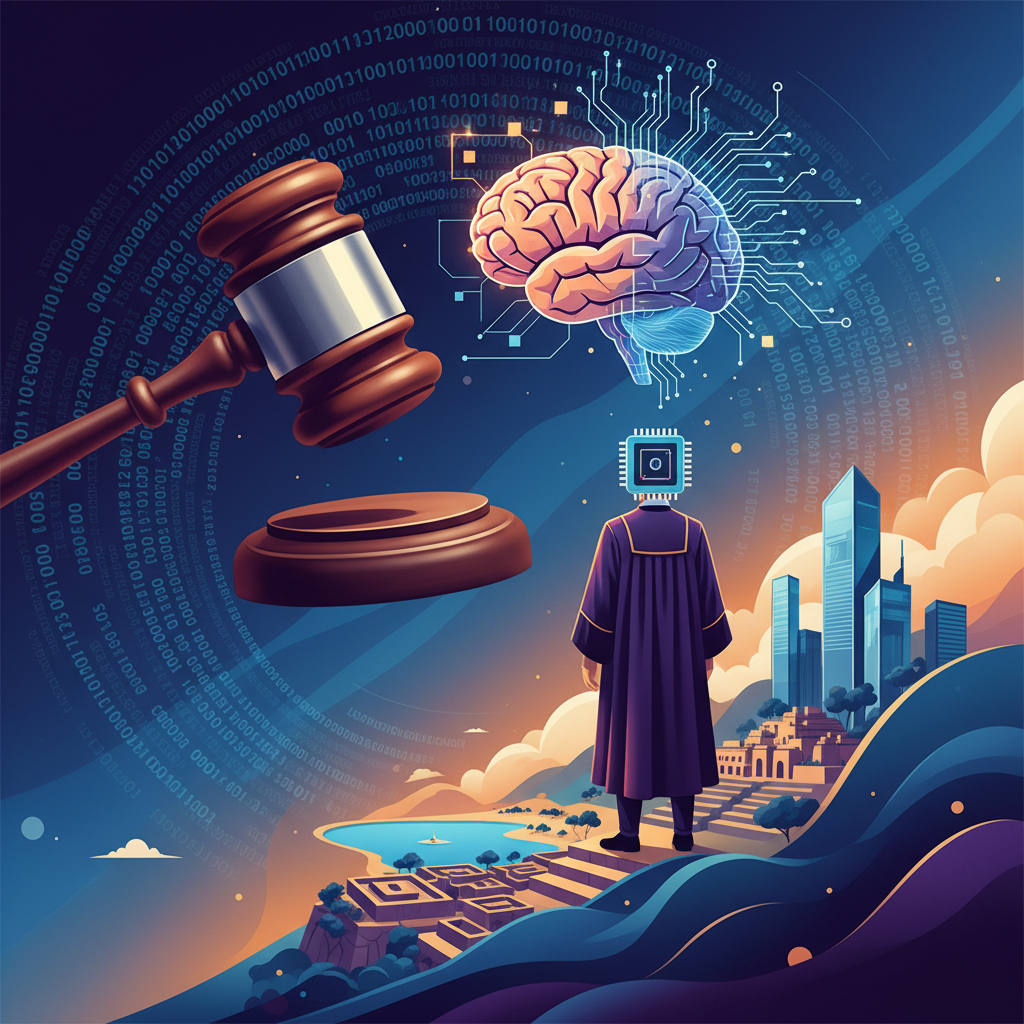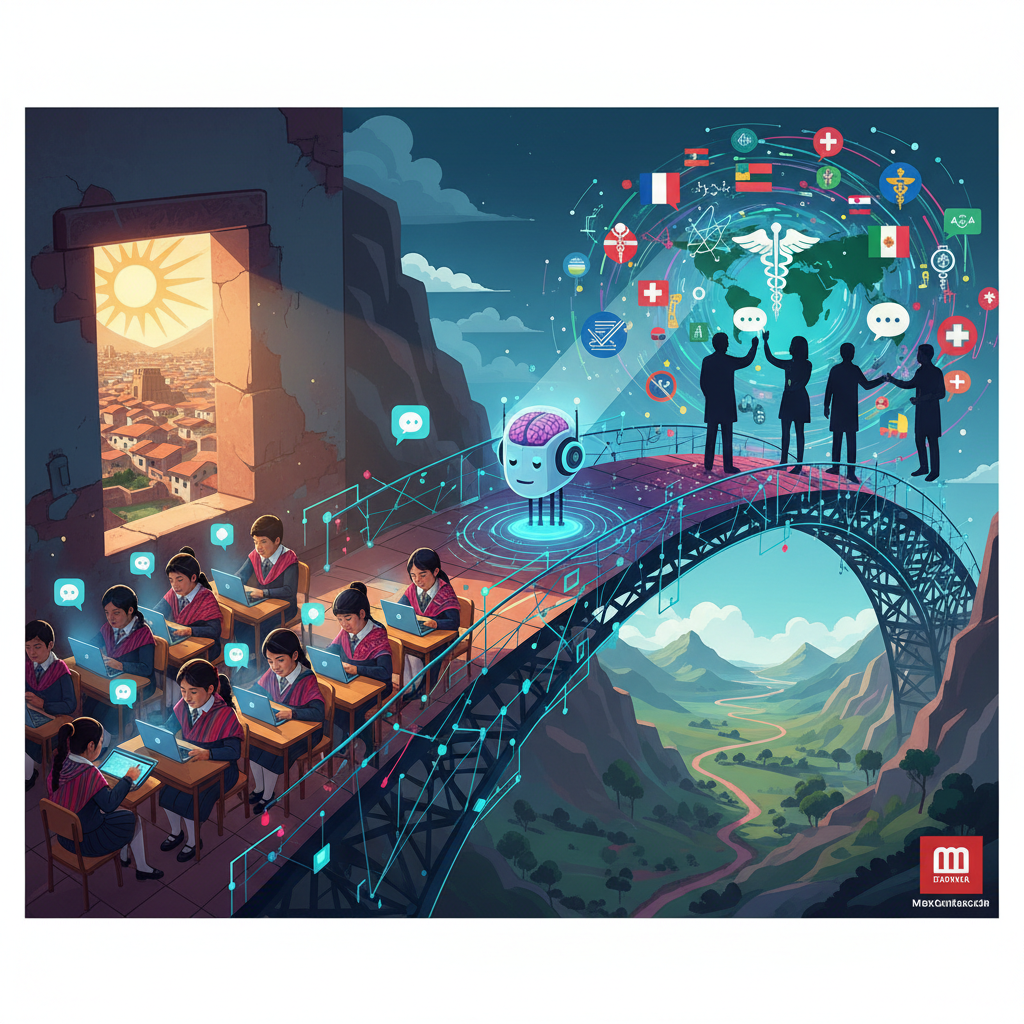

The morning mist still clings to the peaks of the Andes as I make my way through the bustling streets of Cusco, past ancient Inca walls that whisper stories of ingenuity and adaptation. Here, where tradition breathes alongside modernity, the global debate over artificial intelligence in our schools feels particularly poignant. Is the widespread adoption of tools like OpenAI's ChatGPT and Google's Gemini in classrooms a looming cheating crisis, or is it, as I firmly believe, an educational revolution waiting to blossom?
For too long, the narrative has been dominated by fear: fear of plagiarism, fear of intellectual laziness, fear that our students will lose the ability to think critically. I understand these concerns, of course. The digital age brings new challenges, and we must always safeguard academic integrity. But to focus solely on the potential for misuse is to miss the vibrant, transformative possibilities these technologies offer, especially for students in regions like ours, where access to resources can be uneven.
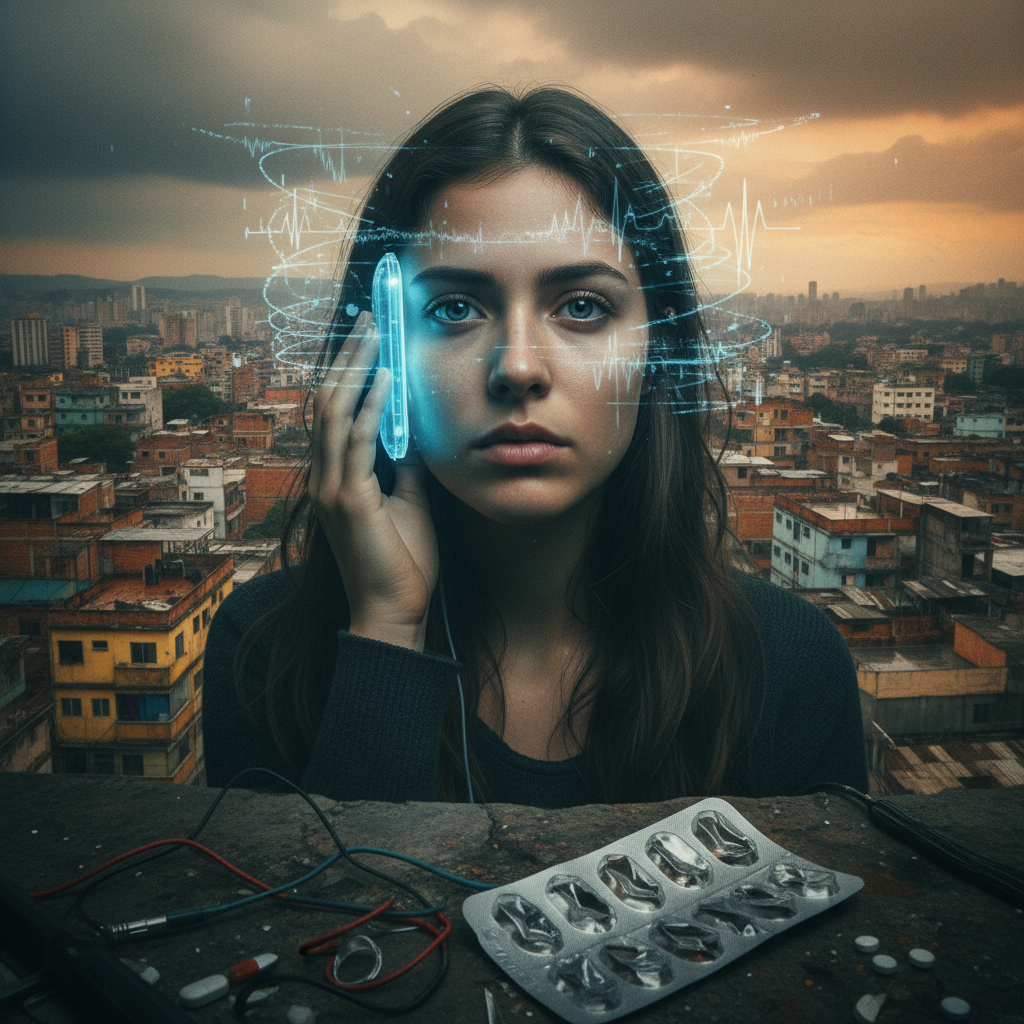
Imagine a young student in a remote Andean village, perhaps one who walks for an hour to reach a school with limited textbooks and even fewer specialized teachers. For this student, an AI chatbot is not a shortcut to avoid learning; it is an encyclopedia, a personal tutor, a language exchange partner, and a creative collaborator, all rolled into one. It is a window to knowledge that might otherwise be out of reach. This is a story about ancient wisdom meeting modern AI, where technology can democratize access to learning, not just in theory, but in tangible, life-changing ways.
I recently spoke with Dr. Elena Vargas, a leading educational technologist at the Pontificia Universidad Católica del Perú in Lima. She showed me something that changed my understanding of this debate. Doctora Vargas has been piloting programs where AI tools assist students in researching complex topics, structuring essays, and even practicing English conversation. "We are not asking students to outsource their thinking," she explained, her voice passionate. "We are giving them a powerful assistant. Imagine the time a teacher saves on basic factual corrections, time they can then dedicate to fostering critical thinking, debate, and truly personalized guidance. This is about elevating the human role in education, not replacing it." Her perspective resonates deeply with me; it’s about empowering, not fearing.
Consider the sheer volume of information available today. Rote memorization, once a cornerstone of education, is becoming less relevant in an era where facts are instantly accessible. What truly matters is the ability to analyze, synthesize, question, and create. AI chatbots, when used thoughtfully, can be instrumental in developing these higher-order skills. They can help students brainstorm ideas, refine arguments, and explore different perspectives on a topic. They can provide instant feedback on writing, pointing out grammatical errors or suggesting ways to improve clarity, freeing up teachers to focus on the deeper nuances of content and critical analysis.
Of course, I hear the counterarguments. Critics often point to instances of students submitting AI-generated essays as their own work. They argue that this undermines the very foundation of education. And yes, such misuse is a problem that needs addressing. However, banning these tools entirely is akin to banning calculators in mathematics class because some students might use them to avoid learning basic arithmetic. The solution is not prohibition, but integration with wisdom and purpose.
We need to teach our students how to use these tools responsibly and ethically. This means developing new curricula that incorporate AI literacy, teaching critical evaluation of AI-generated content, and designing assignments that require human creativity, critical thinking, and personal reflection that AI cannot replicate. For example, instead of asking students to write a report on the Inca Empire, ask them to debate a specific historical interpretation with an AI, then reflect on the AI's arguments and their own. Or, as the MIT Technology Review often highlights, design projects where students use AI to analyze data and then present their findings and interpretations, emphasizing their unique human insights.
Furthermore, the development of robust AI detection tools is advancing rapidly. Companies like Turnitin are constantly updating their algorithms to identify AI-generated text, and universities worldwide are investing in these solutions. While no detection system is perfect, these tools, combined with a shift in pedagogical approaches, can help mitigate the risk of academic dishonesty. The key is to move beyond simply assessing the final product and instead focus on the learning process, encouraging students to show their work, explain their reasoning, and engage in genuine intellectual inquiry.
In the highlands of Peru, where communities have preserved knowledge for centuries through oral traditions and intricate textiles, the concept of learning is deeply communal and experiential. We understand that knowledge is not just about facts, but about context, wisdom, and application. AI can complement this. Imagine a student using an AI to translate ancient Quechua texts, then discussing the nuances with their elders. Or using AI to analyze agricultural data to improve crop yields, blending modern science with ancestral farming practices. This is the kind of innovation where tradition meets technology that truly excites me.
This is not a uniquely Peruvian challenge, of course. Educators globally are grappling with these questions. As The Verge recently reported, school districts across the United States are moving from outright bans to embracing AI tools, recognizing their potential. We are seeing a similar shift in perspective in Europe and Asia, where forward-thinking institutions are exploring how AI can enhance learning outcomes.
We are at a crossroads. We can choose to view AI chatbots as an existential threat to traditional education, or we can embrace them as powerful allies in our mission to equip the next generation with the skills they need to thrive in an increasingly complex world. The latter requires courage, adaptability, and a willingness to rethink long-held assumptions about teaching and learning. It demands that we, as educators and journalists, guide this conversation with optimism and a clear vision for the future.
Our students deserve more than just fear and prohibition. They deserve to be empowered with the tools that will define their future, taught how to wield them wisely and ethically. The revolution is not coming; it is already here, and it is our responsibility to ensure it serves all our children, from the bustling cities to the quietest corners of our majestic Andes. Let us build bridges, not walls, in the pursuit of knowledge. For more on how AI is impacting education globally, you can explore articles on TechCrunch's AI section.