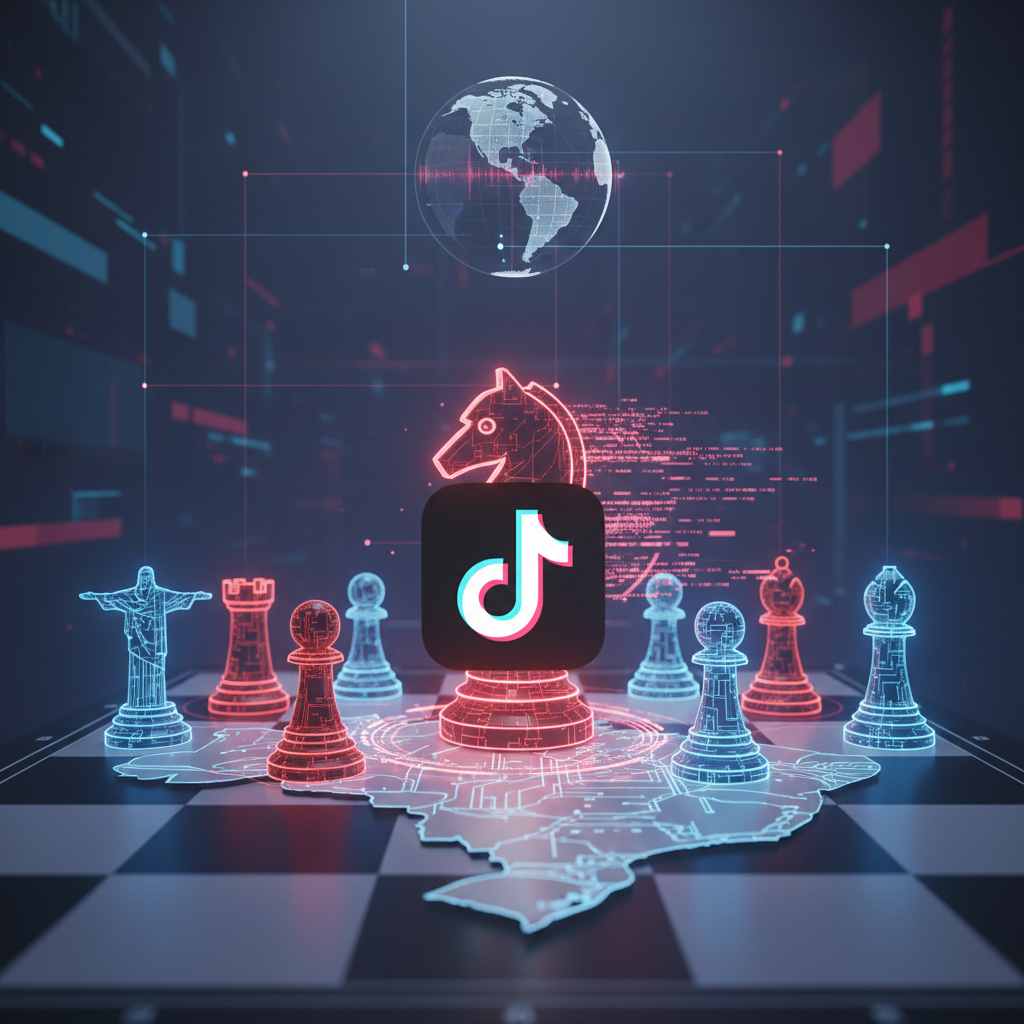

The rhythmic pulse of TikTok videos has become an inescapable soundtrack to modern life in Brazil. From the favelas of Rio to the corporate towers of São Paulo, ByteDance's flagship application, powered by what many consider the most potent recommendation engine on Earth, has captivated a generation. But beneath the surface of viral dances and short-form entertainment, a more profound strategic play unfolds, one that demands the meticulous scrutiny of any nation concerned with its digital future. My investigation reveals that Brazil's embrace of TikTok, while economically beneficial for many, comes with inherent geopolitical and strategic risks that are often overlooked in the fervor of digital engagement.
The Strategic Move: Deepening Algorithmic Roots in Brazil
ByteDance's strategy in Brazil is not merely about user acquisition; it is about algorithmic entrenchment. The company has invested heavily in localizing content, fostering a robust creator ecosystem, and integrating its platform into the fabric of Brazilian culture and commerce. This strategic move extends beyond entertainment, touching upon e-commerce, news dissemination, and even political discourse. TikTok's recommendation algorithm, a sophisticated blend of machine learning and behavioral psychology, continuously refines its understanding of Brazilian users, their preferences, and their vulnerabilities. This deep learning capability allows TikTok to not only predict but also subtly shape trends, opinions, and consumption patterns. The investment trail leads to significant local partnerships, advertising spend, and talent acquisition, all designed to make TikTok indispensable.
Context and Motivation: A Global Play for Data and Influence
The motivation behind ByteDance's aggressive expansion in markets like Brazil is multifaceted. Firstly, it is a pursuit of data. Each interaction, every swipe, every 'like' or 'share' contributes to an unparalleled dataset on human behavior. This data, when aggregated and analyzed, provides invaluable insights into cultural nuances, market demands, and even societal sentiments. For a company like ByteDance, headquartered in China, such a vast repository of global data represents a strategic asset of immense value. Secondly, there is the undeniable economic incentive. Brazil, with its large, young, and digitally native population, represents a colossal market for advertising revenue and e-commerce integration. TikTok's foray into in-app shopping and creator monetization schemes has already begun to shift significant economic activity onto its platform. Lastly, and perhaps most controversially, is the potential for influence. An algorithm that can dictate what millions of people see, hear, and think holds an unprecedented level of soft power, a tool that can be leveraged for various ends, both commercial and political. The question of whether this influence could ever be directed or manipulated by external state actors remains a persistent concern for national security experts globally.
Competitive Analysis: Outmaneuvering the Giants
In Brazil, TikTok faces competition from established social media giants like Meta's Instagram and Facebook, Google's YouTube, and even local players. However, TikTok's algorithmic prowess has given it a distinct edge. While Meta and Google rely on sophisticated algorithms, TikTok's recommendation engine is often lauded for its uncanny ability to understand and cater to individual user tastes, often surprising users with content they did not explicitly seek but deeply engage with. This 'for you' page phenomenon creates a highly personalized, almost addictive, user experience that traditional platforms have struggled to replicate. TechCrunch has frequently highlighted how TikTok's engagement metrics often surpass those of its rivals, particularly among younger demographics. This competitive advantage is not accidental; it is the direct result of ByteDance's relentless investment in AI research and development, combined with a willingness to iterate rapidly based on user feedback and data analysis.
Strengths and Weaknesses: A Double-Edged Sword for Brazil
Strengths for Brazil:
- Economic Opportunity: TikTok has democratized content creation, allowing countless Brazilians to build personal brands, earn income through sponsorships, and launch small businesses. This has fostered a vibrant creator economy, particularly for those in marginalized communities who previously lacked access to traditional media platforms.
- Cultural Exchange: The platform has become a powerful vehicle for showcasing Brazilian culture, music, and art to a global audience, fostering a sense of national pride and soft power.
- Digital Literacy: For many, TikTok serves as an entry point into the digital world, enhancing digital literacy and connectivity.
Weaknesses and Risks for Brazil:
- Data Sovereignty: The most significant concern revolves around data. Where is Brazilian user data stored? Who has access to it? And under what legal frameworks can it be compelled? Brazil's General Data Protection Law, the Lgpd, provides some protections, but the extraterritorial reach of foreign governments, particularly China's national security laws, creates a complex legal and ethical quagmire. As Reuters has reported on similar concerns in other nations, the lack of complete transparency from ByteDance regarding data flows remains a critical vulnerability.
- Algorithmic Manipulation: The potential for the algorithm to be used for propaganda, censorship, or the suppression of certain narratives is a serious threat to democratic discourse. In a nation with a history of political polarization, an algorithm that can amplify or silence voices could have profound societal implications.
- Economic Dependency: As more economic activity shifts to TikTok, Brazil risks creating a dependency on a platform controlled by a foreign entity, potentially giving ByteDance undue leverage over local businesses and creators.
- National Security: The aggregation of vast amounts of personal data, combined with the platform's ability to influence public opinion, presents a national security risk. Intelligence agencies are increasingly concerned about the potential for foreign adversaries to exploit such platforms for espionage or destabilization.
Verdict and Predictions: A Precarious Balance
The strategic implications of ByteDance's TikTok algorithm for Brazil are profound and complex. The platform offers undeniable benefits, particularly in economic empowerment and cultural expression. However, the risks associated with data sovereignty, potential algorithmic manipulation, and national security cannot be ignored. Brazil finds itself in a precarious balance, enjoying the fruits of a powerful technological innovation while grappling with its hidden costs.
Is this strategy enough for ByteDance? From a business perspective, yes, it has been wildly successful. From Brazil's perspective, however, it is not enough to simply enjoy the entertainment. The nation must develop a more robust framework for digital sovereignty. This includes demanding greater transparency from ByteDance regarding data handling, exploring mechanisms for local data storage and processing, and investing in domestic AI capabilities to reduce reliance on foreign-controlled algorithms. As Professor Lúcia Santos, a leading expert in digital governance at the Federal University of Minas Gerais, recently stated, "Brazil cannot afford to be merely a consumer of global algorithms. We must be architects of our own digital future, understanding the implications of every byte of data that crosses our borders." Her words echo a growing sentiment among policymakers and academics who see the need for proactive measures.
Looking ahead, I predict increased regulatory pressure on TikTok in Brazil, mirroring trends seen in Europe and the United States. The Brazilian government, perhaps inspired by the European Union's Digital Services Act, may move to implement stricter data localization requirements and algorithmic transparency mandates. The debate will intensify around whether the economic benefits outweigh the strategic risks. Ultimately, Brazil's AI funding landscape hides surprises, and the nation's response to this algorithmic challenge will define a significant chapter in its digital evolution, determining whether it can harness the power of AI without ceding control over its own destiny. The stakes are too high for complacency.