
The scent of spices, the rustle of silk, the murmur of countless languages. This is Bukhara, a city where trade has flowed for millennia, a crossroads of civilizations. Yet, even in this ancient heart of commerce, the modern world often moves at a different pace. For too long, the vast economic potential of Central Asia has been constrained by outdated systems, opaque logistics, and a lack of integrated financial infrastructure. But what if the spirit of the Silk Road could be reborn, powered not by camels and caravans, but by artificial intelligence?
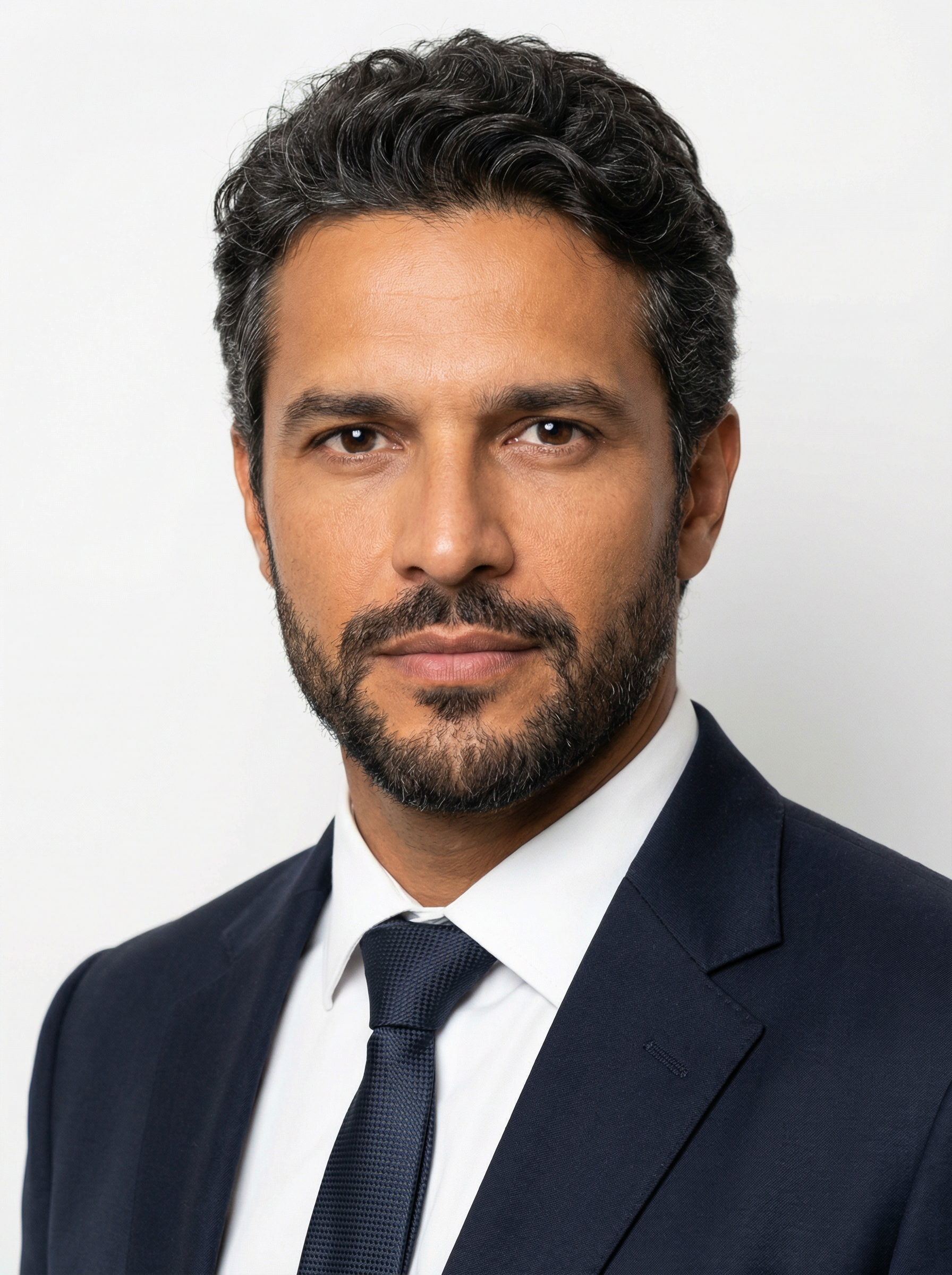
This is the vision of Leyla Karimova, a name you will soon know. She is the founder and CEO of SilkRoute AI, a startup that recently emerged from the Y Combinator W2025 batch and is already turning heads, securing a significant Series A round. Leyla, a native of Samarkand, carries the legacy of her ancestors in her very being. Her journey, like many great stories, began with a personal frustration and an 'aha moment' that struck her not in a bustling tech hub, but in the quiet, dusty archives of the National Bank of Uzbekistan.
Leyla's family has been involved in textiles and trade for generations. She grew up watching her grandfather meticulously manage ledgers, his face etched with the worries of cross-border payments and unreliable supply chains. After studying finance at the Tashkent State University of Economics and then working with a major international bank in London, Leyla returned home with a burning desire to modernize her region. "I saw the incredible talent, the rich resources, and the sheer entrepreneurial spirit here," Leyla told me during a recent video call, her voice clear and passionate. "But our businesses, especially the small and medium enterprises, were struggling with the same problems my grandfather faced: how to track goods across multiple borders, how to ensure timely payments, and how to access capital when traditional banks saw too much risk."
Her 'aha moment' came during a research project for a local fintech incubator. She was analyzing historical trade data and realized the immense complexity of inter-regional commerce. "We have so much data, but it is fragmented, siloed, and often analog," she explained. "It was like trying to navigate the ancient Silk Road with only a few scattered parchment maps. I thought, what if we could use AI to connect all these disparate pieces, to create a real-time, transparent, and trustworthy network for trade finance and logistics?"
The Problem SilkRoute AI is Solving
The problem is multifaceted. Central Asian economies, while growing, still face significant hurdles in trade. Logistics are often inefficient, with goods sometimes taking weeks to clear customs or navigate complex transit routes. Financial transactions are frequently slow and costly, relying on correspondent banking relationships that are expensive for smaller businesses. Furthermore, access to trade finance, such as letters of credit or supply chain financing, is limited, stifling growth for countless enterprises. According to a recent report by the Asian Development Bank, the trade finance gap in Central Asia alone exceeds $20 billion annually, a staggering figure that highlights a massive unmet need.
SilkRoute AI aims to solve this by creating a unified, AI-powered platform that integrates logistics, customs, and financial services. Imagine a small artisan in Fergana Valley wanting to export ceramics to Kazakhstan. Currently, they might deal with several freight forwarders, a customs broker, and their local bank, each with their own paperwork and processes. With SilkRoute AI, this entire process is streamlined onto a single dashboard, leveraging predictive analytics and secure distributed ledger technology.
The Technology: Weaving a Digital Tapestry
At its core, SilkRoute AI utilizes a sophisticated blend of machine learning, natural language processing, and blockchain. The platform's AI models are trained on vast datasets of historical trade routes, customs regulations, shipping manifests, and financial transaction records from across the region. This allows it to predict optimal routes, estimate customs duties, and even assess the creditworthiness of trading partners with unprecedented accuracy.
"We are building a digital twin of the Silk Road," Leyla elaborated, her eyes gleaming. "Our AI can analyze weather patterns, geopolitical events, and even local holiday schedules to reroute shipments in real-time, minimizing delays. For finance, our algorithms assess risk much more dynamically than traditional models, allowing us to connect local businesses with global lenders who previously saw Central Asia as too risky or too complex."
She showed me something remarkable: a live demo of their platform tracking a shipment of cotton from Uzbekistan to Turkey. I watched as the system automatically updated its estimated arrival time, flagged a potential customs delay at the Georgian border, and even suggested alternative financing options for the buyer, all within seconds. The transparency and efficiency were astounding. "We use a permissioned blockchain to ensure every transaction, every document, every step of the journey is immutable and auditable," explained Bakhtiyor Saidov, SilkRoute AI's Chief Technology Officer, a former Google engineer who returned to Tashkent to join Leyla's mission. "This builds trust, which is the bedrock of trade, just as it was centuries ago on the old Silk Road."
The Market Opportunity: A $500 Billion Horizon
The market opportunity for SilkRoute AI is immense, stretching far beyond Uzbekistan's borders. Central Asia, comprising countries like Kazakhstan, Kyrgyzstan, Tajikistan, Turkmenistan, and Uzbekistan, represents a combined GDP of over $300 billion, with significant untapped potential in trade and logistics. When you consider its strategic position between Europe and Asia, serving as a transit corridor for goods worth hundreds of billions, the total addressable market explodes. Analysts at McKinsey & Company estimate that optimizing trade logistics and finance in the region could unlock an additional $500 billion in economic activity over the next decade. According to TechCrunch, investors are increasingly looking for startups that can leverage AI to solve real-world problems in underserved markets, and SilkRoute AI fits this perfectly.
Leyla’s vision extends beyond just Central Asia. "This model is scalable," she asserted. "The challenges we face here are not unique. Many emerging markets struggle with similar inefficiencies. Our goal is to become the leading trade and finance platform for the New Silk Road, connecting Asia to Europe and beyond."
Competitive Landscape: Navigating the Sands of Innovation
The competitive landscape for trade finance and logistics technology is certainly not empty. Global players like Maersk, with their TradeLens platform, and various fintechs offering cross-border payment solutions, exist. However, SilkRoute AI has a distinct advantage: its deep regional focus and tailored AI models. "Many global solutions are built for established markets and struggle with the nuances of our region's regulations, languages, and unique trade corridors," Bakhtiyor pointed out. "Our AI understands the intricacies of the Karakum Desert as well as it understands customs tariffs in Aktau. That local intelligence is Central Asia's best-kept secret, and it is our competitive edge."
Furthermore, SilkRoute AI's integrated approach, combining logistics tracking with embedded finance, differentiates it from point solutions. "We are not just a payment processor or a tracking app," Leyla clarified. "We are building an ecosystem that empowers businesses to trade more efficiently, more transparently, and with greater access to capital. We are creating economic opportunity where it was once difficult to find."
What's Next: Expanding the Digital Caravan
SilkRoute AI's Series A round, led by a consortium of international and regional venture capital firms, including Singapore-based Golden Gate Ventures and Uzbekistan’s own UzVC, raised $25 million. This capital will fuel expansion into neighboring countries, enhance their AI capabilities, and grow their team. In a small office in Tashkent, Leyla and her team are already planning partnerships with local banks and logistics providers across Kazakhstan and Kyrgyzstan.
"Our immediate next step is to onboard 5,000 small and medium-sized enterprises across the region by the end of 2026," Leyla shared. "We also plan to launch a new feature that uses AI to match exporters with buyers based on historical demand and supply chain stability, further reducing risk and increasing trade volumes." The company is also exploring integration with global trade platforms and digital currencies to further streamline cross-border payments, a topic of increasing interest as discussed by MIT Technology Review.
Leyla Karimova is not just building a company; she is weaving a new tapestry for Central Asian trade, one thread at a time. Her story reminds us that true innovation often springs from a deep understanding of local needs, combined with a bold vision for global impact. As the ancient Silk Road once connected East and West, SilkRoute AI is poised to connect the region's vibrant entrepreneurial spirit with the boundless opportunities of the digital age. It is a future I, and many others in Uzbekistan, eagerly anticipate.
For more on how AI is transforming finance, you might be interested in our article on When OpenAI's Filters Meet the Andes: Chile's Digital Free Speech Dilemma and Sam Altman's Algorithms [blocked].