
The hum of artificial intelligence is growing louder, not just in Silicon Valley, but right here in the vibrant, complex heart of Colombia. Today, everyone is talking about how AI is reshaping industries, and the insurance sector, with its mountains of data and intricate risk calculations, is no exception. Automated claims processing, sophisticated fraud detection, and hyper-personalized risk pricing are no longer futuristic concepts, they are the present. But as a journalist from this beautiful, resilient country, my question is always: for whom, and at what cost?
Globally, the promise is clear: AI will make insurance faster, fairer, and more accessible. Companies like Lemonade, a prominent insurtech firm, have built their entire model on AI driven claims processing, boasting payouts in seconds for simple cases. In the traditional giants, Google's DeepMind and Microsoft's Azure AI are powering new analytical tools that can sift through vast datasets to identify patterns that human actuaries might miss, leading to more precise risk assessments. This efficiency is seductive, particularly in a region like Latin America, where bureaucratic hurdles can often delay crucial support for families and businesses.
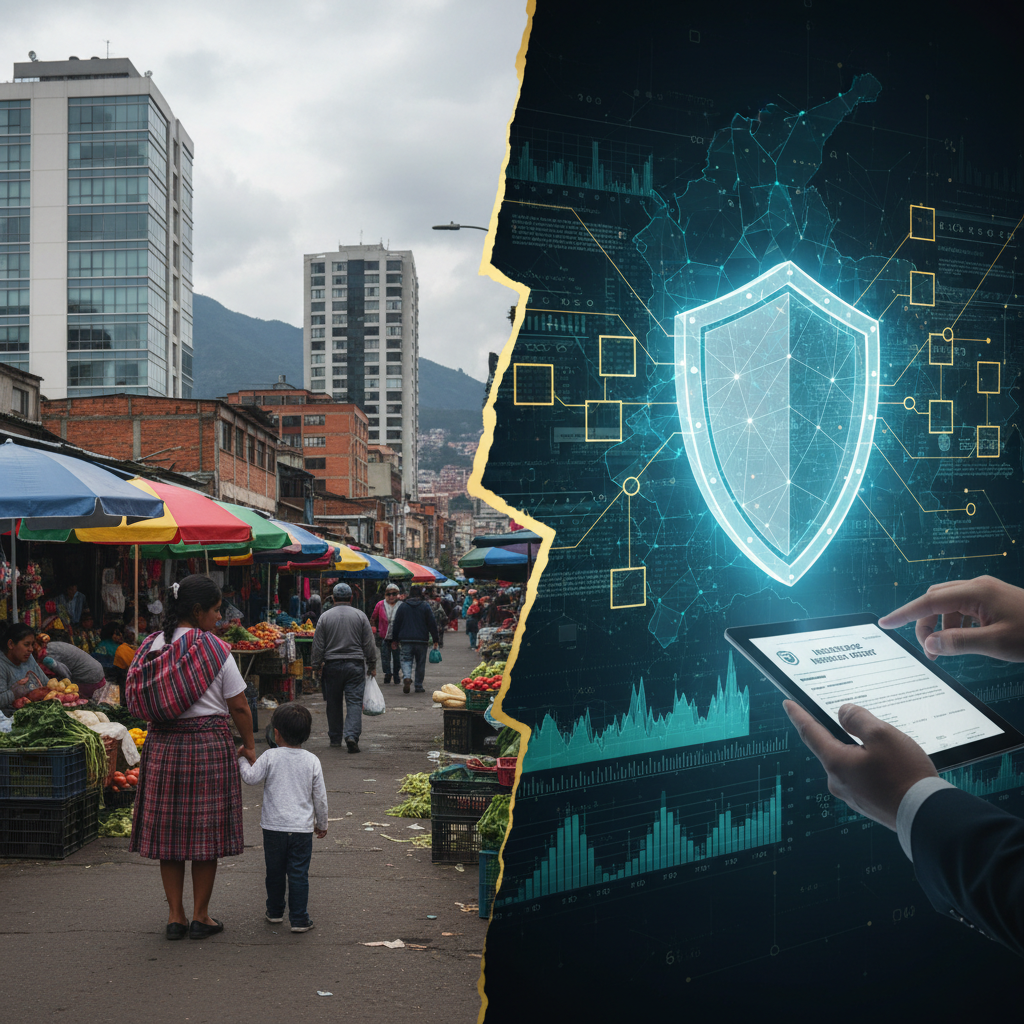
But let us pause for a moment and consider our reality. Colombia is a nation that has endured decades of conflict, a country where informal economies thrive, and where a significant portion of the population has historically been underserved by formal financial institutions. When we talk about AI in insurance here, we are not just discussing algorithms and data points, we are talking about people's livelihoods, their homes, their health, and their ability to rebuild after a natural disaster or an unforeseen tragedy. This is about more than technology because it's about justice.
Take automated claims processing. Imagine a small farmer in Boyacá, whose crops are destroyed by an unexpected hailstorm. If an AI system processes his claim, will it understand the nuances of local agricultural practices, the informal networks of proof, or the specific vulnerabilities of his land that might not be captured in a standardized data model? Or will it flag his claim as anomalous, delaying or even denying the very support he needs to survive? The data used to train these models is critical. If it is predominantly from developed markets, or from segments of our own society that are already well-documented and formal, then the AI will inevitably inherit and perpetuate those biases.
Fraud detection is another area where AI's power is undeniable. Machine learning algorithms can identify suspicious patterns in claims data with remarkable accuracy, potentially saving insurers millions. This is good for the industry, yes, but what about the unintended consequences? In a country where many people lack formal identification, or where documentation might have been lost due to displacement or violence, an overly aggressive AI system could easily misidentify legitimate claims as fraudulent. We have seen how algorithms can be opaque, creating 'black boxes' that make it difficult to understand why a decision was made. For someone fighting for their insurance payout, this opacity can be devastating.
Dr. Juan Carlos Echeverry, a former Colombian Minister of Finance and Public Credit, has often spoken about the need for technology to serve social inclusion. While not directly addressing AI in insurance, his broader message resonates. He once stated,