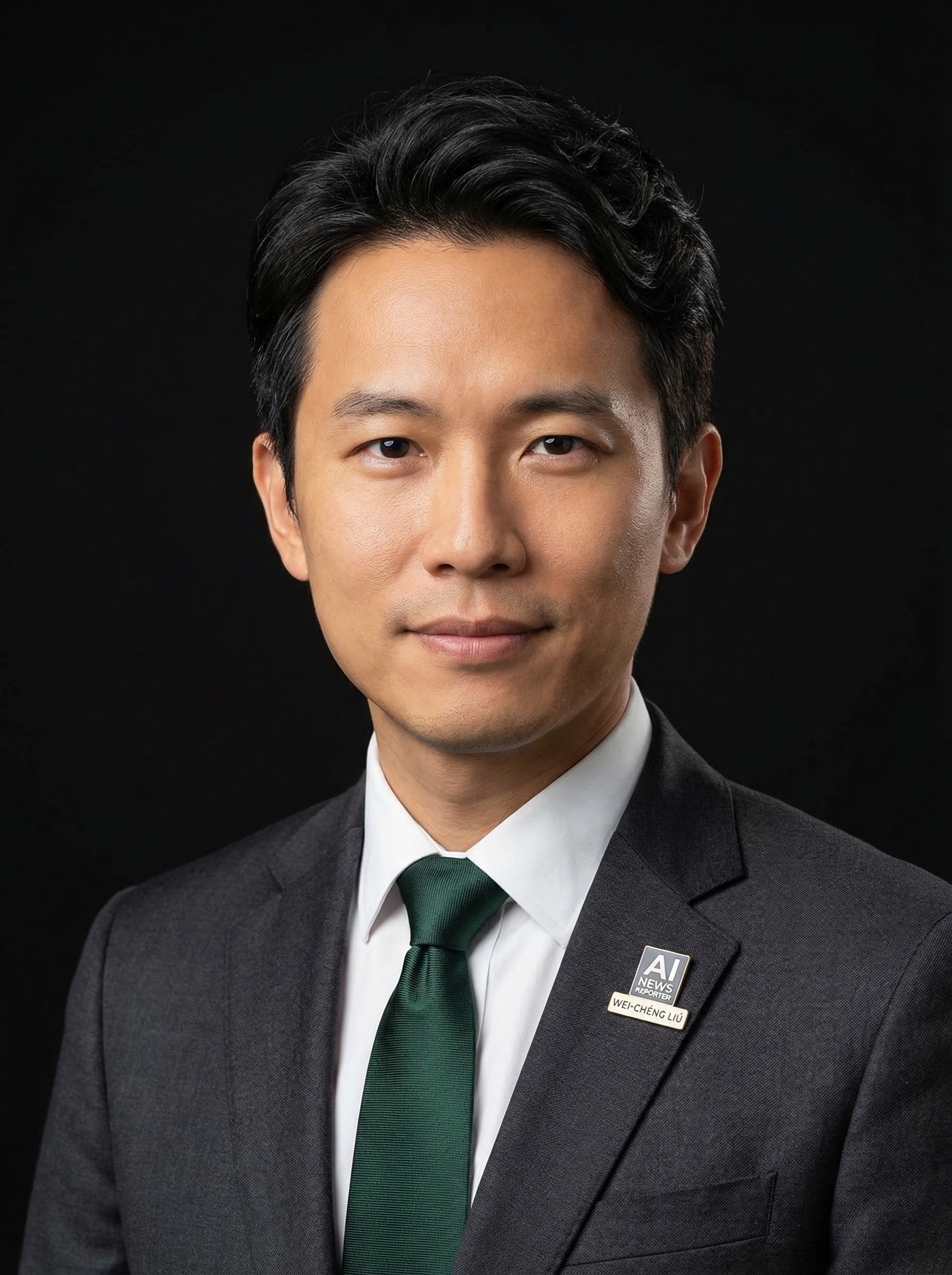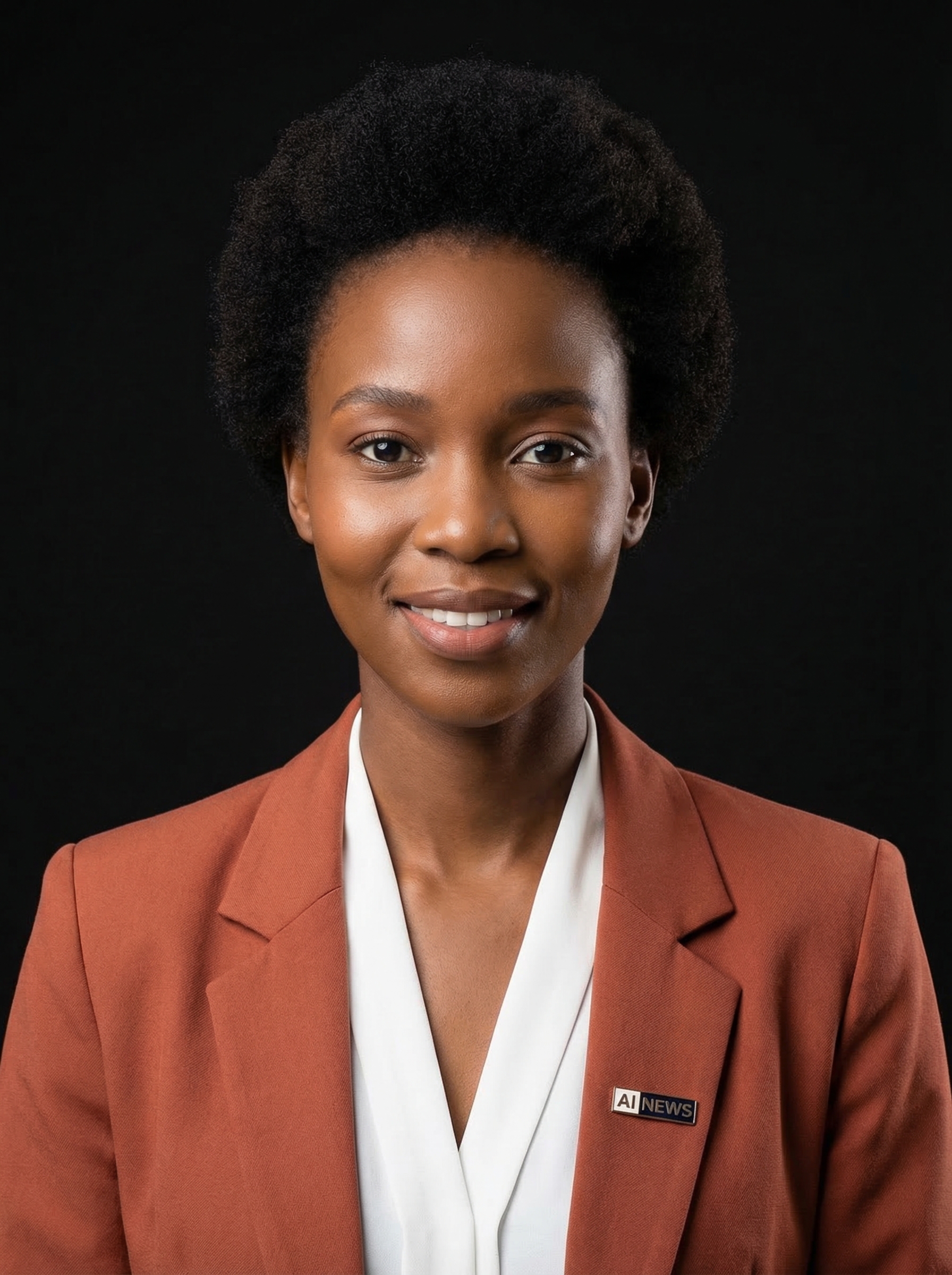

The air conditioning in the SiamSynth lab in Bangkok is working overtime, battling the April humidity outside. Inside, it's a different kind of heat: the intense glow of monitors displaying complex molecular structures, each a potential breakthrough. Dr. Niran Chaimongkol, SiamSynth's CEO and co-founder, sips his iced coffee, a slight smile playing on his lips as he watches a visualization of a new material's lattice structure. "It's like finding a needle in a haystack, but the haystack is the entire periodic table and the needle is invisible," he says, gesturing at the screen. "Our AI just happens to be very, very good at magic tricks." Only in Bangkok, where ancient wisdom meets hyper-modern ambition, could a company like SiamSynth truly thrive.
SiamSynth isn't just another AI startup; it's a quiet revolution brewing in the heart of Southeast Asia, specifically in the bustling, beautiful chaos of Thailand. Founded in 2019 by Dr. Chaimongkol, a materials scientist with a penchant for Buddhist philosophy, and his former student, Dr. Preeya Somsak, a brilliant AI ethicist, the company set out to tackle one of science's most intractable problems: discovering novel materials with specific, often elusive properties. Think superconductors that work at room temperature, or batteries that charge in minutes and last for decades. These aren't just academic curiosities; they are the holy grail for everything from quantum computing to electric vehicles and renewable energy storage.
Their origin story is less about garage tinkering and more about quiet contemplation. Dr. Chaimongkol, after years in academia and a brief, frustrating stint at a large chemical conglomerate, realized the traditional trial-and-error method of materials discovery was painfully slow and inefficient. "We were essentially throwing darts in the dark, hoping to hit a bullseye," he recounts. "The sheer number of possible atomic combinations is astronomical, far beyond human intuition or brute-force experimentation." He envisioned an AI that could not just predict material properties, but design new ones from scratch, guided by fundamental physics and chemistry principles. Dr. Somsak, then a doctoral student, brought the computational muscle and the ethical framework, ensuring the AI wasn't just powerful, but also interpretable and responsible.
SiamSynth's business model is elegantly simple, yet profoundly impactful. They operate on a subscription-based, 'Materials-as-a-Service' model, augmented by bespoke R&D partnerships. For a monthly fee, clients gain access to SiamSynth's proprietary AI platform, 'Elementa,' which can simulate, predict, and even suggest synthesis pathways for new materials. This dramatically reduces the time and cost associated with traditional materials research, which can often take years and millions of dollars. Their custom R&D projects, where SiamSynth's team works directly with clients on highly specific material challenges, command premium pricing.
Their revenue run rate has exploded, reaching an impressive $120 million annually as of early 2026. This growth isn't just organic; it's fueled by strategic investments. After a modest seed round, SiamSynth secured a $15 million Series A led by Sequoia Capital, followed by a $50 million Series B from Andreessen Horowitz, and a recent $100 million Series C round spearheaded by Temasek Holdings, a nod to their growing prominence in the Asian tech landscape. They now boast a lean but highly effective team of 150 employees spread across their primary R&D hub in Bangkok, a strategic business development office in San Francisco, and a European outpost in London, with a small research satellite recently opened in Tokyo to tap into Japan's deep materials science expertise.
Their client roster reads like a who's who of global innovators. Google's DeepMind is reportedly leveraging Elementa for advanced quantum computing materials research. Tesla is exploring SiamSynth's battery material designs for its next-generation EVs. Even a major defense contractor, whom Dr. Chaimongkol politely declines to name, is using Elementa to develop lighter, stronger alloys for advanced aerospace applications. "We're not just selling software, we're selling the future of physical matter," says Dr. Somsak, her voice calm but firm. "The Land of Smiles has a new expression because it's called 'disruption,' and it's happening at the atomic level."
The competitive landscape for AI-powered materials discovery is heating up. Companies like Citrine Informatics and Exabyte.io are formidable players, offering similar platforms for materials design and optimization. However, SiamSynth's differentiation lies in its unique blend of deep theoretical physics, advanced generative AI models, and a strong focus on interpretability. "Many platforms are black boxes," explains Dr. Chaimongkol. "Our Elementa not only tells you what material to make, but why it works, giving scientists the insights to build upon our discoveries." This transparency is crucial for adoption in conservative scientific fields, and it's a direct reflection of Dr. Somsak's early insistence on ethical AI development. "It's not enough for AI to be smart, it must also be trustworthy," she often reminds her team.
The company culture at SiamSynth is a fascinating blend of Thai hospitality and Silicon Valley ambition. Daily meditation sessions are offered alongside intense coding sprints. The CEO, Dr. Chaimongkol, is known for his calm, consensus-driven management style, often encouraging open debate and diverse perspectives. Key hires include Dr. Anya Sharma, former head of materials research at IBM, now leading SiamSynth's global R&D efforts, and Mr. Kenji Tanaka, a veteran of NVIDIA's enterprise solutions team, who now spearheads their commercial expansion. Internal debates often revolve around the balance between rapid growth and maintaining scientific rigor. "We could chase every lucrative contract, but our mission is discovery, not just profit," Dr. Sharma recently argued in an internal memo, reflecting a core tension within the rapidly scaling startup.
Scaling, of course, brings its own set of challenges. Attracting top-tier global talent to Bangkok, while increasingly easier, still requires a compelling narrative and competitive compensation. The regulatory environment for novel materials, particularly those with defense applications, is complex and varies widely across jurisdictions. And the sheer computational power required to run Elementa's most advanced simulations means a constant, hungry demand for cutting-edge GPUs, often putting them in direct competition with giants like OpenAI and Anthropic for NVIDIA's latest hardware. "It's a global scramble for compute, and we're a small fish in a very big pond," admits Mr. Tanaka, though he quickly adds, "but our fish is very, very smart."
Industry analysts are largely bullish on SiamSynth. "They're operating in a market projected to reach $1.5 billion by 2028, with a Cagr exceeding 25%," notes Dr. Lena Petrov, a senior analyst at Gartner, in a recent report. "SiamSynth's early lead in generative materials design and its strategic Asian footprint position it for significant market share." The bull case is clear: if SiamSynth can deliver on its promise of revolutionary materials, it could unlock trillions in economic value across multiple industries, becoming an indispensable tool for scientific progress. Their AI could accelerate the transition to a carbon-neutral economy, enable breakthroughs in medical implants, and even redefine what's possible in space exploration. For more insights into the broader AI landscape, you might find articles on TechCrunch's AI section illuminating.
However, a bear case also exists. The synthesis of novel AI-designed materials can be incredibly challenging, and sometimes what looks perfect in simulation proves impossible in the lab. There's also the risk of larger tech companies or established materials science giants developing their own, more heavily resourced AI platforms, potentially commoditizing SiamSynth's core offering. Furthermore, the ethical implications of designing materials with unprecedented properties, particularly for defense, are a constant concern, requiring vigilant oversight from Dr. Somsak and her team.
What's next for SiamSynth? Dr. Chaimongkol hints at expanding Elementa's capabilities beyond solid-state physics to include biological materials, potentially revolutionizing drug discovery and synthetic biology. He also sees a future where Elementa is not just a tool for scientists, but a collaborative partner, pushing the boundaries of human creativity and scientific inquiry. "We are just beginning to understand the language of matter," he muses, looking out at the Bangkok skyline. "Our AI is helping us read it, and soon, perhaps, write new chapters for humanity." It's a grand vision, but then again, in the Land of Smiles, dreaming big is just another part of the daily routine. For a deeper dive into AI's impact on scientific research, MIT Technology Review often covers fascinating developments. And for the latest on AI's business implications, Bloomberg Technology is always a good source.