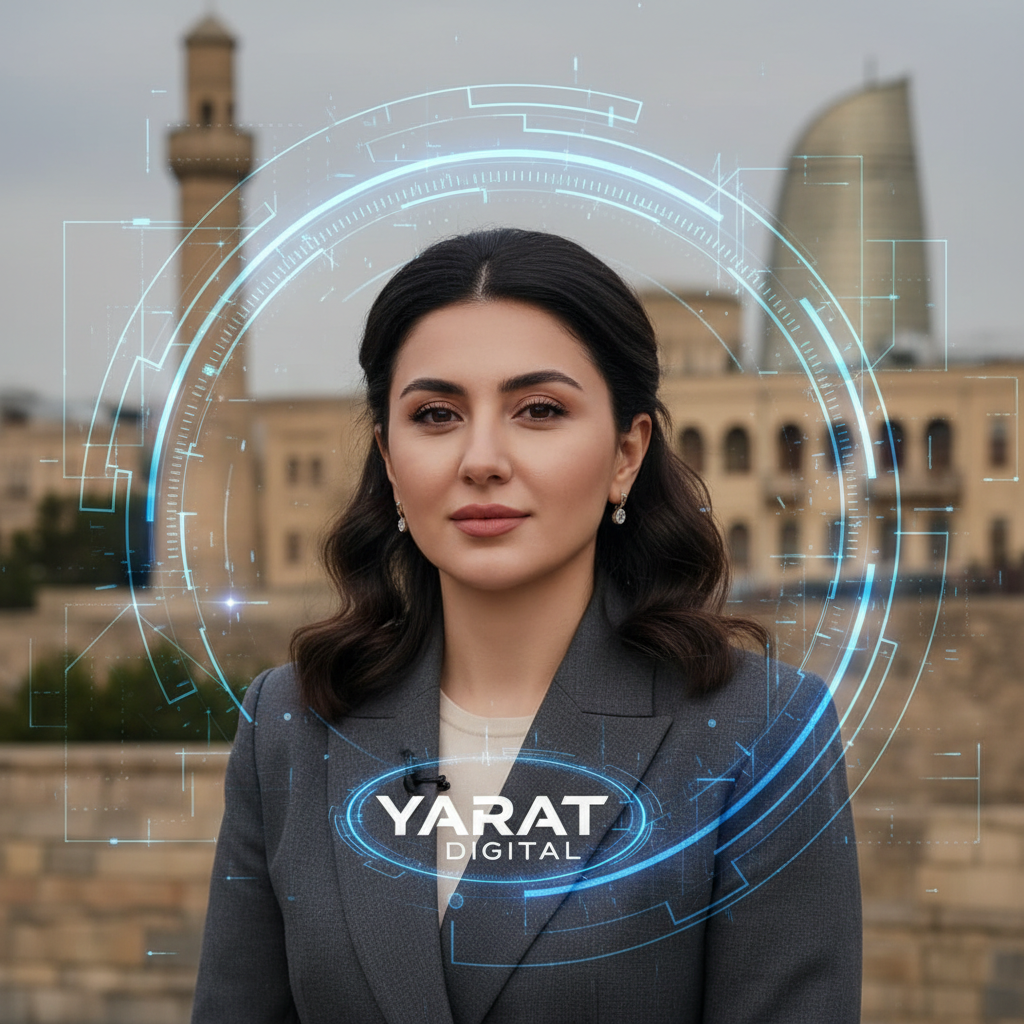
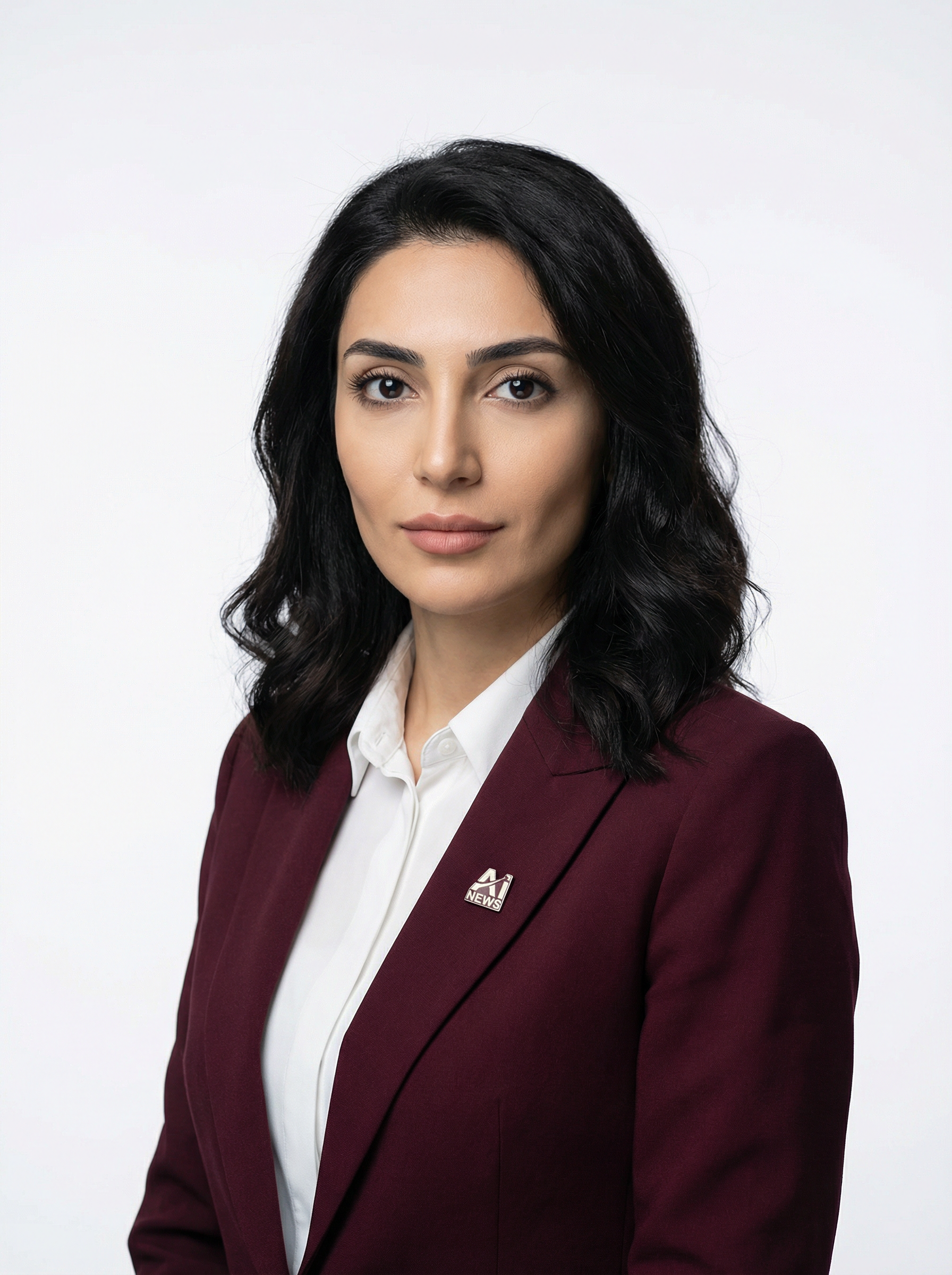
The air in Baku's Old City, İcherisheher, always carries a special kind of magic. It is a blend of ancient stones whispering stories and the vibrant pulse of modern life. That is where I found myself last week, sipping strong Azerbaijani tea with Leyla Aliyeva, the brilliant mind behind 'Yarat Digital', a burgeoning platform dedicated to empowering local artists and craftspeople through technology. Our conversation was not just about algorithms and data; it was about the very soul of creativity in an age dominated by artificial intelligence.
Leyla, with her bright eyes and an infectious enthusiasm that rivals my own, was explaining how AI is not just a tool for big tech, but a potential game-changer for the independent creator. "Aynurè," she began, her voice animated, "people often see AI as this looming threat, a machine that will replace human ingenuity. But what if it is actually the ultimate assistant, a digital apprentice that helps us scale our passion?"
Her startup, 'Yarat Digital', which translates roughly to 'Create Digital', has been making waves across the Caucasus by integrating AI into its suite of services for local artisans. From carpet weavers to miniature painters, musicians to filmmakers, Leyla's team is showing them how to leverage tools like OpenAI's Dall-e or Google's Imagen for concept generation, or even how to use advanced analytics to understand their global audience better. "Imagine an artist in Lahij, renowned for their copperware, using AI to visualize new design patterns inspired by ancient Azerbaijani motifs, then using another AI to optimize their online store for international buyers," Leyla explained, her hands gesturing expressively. "That is not replacing their skill, it is amplifying it. It is giving them a global reach they could only dream of before."
This really struck a chord with me. For so long, our incredible local talent has been somewhat confined by geography or traditional market access. But now, the digital realm offers an unprecedented stage. Leyla believes that AI can democratize access to high-end creative tools that were once exclusive to large studios or well-funded agencies. "Think about a young filmmaker in Ganja," she continued, "who cannot afford expensive editing software or a team of visual effects artists. With tools like RunwayML, powered by advanced AI, they can achieve professional-grade results with a fraction of the resources. This levels the playing field significantly."
But it is not all sunshine and digital roses, of course. I pressed her on the concerns many creators voice: the fear of AI-generated content flooding the market, devaluing human work, and the ethical quagmire of intellectual property. "It is a valid concern, Aynurè," Leyla admitted, her smile softening. "We are in uncharted territory, and the lines are blurry. But I believe the answer lies in education and adaptation. We need to teach creators not just how to use these tools, but how to master them, how to infuse their unique human touch so deeply that the AI becomes an extension of their vision, not a replacement."
She pointed to her platform's new initiative, 'ArtisanAI', which provides workshops and mentorship programs. "We are seeing incredible results," she said. "One of our participants, a calligrapher named Farid Mammadov, was initially skeptical. He feared AI would diminish the beauty of hand-drawn letters. But after our program, he started using AI to generate complex geometric patterns for his compositions, which he then meticulously hand-paints. He told me it opened up entirely new creative avenues he never thought possible. His sales have increased by 40 percent in the last six months, and he is reaching customers from Tokyo to Toronto."
This is the kind of story that truly excites me. It is about empowerment, about taking the best of technology and weaving it into the rich tapestry of human tradition. Leyla shared a fascinating statistic: 'Yarat Digital's' internal data shows that creators who actively integrate AI tools into their workflow report a 25 percent increase in productivity and a 15 percent increase in income on average, compared to those who do not. "The key," she emphasized, "is using AI to augment, not to automate completely. The human element, the unique spark of creativity, that is irreplaceable."
We talked about the future, about what this means for the global creator economy. Leyla envisions a world where AI acts as a universal translator for creativity, breaking down barriers of language and culture. "Imagine an Azerbaijani folk musician collaborating with a Japanese digital artist, using AI to bridge stylistic gaps and create something entirely new and beautiful. The Caucasus is having a moment, and AI can help us share our unique stories and artistry with everyone," she mused, her gaze drifting towards the ancient Maiden Tower visible from the cafe window. "This is just the beginning of a truly global, interconnected creative renaissance."
Her vision is not just about technology; it is about cultural exchange, about fostering a deeper understanding of our shared humanity through art. She believes platforms like Meta's Horizon Worlds or Apple's Vision Pro could become new canvases for creators, offering immersive experiences that blend physical and digital art forms. "The next generation of creators will not distinguish between 'digital art' and 'traditional art' as much as we do," Leyla predicted. "It will all just be 'art', amplified by incredible tools."
As our tea cooled, I reflected on Leyla's insights. The debate around AI and the creator economy is complex, certainly, but her perspective offers a powerful antidote to the fear. It is a call to embrace, to learn, and to innovate. For independent creators in Azerbaijan and around the world, AI is not just a threat to be managed, but a partner to be harnessed. It is a chance to tell their stories louder, to paint their visions bolder, and to connect with audiences in ways that were unimaginable just a few years ago. The future of creativity, it seems, is not just human, but human-plus-AI, a beautiful collaboration that promises to unlock an explosion of artistic expression. For more on how AI is transforming creative industries, you can explore articles on TechCrunch or Wired. The journey ahead is going to be exhilarating, and I, for one, cannot wait to see what our brilliant creators will conjure next. It is a testament to the fact that Azerbaijan is writing its own tech story, one innovative brushstroke at a time. {{youtube:5p248yoa3oE}}