
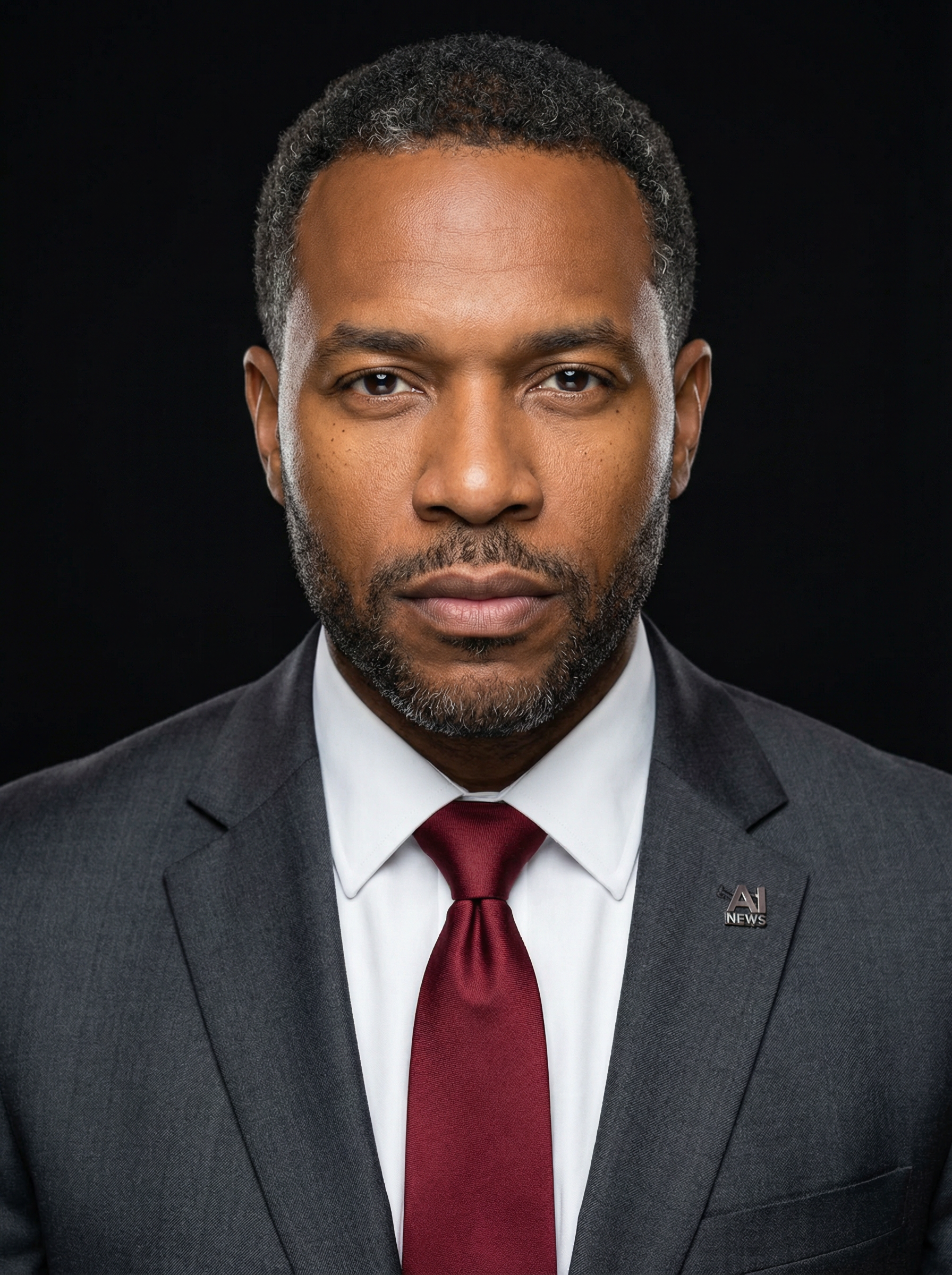
Let me tell you, the future of AI is being built in places you'd never expect. While everyone's eyes are glued to the shiny new models coming out of San Francisco, the real magic, the foundational work, is often happening in cities like Atlanta, where hustle meets innovation. That's exactly where AfterQuery, a company started by two 23-year-olds, just hit a mind-boggling $100 million in revenue. They aren't building the next GPT or Claude, they're building the scaffolding these giants stand on: high-quality, ethically sourced, and meticulously curated AI training data.
This isn't some overnight success story based on hype. This is about understanding a core technical challenge that plagues every single large language model, or LLM, out there: garbage in, garbage out. You can have the most sophisticated transformer architecture, the most powerful GPUs, but if your training data is biased, noisy, or irrelevant, your model will reflect those flaws. AfterQuery's founders, Keisha Jenkins and Marcus Thorne, understood this from day one, and they built a system to tackle it head-on. Their success isn't just a win for them, it's a blueprint for how the next generation of AI infrastructure will be built, right here in America's diverse tech hubs.
The Technical Challenge: Beyond Just Scraping the Web
When we talk about AI training data, most folks imagine web scraping on a massive scale. While that's part of it, the true technical challenge lies in what comes after the initial data acquisition. LLMs, especially those used by Anthropic and OpenAI, require data that is not just vast, but also diverse, contextually rich, and free from harmful biases. This means going beyond simple text extraction to complex tasks like semantic annotation, adversarial example generation, and human-in-the-loop validation at scale. The problem isn't just getting data, it's getting good data, and ensuring its integrity through billions of tokens.
Consider the sheer volume and variety. A model like OpenAI's GPT-4 was reportedly trained on trillions of tokens. Imagine the logistical and computational nightmare of ensuring quality across that dataset. Issues include: identifying and mitigating data drift over time, ensuring factual consistency, handling multi-modal inputs, and crucially, aligning the data with desired ethical guidelines. This isn't a task for a simple script, it requires a sophisticated, distributed data pipeline with robust quality control mechanisms.
Architecture Overview: A Multi-Stage Data Refinery
AfterQuery's system, which they've dubbed the 'Cognitive Data Refinery,' is a multi-stage architecture designed for precision and scale. At its core, it's a series of microservices orchestrated to ingest, process, enrich, and validate data. Their stack is built on a cloud-agnostic foundation, leveraging Kubernetes for container orchestration and Apache Kafka for high-throughput data streaming. This allows them to handle petabytes of raw data efficiently.
-
Ingestion Layer: This layer uses a combination of custom web crawlers, API integrations, and direct data partnerships. It's designed for broad coverage, pulling in text, code, images, audio, and video from diverse sources. Data is immediately sharded and stored in a distributed object storage system like Amazon S3 or Google Cloud Storage.
-
Preprocessing and Normalization: Raw data is often messy. This stage involves tokenization, language detection, deduplication, and format conversion. They use open-source libraries like spaCy and Hugging Face's tokenizers, but with custom extensions for domain-specific preprocessing. A critical component here is their proprietary
NoiseReductionEnginewhich uses unsupervised learning to identify and filter out low-quality or irrelevant segments. -
Enrichment and Annotation: This is where AfterQuery truly shines. They employ a hybrid approach combining automated enrichment with human-in-the-loop annotation. Automated processes use smaller, specialized AI models to extract entities, classify sentiment, identify topics, and generate summaries. For example, a named entity recognition model might tag all proper nouns, while a custom classifier identifies potential biases. Human annotators, often sourced from underserved communities in the US and globally, then validate these automated tags and perform more complex tasks like adversarial prompt generation or detailed factual verification. This human workforce, managed through a custom annotation platform, is a cornerstone of their ethical data sourcing strategy.
-
Bias Detection and Mitigation: This is an iterative process. AfterQuery employs various fairness metrics, such as disparate impact and equalized odds, to continuously monitor the dataset for demographic or social biases. They use techniques like re-sampling, re-weighting, and data augmentation to balance underrepresented groups or de-emphasize overrepresented ones. Their
BiasAuditormodule, written in Python, integrates with frameworks likeFairlearnto provide real-time insights into dataset fairness. -
Validation and Delivery: Before delivery to clients like Anthropic, the data undergoes a final battery of tests, including consistency checks, factual verification against trusted knowledge bases, and stress testing with proxy LLMs. Data is then packaged and delivered via secure APIs or direct cloud transfers, often in formats optimized for transformer training, such as Apache Parquet or custom HDF5 datasets.
Key Algorithms and Approaches
AfterQuery's technical edge comes from their intelligent blend of established ML techniques and novel approaches to data quality.
- Active Learning for Annotation: Instead of randomly selecting data for human annotation, they use active learning strategies. A small model is trained on an initially labeled dataset, then it identifies data points where it is least confident or where the predicted label would have the highest impact on model uncertainty. These 'hard' examples are then prioritized for human review, significantly reducing annotation costs and improving data efficiency. Conceptually, it looks something like this:
 function ActiveLearningLoop(unlabeled_data, labeled_data, model):
 while not stopping_condition:
 model.train(labeled_data)
 uncertain_samples = model.query_uncertainty(unlabeled_data) # e.g., entropy-based sampling
 top_k_samples = select_top_k(uncertain_samples) # Select most uncertain
 human_labels = request_human_label(top_k_samples)
 labeled_data.add(top_k_samples, human_labels)
 unlabeled_data.remove(top_k_samples)
 return labeled_data
 function ActiveLearningLoop(unlabeled_data, labeled_data, model):
 while not stopping_condition:
 model.train(labeled_data)
 uncertain_samples = model.query_uncertainty(unlabeled_data) # e.g., entropy-based sampling
 top_k_samples = select_top_k(uncertain_samples) # Select most uncertain
 human_labels = request_human_label(top_k_samples)
 labeled_data.add(top_k_samples, human_labels)
 unlabeled_data.remove(top_k_samples)
 return labeled_data
-
Adversarial Data Generation: To make LLMs more robust, AfterQuery generates adversarial examples. This involves using generative models (or even smaller LLMs) to create prompts or data points designed to trick or expose weaknesses in a target model. These are then human-vetted and added to the training set. This proactive approach helps build more resilient and less 'brittle' AI systems.
-
Semantic Deduplication: Beyond simple hash-based deduplication, they employ semantic similarity algorithms, often using embeddings from models like Sentence-BERT, to identify and remove near-duplicate content that might otherwise skew model training. This ensures diversity in the dataset, preventing models from over-indexing on redundant information.
Implementation Considerations and Gotchas
Building a system like AfterQuery's isn't just about clever algorithms, it's about robust engineering. Scalability is paramount. They've invested heavily in distributed computing frameworks. Data governance and privacy are also non-negotiable. They implement strict access controls, anonymization techniques, and comply with regulations like GDPR and Ccpa, which is a significant undertaking given their global data sources.
One major pitfall they've navigated is the 'cold start' problem for new data types or domains. Initially, without sufficient labeled data, automated enrichment models perform poorly. Their solution involves bootstrapping with a small, highly skilled human team, then iteratively training and deploying specialized models as more labeled data becomes available. Another challenge is managing the human annotation workforce, ensuring consistent quality, fair wages, and ethical working conditions, which is a core part of their brand and mission.
Real-World Use Cases
AfterQuery's impact is already visible in the LLMs we use daily:
- Anthropic's Claude: AfterQuery provides a significant portion of the conversational data used for Claude's constitutional AI training, focusing on safety, helpfulness, and harmlessness. This includes vast datasets of human feedback on model responses, crucial for reinforcement learning from human feedback, or Rlhf.
- OpenAI's Code Generation Models: For models like Codex, AfterQuery supplies high-quality, diverse code snippets from various programming languages, meticulously annotated for functionality, bugs, and best practices. This helps models generate more accurate and secure code.
- Enterprise Customization: Beyond the giants, AfterQuery works with specific enterprises to create bespoke datasets for fine-tuning LLMs for industry-specific applications, such as legal document analysis or medical diagnostics, ensuring the models understand niche terminology and contexts.
- Multilingual Expansion: As LLMs expand globally, AfterQuery is a key partner in sourcing and annotating data in low-resource languages, enabling these models to serve a broader, more diverse user base.
Resources for Going Deeper
For those looking to dive deeper into the technicalities of building robust data pipelines for AI, I recommend exploring resources on distributed systems, active learning, and ethical AI data practices. The MIT Technology Review often covers cutting-edge research in data quality for AI. You can also find excellent discussions on data engineering best practices on TechCrunch's AI section. For a more academic perspective, papers on data-centric AI and fairness in machine learning are frequently published on arXiv.
What Keisha and Marcus have built isn't just a company, it's a testament to the idea that the most impactful innovations often come from solving the problems others overlook. They understood that the foundation is just as important, if not more so, than the flashy facade. This is the real AI revolution, folks, and it's being powered by the meticulous, often unseen, work of companies like AfterQuery, proving that you don't need to be in Silicon Valley to shape the future. You just need a sharp mind and the grit to tackle the hard problems.