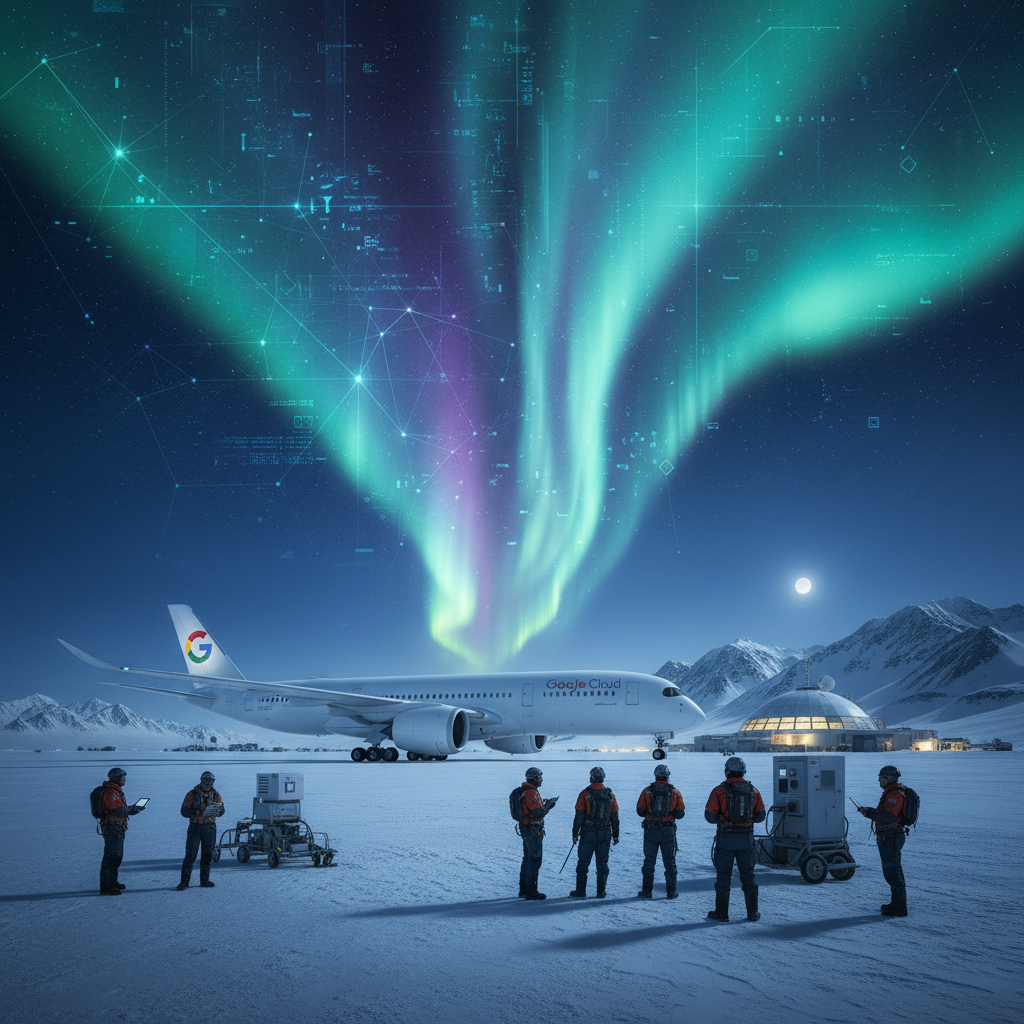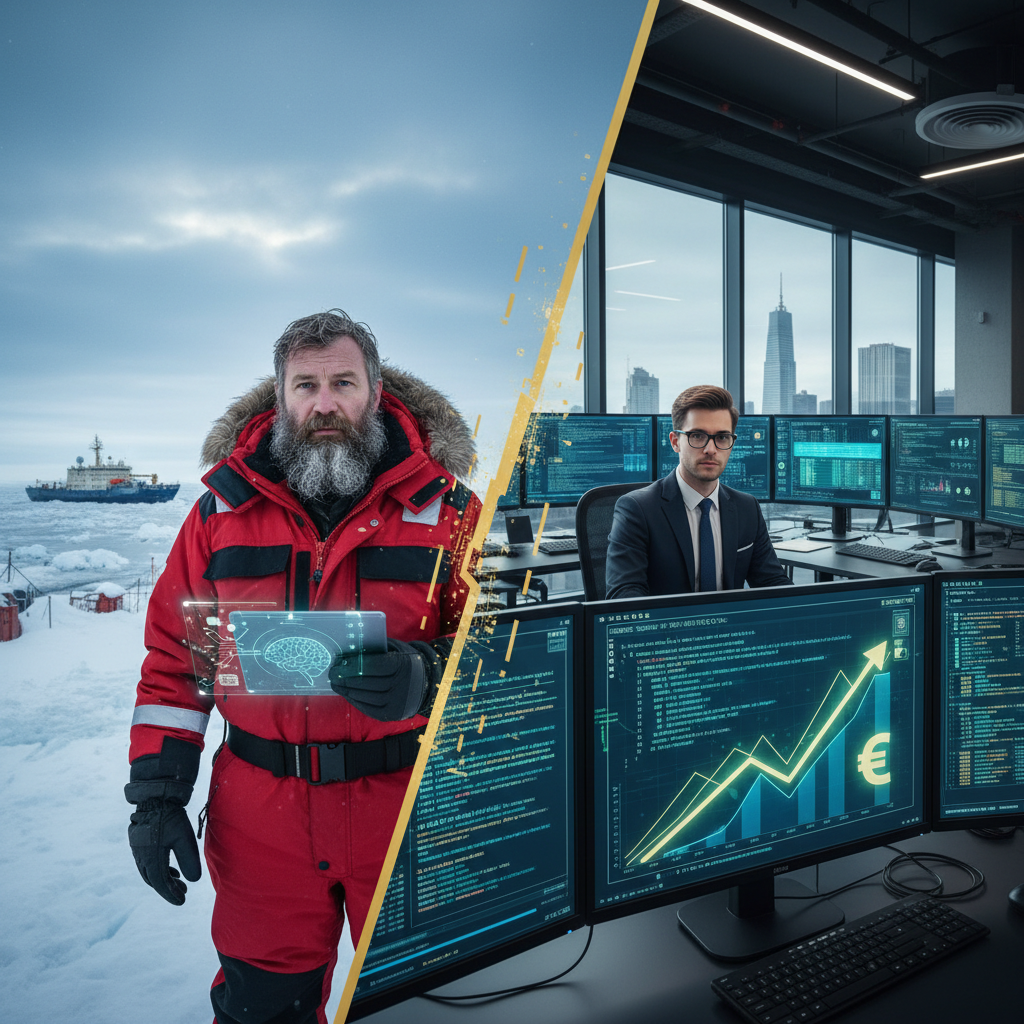

The wind howls outside my window, a constant reminder of the extreme conditions that define life and science at Vostok Station. Here, at the coldest, most isolated point on Earth, the pursuit of knowledge is a daily battle against the elements. Yet, an even more formidable force is now threatening our scientific endeavors: the global AI talent war, a relentless economic blizzard sweeping across the world, drawing away the brightest minds with offers of seven-figure salaries and unparalleled resources.
This phenomenon is not merely a Silicon Valley anecdote, it is a geopolitical reality with tangible consequences, even for nations like Russia, which has historically prided itself on its scientific prowess. The data from our Antarctic station reveals a stark trend: the gravitational pull of companies such as OpenAI, Google DeepMind, and NVIDIA is proving irresistible for many of our most gifted researchers, particularly those specializing in advanced machine learning, neural networks, and large language models.
Consider the recent revelations: reports indicate that top AI researchers and engineers are commanding annual compensation packages exceeding one million US dollars, often including substantial equity. This is not merely a marginal increase; it is an order of magnitude shift from traditional academic or industrial salaries, particularly in countries outside the immediate orbit of major tech hubs. "The scale of financial incentives being offered by American tech behemoths is simply unprecedented," states Dr. Anatoly Kuznetsov, Head of Artificial Intelligence Research at the Russian Academy of Sciences in Moscow. "We are not just competing for talent; we are witnessing an economic secession of our most valuable intellectual capital. A young, brilliant mind, trained at our state universities, can earn in a month what they might make in a year here. It is a profound challenge to our national scientific infrastructure."
This talent drain is akin to the rapid melting of polar ice sheets, a slow but inexorable process that reshapes entire landscapes. Just as the Antarctic ice core samples reveal centuries of climate data, the exodus of AI specialists reveals a critical vulnerability in our long-term technological development. These are the individuals who would otherwise be contributing to Russia's advancements in critical sectors: from optimizing resource extraction in the Arctic to developing sophisticated medical diagnostics and enhancing national defense capabilities. The lure is not only financial; it is also the promise of working on the cutting edge, with virtually unlimited computational resources and access to vast datasets, an environment often difficult to replicate in state-funded institutions.
One striking example involves a former colleague, Dr. Elena Petrova, a brilliant specialist in reinforcement learning who contributed significantly to our station's autonomous drone navigation systems. Her work was vital for mapping subglacial lakes. Last year, she accepted an offer from Anthropic, the AI safety-focused company behind Claude, for a package reportedly north of 1.2 million dollars. Her departure, while understandable on a personal level, left a significant void in our specialized team. "At -40°C, technology behaves differently, and so do the people who build it," Dr. Petrova commented in a recent digital correspondence. "The opportunity to shape the future of AI, with the resources Anthropic provides, was a call I could not ignore, despite my deep commitment to polar science."
This trend is not unique to Russia. Nations across Europe and Asia are grappling with similar challenges. According to Reuters, the global demand for AI expertise has outstripped supply by an estimated 60% in the last two years alone. Companies like Microsoft, with its massive investments in OpenAI, and Meta, with its open-source Llama models, are aggressively recruiting from universities and research labs worldwide. This competitive landscape means that even established tech giants are struggling to retain talent against the allure of well-funded startups or direct offers from competitors.
The implications extend beyond immediate brain drain. It creates a feedback loop: fewer top researchers mean fewer new discoveries, fewer patents, and ultimately, a slower pace of innovation domestically. This can lead to a reliance on foreign AI technologies, creating dependencies that could have strategic ramifications. "The long-term impact on our technological sovereignty is a serious concern," explains Professor Ivan Volkov, an economist specializing in labor markets at the Moscow State University. "We risk becoming consumers of advanced AI rather than producers, which is an untenable position for a major power in the 21st century."
What can be done? The solutions are complex and multifaceted. Increasing domestic funding for AI research is paramount, not just in terms of salaries, but also in providing world-class infrastructure and computational power. Fostering strong partnerships between academia, industry, and government is crucial to create attractive ecosystems where top talent can thrive. Initiatives like specialized AI research centers, offering competitive grants and access to powerful NVIDIA GPU clusters, could help stem the tide. Furthermore, focusing on niche areas where Russia holds a competitive advantage, such as AI for extreme environments or specialized scientific computing, could provide compelling reasons for researchers to remain.
The challenge is not merely about money; it is about creating an environment where scientific ambition can flourish. The drama of Antarctic research, the pursuit of fundamental truths in one of the planet's most unforgiving landscapes, is a powerful motivator. We must find ways to translate that spirit into the realm of artificial intelligence, ensuring that the next generation of breakthroughs is not exclusively born in Silicon Valley. The future of our scientific independence, and indeed our technological standing, depends on it. The battle for AI talent is a marathon, not a sprint, and we must adapt our strategies to secure our place in this rapidly evolving global landscape.
For more insights into the global AI landscape, consider the analysis provided by MIT Technology Review. The stakes are higher than ever, and the chill winds of economic competition are as biting as any Antarctic gale.