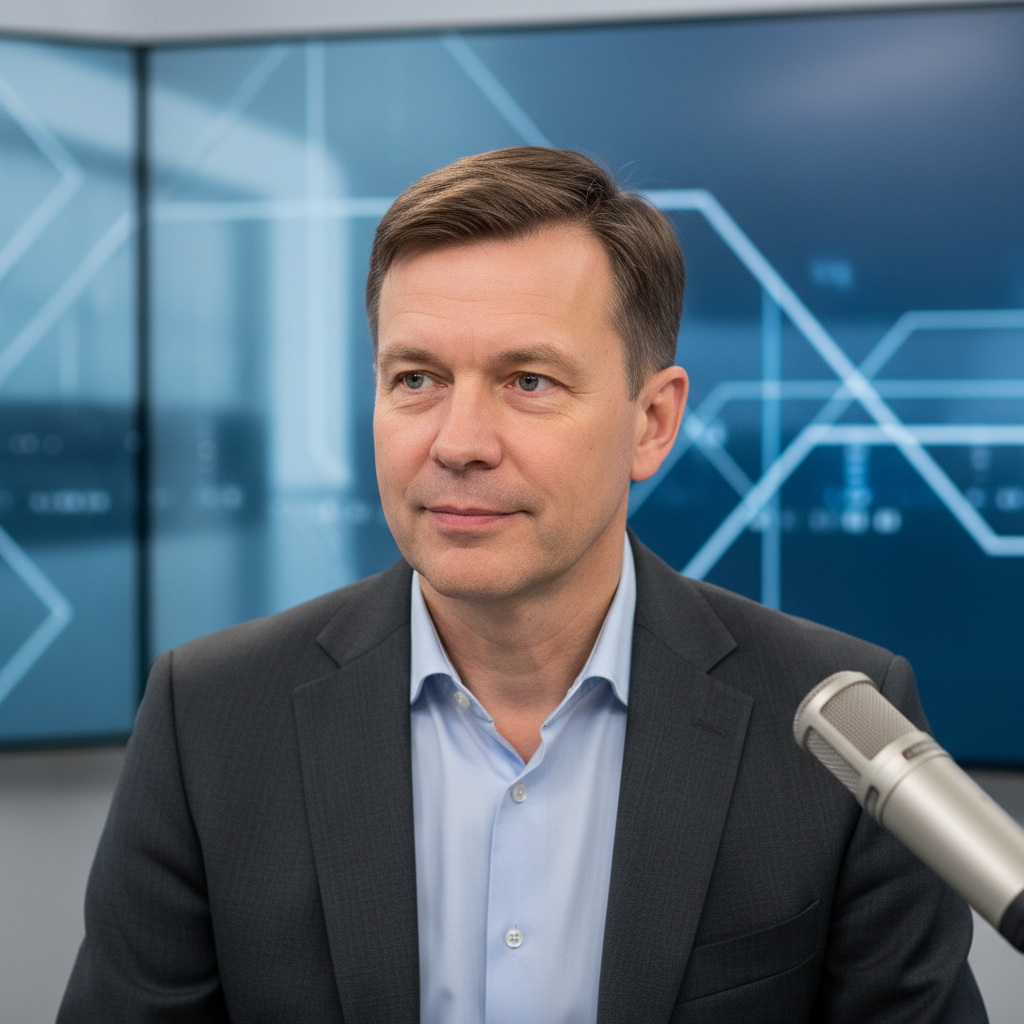
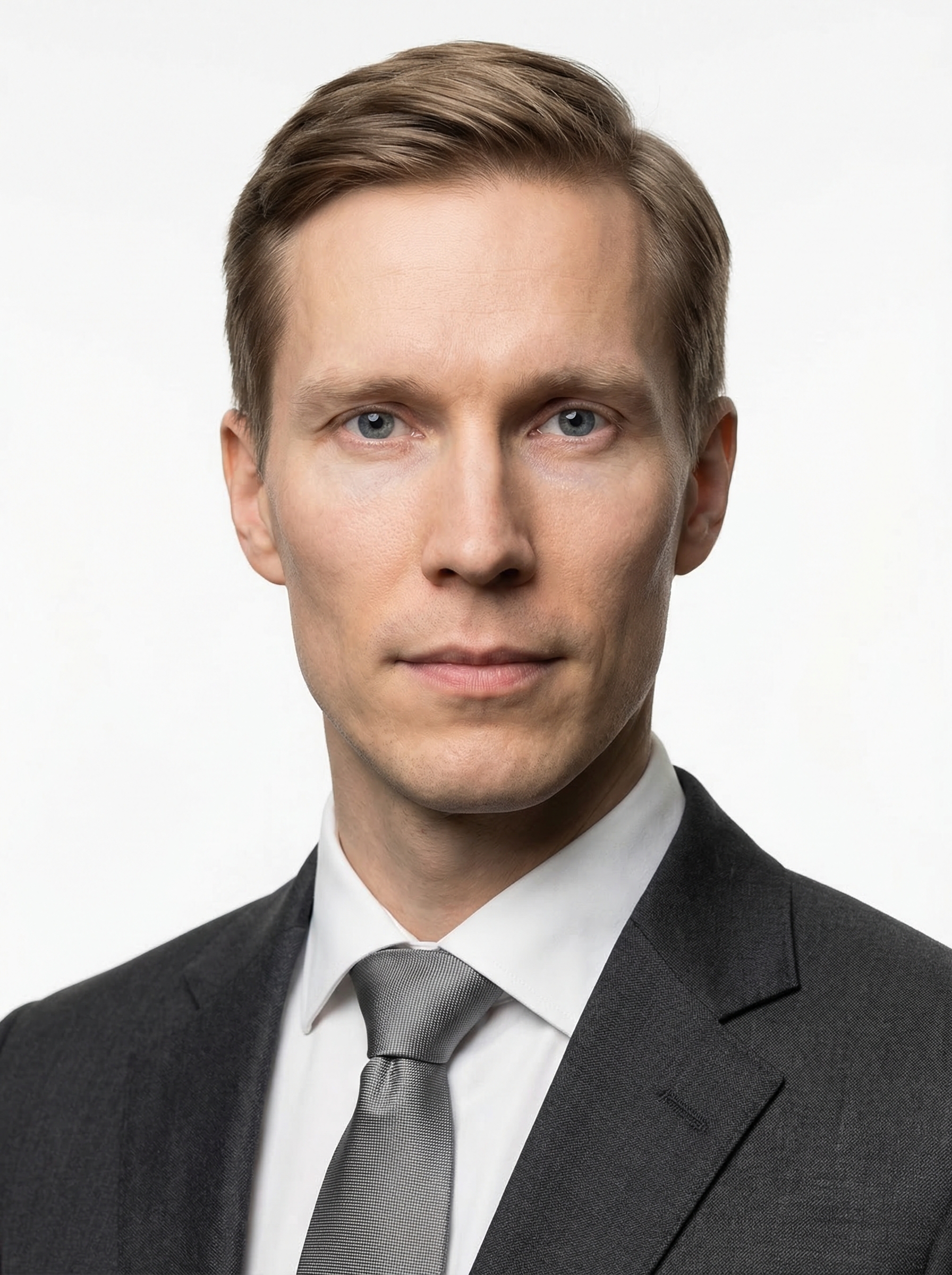
The news cycles are awash with narratives of job displacement, particularly in the white-collar sector. Consulting firms, legal offices, and even newsrooms are reportedly re-evaluating their workforce structures as AI tools like OpenAI's GPT models and Google's Gemini become increasingly sophisticated. While the headlines often paint a picture of impending doom, a more nuanced perspective emerges when one speaks with figures like Juha Vanhanen, a respected Finnish AI ethicist and former advisor to the Ministry of Economic Affairs and Employment.
Vanhanen, known for his pragmatic approach to technological integration, views the current anxieties through a distinctly Nordic lens. "The fear of AI replacing white-collar jobs is understandable, but often oversimplified," Vanhanen stated in a recent public address. "Our history, particularly with the transformation of industries like forestry and telecommunications, has taught us that technological shifts demand adaptation, not just apprehension." He emphasizes that Finland's approach is quietly revolutionary, focusing on systemic resilience and continuous learning.
His background is deeply rooted in both technology and public policy. After a career spanning telecommunications research during the Nokia era, he transitioned into roles advising the Finnish government on digital strategy and ethical AI deployment. This unique vantage point allows him to dissect the implications of AI with a blend of technical understanding and societal foresight. He often references the lessons learned from Nokia's dramatic reinvention, a period that underscored the importance of agility and upskilling an entire workforce.
When discussing the impact on professional services, Vanhanen points to data indicating a shift in task composition rather than wholesale job elimination. A 2023 report by the Finnish Centre for Economic Research, for instance, suggested that while up to 30% of current tasks in legal and financial services could be automated by advanced AI, only a fraction of full-time positions were at immediate risk of complete redundancy. "The critical distinction lies between task automation and job automation," Vanhanen explained during a recent panel discussion at Aalto University. "AI will augment, streamline, and even redefine many roles, but it will not simply erase them in the way some predict. The demand for human judgment, creativity, and complex problem-solving remains." He cites the example of legal professionals using AI for document review and preliminary research, freeing them to focus on strategic advice and client relations.
Vanhanen's vision for navigating this transition centers heavily on education and lifelong learning, a cornerstone of Finnish society. "We have always believed in the power of education to adapt and innovate," he remarked. "The sauna principle of AI development, slow heat, lasting results, applies equally to our workforce strategy. We invest in continuous learning, ensuring our professionals are equipped for the evolving demands of their fields." He advocates for national programs that retrain and upskill workers, particularly those in roles most susceptible to automation. This includes initiatives to integrate AI literacy into university curricula across all disciplines, not just computer science.
He has been a vocal proponent of Finland's national AI strategy, which emphasizes ethical development, public sector adoption, and robust educational frameworks. This strategy, first outlined in 2017 and regularly updated, seeks to harness AI's potential while mitigating its risks. "We are not naive about the challenges," Vanhanen conceded. "There will be disruption, and some individuals will face difficult transitions. Our responsibility, as a society, is to provide the safety nets and the pathways for re-employment." He frequently highlights the Finnish social welfare model as a crucial buffer during periods of economic transformation, providing support for those undergoing retraining or seeking new opportunities.
Vanhanen also touches upon the role of leadership in this era of change. He notes that companies like Accenture and Deloitte, while investing heavily in AI tools, are also simultaneously investing in reskilling their consultants. "These firms understand that their intellectual capital is their primary asset," he observed. "The goal is not to replace human consultants with algorithms, but to empower them with superior tools, allowing them to deliver greater value to clients." He suggests that the most successful organizations will be those that view AI as a co-pilot, enhancing human capabilities rather than supplanting them.
In the media sector, where AI is already generating preliminary drafts and summarizing reports, Vanhanen sees a similar pattern. "Journalism, at its core, is about storytelling, investigation, and critical analysis," he posited. "While AI can handle routine data aggregation or even basic news summaries, the nuanced understanding of context, the ethical considerations, and the human element of narrative will remain indispensable." He has publicly praised initiatives by Finnish media outlets, such as Helsingin Sanomat, which are experimenting with AI to automate mundane tasks, thereby freeing journalists to pursue deeper investigative work.
MIT Technology Review has extensively covered the global debate on AI and employment, often highlighting the divergent approaches taken by different nations. Finland, under the guidance of experts like Vanhanen, has consistently favored a proactive, human-centric strategy. This involves not only technological development but also a strong emphasis on social dialogue and worker protection. "Nokia taught us something about reinvention," Vanhanen often reminds his audiences. "It taught us that even profound industrial shifts can be navigated with foresight, investment in human capital, and a collective will to adapt."
The conversation with Vanhanen underscores a crucial point: the future of white-collar work is not a predetermined outcome of technological advancement, but rather a reflection of societal choices. Will we choose to view AI as an existential threat, or as a powerful tool for augmentation and evolution? From Vanhanen's perspective, Finland's experience suggests the latter. By prioritizing education, ethical guidelines, and robust social support systems, nations can transform the challenge of AI induced job shifts into an opportunity for economic growth and human flourishing. As AI continues its inexorable march into every facet of professional life, the quiet pragmatism of the Nordic approach offers a compelling blueprint for a future where technology serves humanity, not the other way around. This is not about avoiding change, but about shaping it deliberately and thoughtfully, much like how a Finnish forest grows, slowly but resiliently. Further insights into the broader European context can be found on Reuters' AI section, which frequently reports on policy responses across the continent.