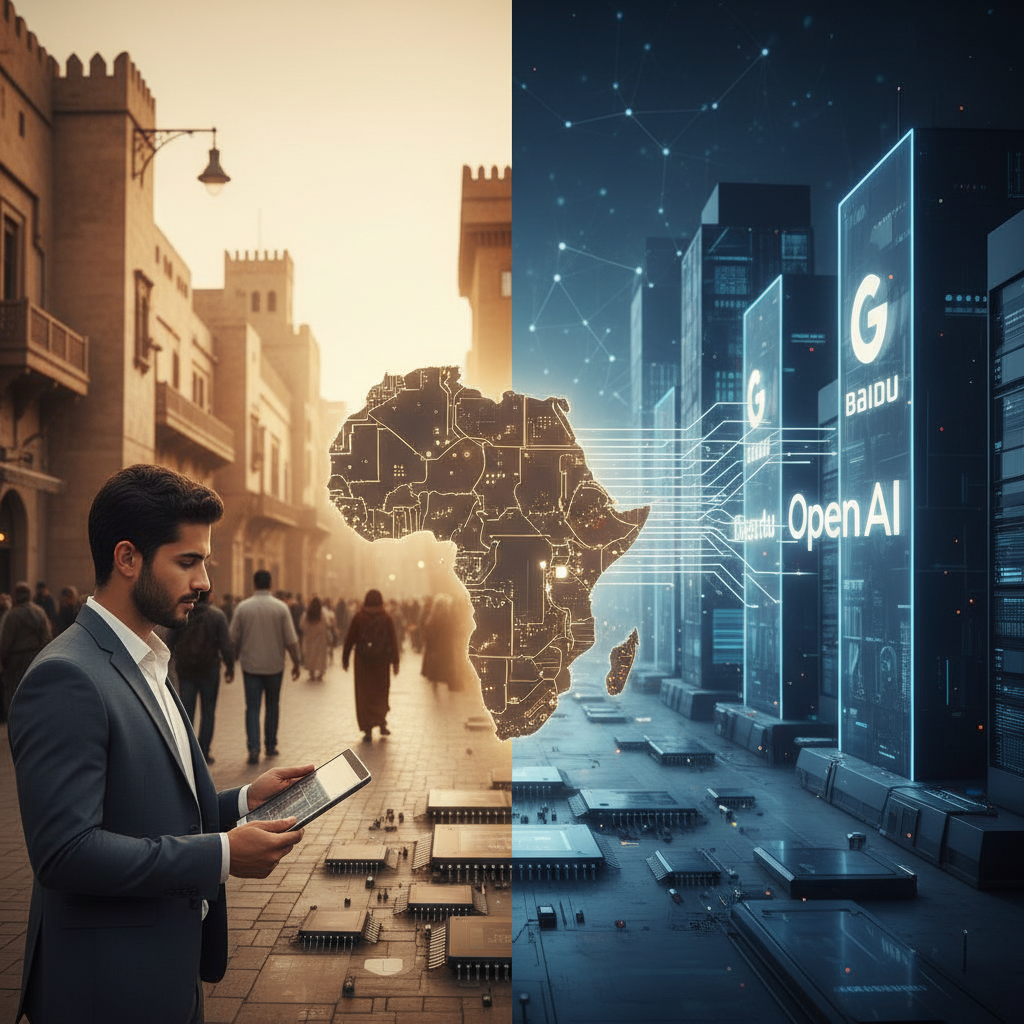
The digital winds of change are sweeping across the globe, carrying with them the unmistakable scent of an AI arms race. From the gleaming campuses of Silicon Valley to the bustling tech hubs of Shenzhen and the regulatory corridors of Brussels, the competition for artificial intelligence supremacy is fierce, multifaceted, and relentless. Yet, as a journalist observing this phenomenon from Algiers, I find myself drawn to a narrative often overlooked in the grand pronouncements of Google, Baidu, and OpenAI: the burgeoning, strategic ambitions of emerging nations, particularly here in Africa.
For too long, the discourse has centered on a binary struggle, a technological tug-of-war between the United States and China, with the European Union attempting to carve out a regulatory third way. This perspective, while not entirely inaccurate, paints an incomplete picture, much like admiring a magnificent mosaic while ignoring the individual tesserae that give it depth and character. The reality is far more complex, a multi-polar world where nations like Algeria are not content to be mere spectators or passive recipients of technological dictates.
Let me walk you through the architecture of this evolving global landscape. On one side, we have the established giants. The United States, with its unparalleled venture capital ecosystem and pioneering firms like OpenAI, Anthropic, and NVIDIA, continues to lead in foundational model development and advanced hardware. Data from the National Security Commission on Artificial Intelligence indicates that US private investment in AI reached nearly $68 billion in 2023, a staggering figure that underscores its commitment. TechCrunch frequently reports on the latest funding rounds and breakthroughs emanating from this fertile ground.
China, on the other hand, leverages its vast data reserves, state-backed initiatives, and a formidable talent pool to push the boundaries of applied AI, particularly in areas like surveillance, smart cities, and e-commerce. Companies such as Baidu, Alibaba, and Tencent are not just competing; they are innovating at a scale that often dwarfs their Western counterparts in specific domains. The intertwining of state and corporate interests creates a unique, often opaque, but undeniably powerful engine for AI development.
Europe, with its emphasis on ethical AI and data privacy, is attempting to forge a distinct path. The EU AI Act, set to be fully implemented by 2027, represents the world's first comprehensive legal framework for AI. This regulatory approach, while lauded by many for its foresight, also raises questions about its potential impact on innovation velocity compared to the more unfettered environments of the US and China. As MIT Technology Review often highlights, striking a balance between innovation and regulation is a perpetual challenge.
But what of the emerging nations? This is where the story becomes truly compelling, particularly for us in Africa. Our continent, long viewed through the lens of resource extraction or humanitarian aid, is rapidly asserting its digital sovereignty. The mathematics behind this is elegant: a young, digitally native population, a growing pool of skilled engineers, and an urgent need for AI solutions tailored to local challenges, from agriculture to healthcare and education.
Consider Algeria. Our government, through initiatives like the National Strategy for Artificial Intelligence 2020-2030, is investing heavily in research and development, talent cultivation, and infrastructure. We are not aiming to replicate Silicon Valley, nor are we attempting to outspend Beijing. Instead, our strategy is one of strategic niche development and collaboration. We are focusing on areas where AI can have the most immediate and profound impact on our society and economy, such as Arabic natural language processing, precision agriculture in arid lands, and smart energy grids.
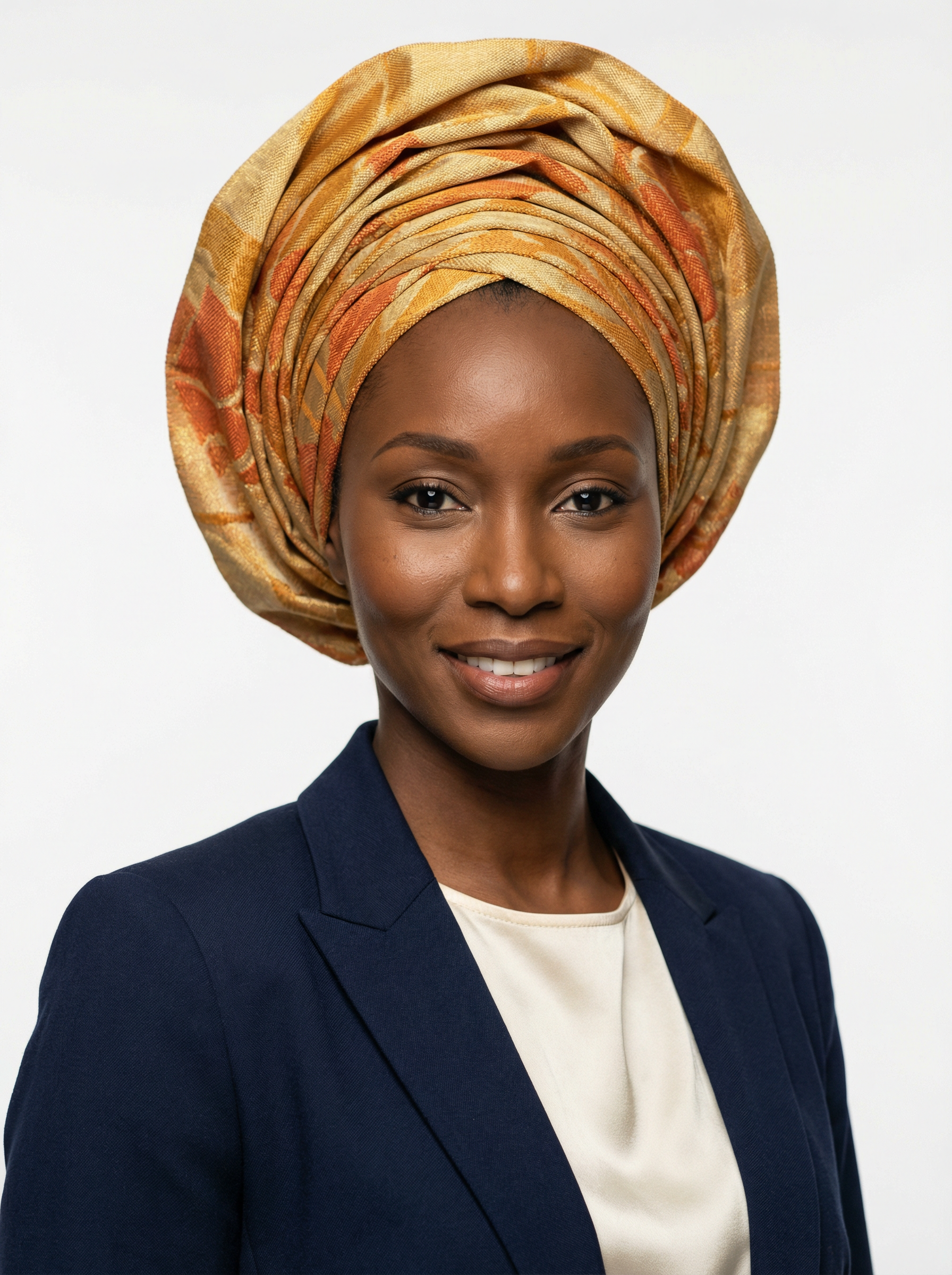
Dr. Amina Benali, Director of the Algerian Institute for Advanced AI Research, articulated this vision eloquently during a recent panel discussion.