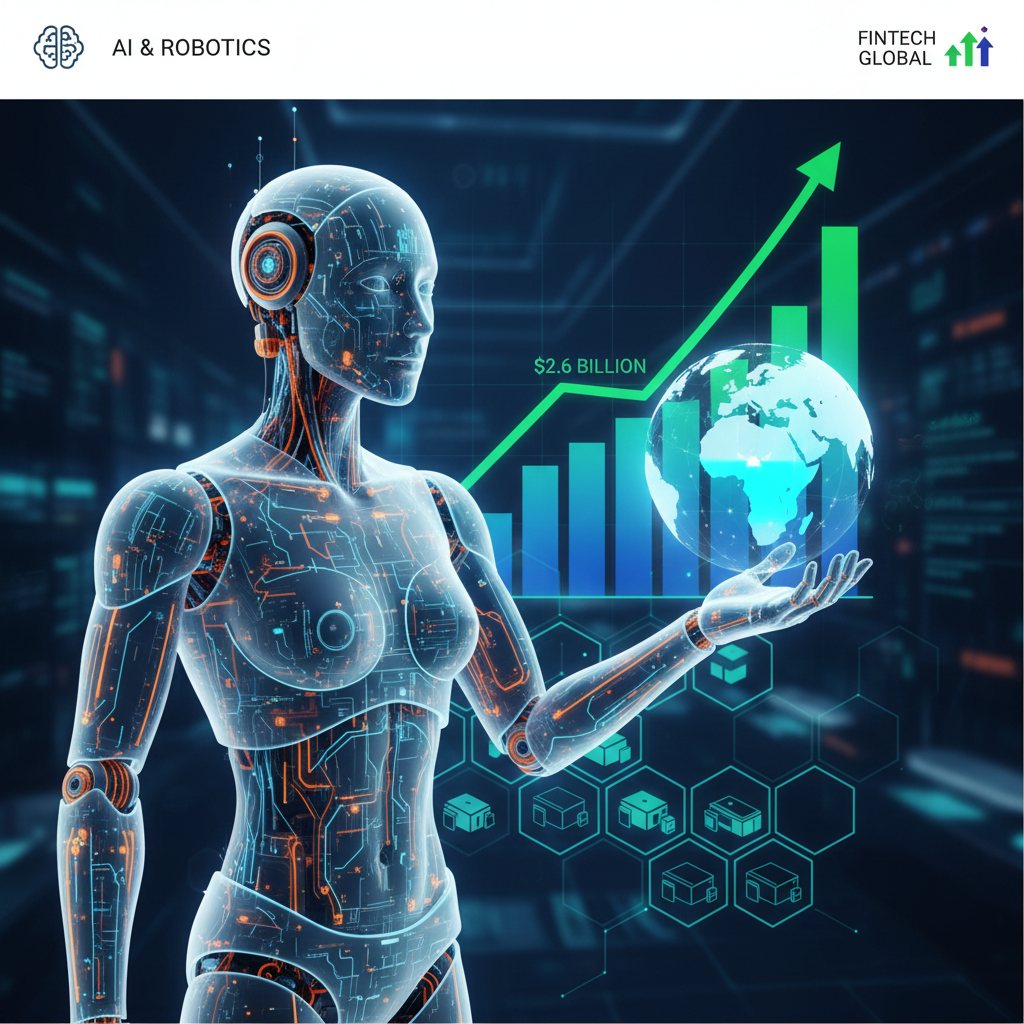

Can you feel that hum in the air? It's not just the wind coming off the Caspian Sea; it's the electric current of innovation, sparking across the globe and right here in our beloved Azerbaijan. Today, we're diving deep into a story that has captured my imagination completely: Figure AI's incredible humanoid robots and the staggering $2.6 billion investment they've secured. This isn't science fiction anymore, my friends; this is the future knocking on our warehouse doors, and it's bringing robots with it.
Imagine a world where the most repetitive, physically demanding tasks in logistics and manufacturing are handled by agile, intelligent machines that look, well, a little bit like us. That's the vision Figure AI is chasing, and with heavyweights like OpenAI's Sam Altman, Microsoft, and NVIDIA pouring billions into their pockets, this vision is rapidly becoming a reality. It's a massive bet, one that could fundamentally reshape global labor markets and supply chains, from the bustling ports of Rotterdam to the rapidly expanding logistics hubs right here in Baku.
The breakthrough, in plain language, is about making robots truly general-purpose. For years, industrial robots have been incredible, but they're usually fixed in place, programmed for one specific task. Think of the robotic arms on an assembly line. Figure AI's humanoid, named Figure 01, is different. It's designed to navigate complex, unstructured environments, pick up diverse objects, and even learn new tasks through observation and interaction. This is not just about brute strength; it's about dexterity, adaptability, and cognitive understanding. They're moving beyond simple automation to genuine intelligent assistance.
Why does this matter so much? Oh, my dears, it matters for everything! The global supply chain, as we all know, is a complex dance of goods and people. Warehouses are the beating hearts of this system, but they face constant challenges: labor shortages, safety concerns, and the sheer monotony of many tasks. Figure 01 promises to alleviate these pressures, making operations more efficient, safer, and ultimately, more productive. For countries like Azerbaijan, which are rapidly diversifying their economies and building robust logistics corridors, this technology could be a game-changer. It means we can leapfrog older industrial models and embrace cutting-edge solutions right from the start. Azerbaijan is writing its own tech story, and this is a thrilling new chapter.
Let's get a little technical, but don't worry, I promise to keep it exciting. The secret sauce behind Figure 01's impressive capabilities lies in its sophisticated AI architecture. Researchers at Figure AI, led by pioneers like Dr. Elena Petrova, their Head of Robotics AI, have developed a novel 'Embodied Foundation Model' that integrates large language models, like OpenAI's GPT series, with advanced perception and motor control systems. "We're not just telling the robot what to do; we're giving it the cognitive tools to understand why and how to do it, even in novel situations," Dr. Petrova explained in a recent interview with DataGlobal Hub. "This allows Figure 01 to generalize tasks, something traditional robotics has always struggled with." The robot uses high-resolution cameras and tactile sensors to perceive its environment in real-time, feeding this data into its neural network. This network then generates precise motor commands, allowing it to grasp delicate items or stack heavy boxes with equal finesse. It's like giving a robot both the eyes and the brain to truly understand its world.
The research itself has been a whirlwind of progress. A recent paper, 'Cognitive Embodiment for General Purpose Manipulation,' published by Figure AI's research team in collaboration with Stanford University's AI Lab, detailed how they achieved unprecedented success rates in object manipulation tasks within dynamic warehouse settings. "The ability to interpret natural language commands and then translate those into physical actions, adapting to unforeseen obstacles, is a monumental leap," noted Professor Amir Hasanov, a leading robotics expert at the Azerbaijan Technical University. "This isn't just about programming; it's about teaching a robot to think and react." The paper highlighted a 92% success rate in picking and placing diverse items, a significant improvement over previous benchmarks for general-purpose humanoids. You can read more about these kinds of advancements at MIT Technology Review.
So, who exactly is behind this incredible push? Figure AI, a startup founded by Brett Adcock, has assembled an all-star team of robotics and AI experts. The recent funding round, totaling $675 million, saw investments from a who's who of tech giants: OpenAI, Microsoft, NVIDIA, Amazon's Jeff Bezos through his personal fund, and Parkway Venture Capital. This isn't just financial backing; it's a strategic alliance. OpenAI's involvement, in particular, suggests a deep integration of their advanced large language models into Figure's robotic brains, making these humanoids not just physically capable but also incredibly intelligent and communicative. Imagine a robot that can understand your complex instructions, ask clarifying questions, and even explain its actions. That's the power of combining advanced robotics with cutting-edge generative AI.
The implications are vast and truly exciting. For businesses, it means increased efficiency, reduced operational costs, and the ability to scale operations rapidly. For workers, it means a shift away from dangerous or monotonous jobs towards roles that require more oversight, problem-solving, and collaboration with these new robotic colleagues. I believe this will unlock new avenues for human creativity and innovation. The Caucasus is having a moment, and we are seeing how technology can uplift entire economies. We're not just talking about replacing jobs; we're talking about transforming them, creating new opportunities, and fostering a more productive society. As Mr. Elchin Mammadov, CEO of AzLogistics Group, a major player in Azerbaijan's growing logistics sector, told me, "We are already exploring how these kinds of intelligent automation solutions can integrate into our future warehouses. The goal isn't to remove people, but to empower them to do more strategic work, while robots handle the heavy lifting and repetitive tasks. It's a partnership." You can follow more industry news on this topic at TechCrunch.
What comes next? Figure AI has already announced partnerships with companies like BMW Manufacturing to deploy Figure 01 in their Spartanburg, South Carolina, factory. This pilot program aims to test the robot's capabilities in real-world automotive production environments. We can expect to see these humanoids gradually introduced into various sectors, from manufacturing to retail, and yes, even our local distribution centers. The regulatory landscape will also need to evolve, ensuring safety, ethical deployment, and fair labor practices. But make no mistake, the trajectory is clear. This is just the beginning of a truly transformative era.
From my vantage point here in Azerbaijan, watching the rapid advancements in AI and robotics, I can't help but feel an immense sense of optimism. The world is changing at an incredible pace, and technologies like Figure AI's humanoids are not just tools; they are catalysts for progress, efficiency, and a brighter future for everyone. We have the opportunity to embrace these innovations, adapt our industries, and prepare our workforce for a world where humans and intelligent machines collaborate to build something truly extraordinary. The future is not just coming; it's already here, and it's absolutely thrilling.