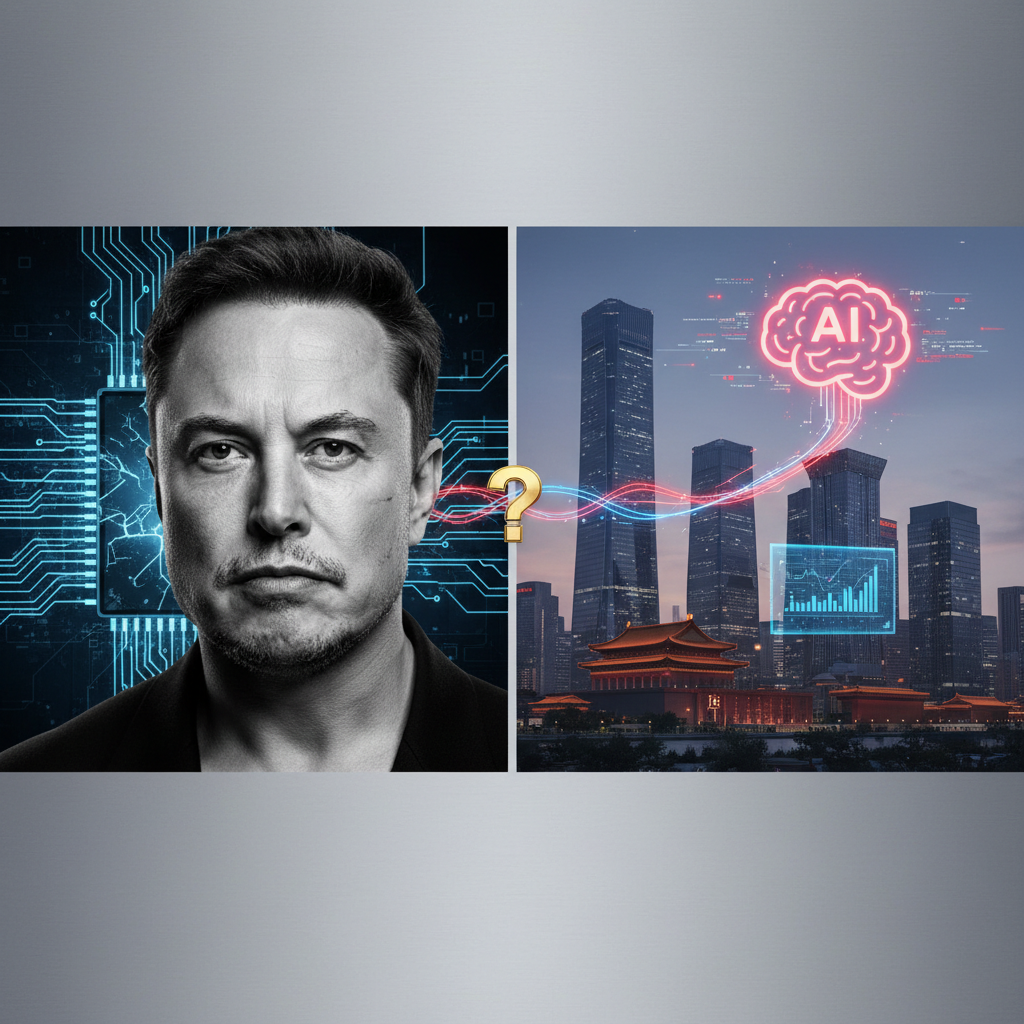

The legal battle unfolding between Elon Musk and OpenAI is not merely a squabble between billionaires, nor is it simply about a broken promise. This is a foundational conflict over the very soul of artificial intelligence, a struggle that will define who controls the most powerful technology humanity has ever created. For us here in China, and indeed for all of Asia, the implications are far reaching, touching everything from national security to the future of our industries and even our daily lives.
The Headline Development: A Feud Goes Public
In late February 2024, Elon Musk filed a lawsuit against OpenAI, its CEO Sam Altman, and President Greg Brockman. The core of Musk's claim is that OpenAI, originally founded as a non-profit dedicated to developing artificial general intelligence (AGI) for the benefit of humanity, has strayed from its founding mission. He alleges that the company has become a for-profit entity, effectively a subsidiary of Microsoft, prioritizing commercial gain over its original altruistic goals. Musk, an early investor and co-founder, argues that OpenAI's pivot to a closed source, profit-driven model violates the spirit, if not the letter, of its initial agreements. He points to the company's rapid commercialization of models like GPT-4, its multi-billion dollar valuation, and its close ties with Microsoft as evidence of this alleged betrayal. OpenAI, naturally, has vehemently denied these claims, asserting that its for-profit structure was a necessary step to secure the immense capital required for AGI development, and that its core mission remains unchanged.
Why Most People Are Ignoring It: The Attention Gap
In the bustling digital landscape, where every day brings a new AI breakthrough or a fresh controversy, it is easy for a complex legal dispute to get lost. Most people see this as just another rich man's fight, a corporate drama playing out in distant American courts. The headlines often focus on the personalities involved, the sheer audacity of Musk's claims, or the counter-arguments from OpenAI. They rarely delve into the deeper philosophical and geopolitical currents at play. For many, the immediate impact of AI is felt through their smartphones or their work tools, not through the intricate legal documents debating corporate charters. The abstract nature of AGI, the long-term vision of a superintelligent machine, feels distant when compared to the immediate convenience of ChatGPT or the latest AI-generated image. This attention gap is dangerous, allowing fundamental shifts in power and control to occur largely unnoticed by the wider public.
How It Affects YOU: Personal Impact on Readers
Do not be fooled; this legal battle is not just for the Silicon Valley elite. It directly impacts you. If OpenAI, or any dominant AI entity, develops AGI under a purely commercial, closed-source model, who truly benefits? Will the immense power of such an intelligence be accessible to all, or will it be controlled by a select few corporations and their government partners? Imagine a future where the most advanced intelligence is proprietary, its algorithms opaque, its decisions influencing everything from your job prospects to the news you consume, all without public oversight. This is not science fiction; it is the potential reality if the 'for-profit' model of AGI development prevails without sufficient checks and balances. Your data, your privacy, and even your cognitive landscape could be shaped by systems whose primary allegiance is to shareholder value, not societal well-being. The real story is in the supply chain, not just of chips, but of ideas and control. If the very foundations of AGI are built on commercial secrecy, then the benefits will flow to a select few, leaving the rest of us as mere consumers in a world designed by algorithms we do not understand and cannot influence.
The Bigger Picture: Societal, Economic, or Political Implications
This lawsuit lays bare a fundamental tension at the heart of the global AI race: should AGI be a public good, developed openly and transparently, or a proprietary asset, controlled by corporations? For China, this question resonates deeply. Beijing isn't saying this publicly, but the prospect of a single, dominant, Western-controlled AGI raises significant strategic concerns. Our own national AI strategy emphasizes indigenous innovation and control, precisely to avoid dependence on foreign entities for such critical technology. The outcome of this case could set a precedent for how AGI is developed and governed globally. If OpenAI successfully defends its commercial model, it could embolden other AI giants like Google DeepMind or Meta AI to further privatize their AGI research, leading to a fragmented, competitive landscape where ethical considerations might take a backseat to speed and profit. Conversely, if Musk's arguments gain traction, it could spark a global conversation about the necessity of open-source AGI development, perhaps even leading to international collaborations or regulatory frameworks that prioritize safety and accessibility over commercial interests. This is a battle for the very architecture of our future digital civilization.
What Experts Are Saying: Voices from the Frontlines